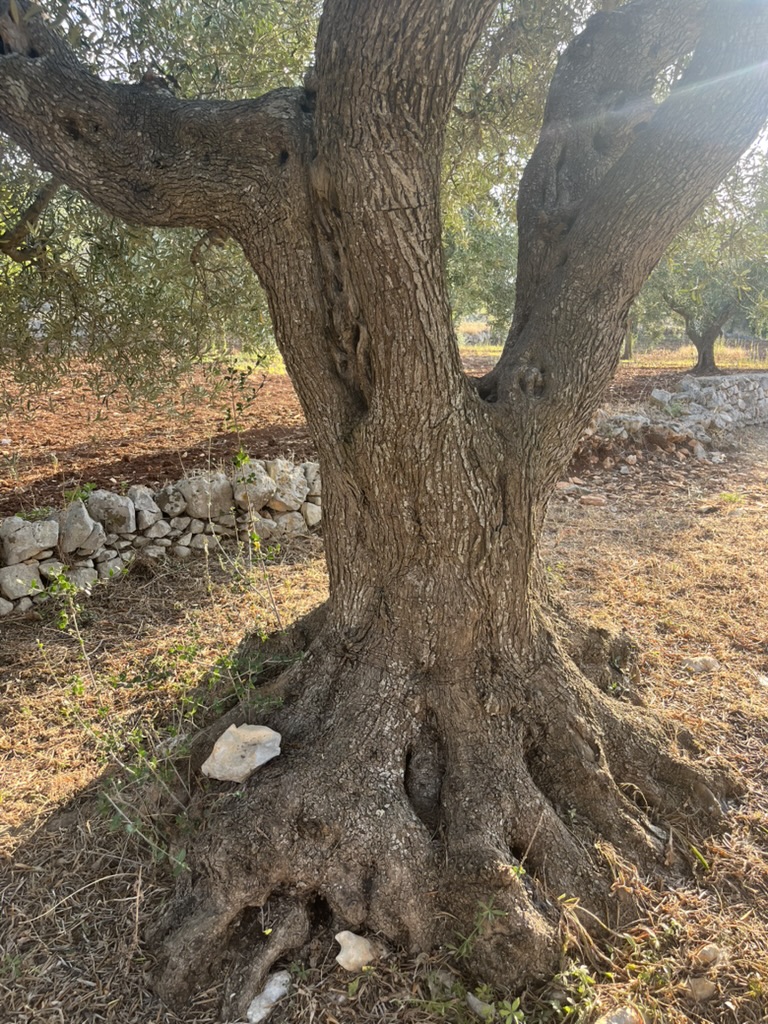
More than 200 ancient olives span the two estates, many of them over 500 years old. They are not crops to be exhausted but living monuments — and for a man who spends his working life inside the most complex organ in the human body, a kind of intelligence no hospital contains: one that has endured half a millennium without a single intervention.
The Adriatic salt wind carved their forms, the limestone fed their roots, and the hands of countless harvesters climbed their branches.
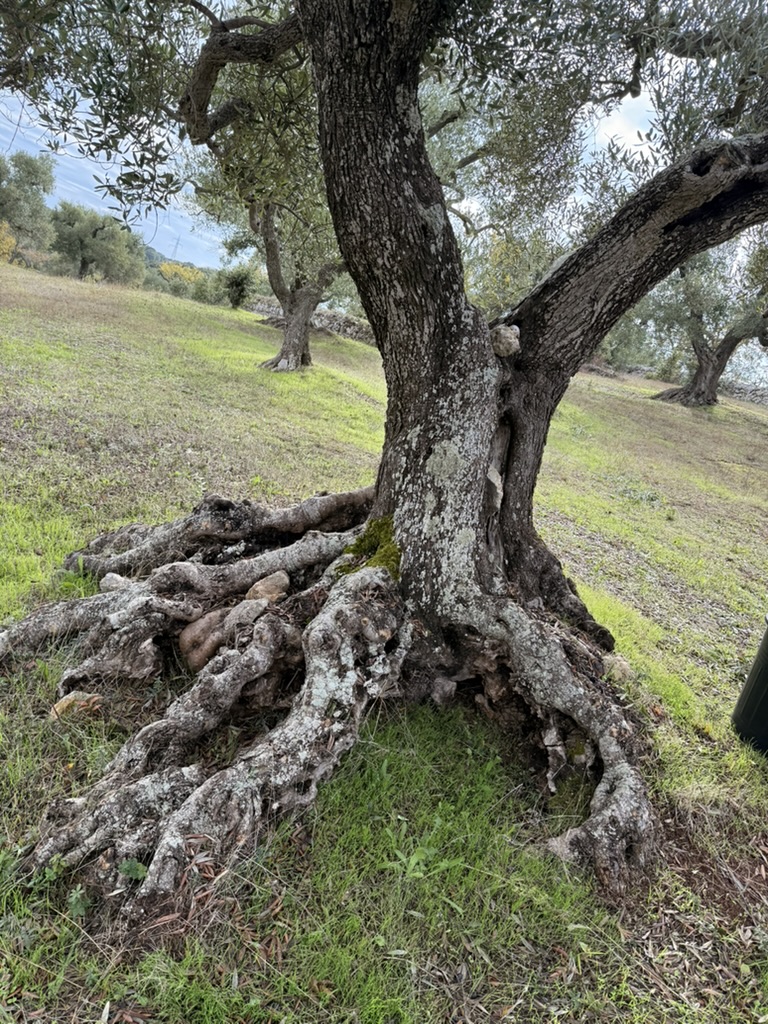 Il Tronco Antico · The Ancient Trunk
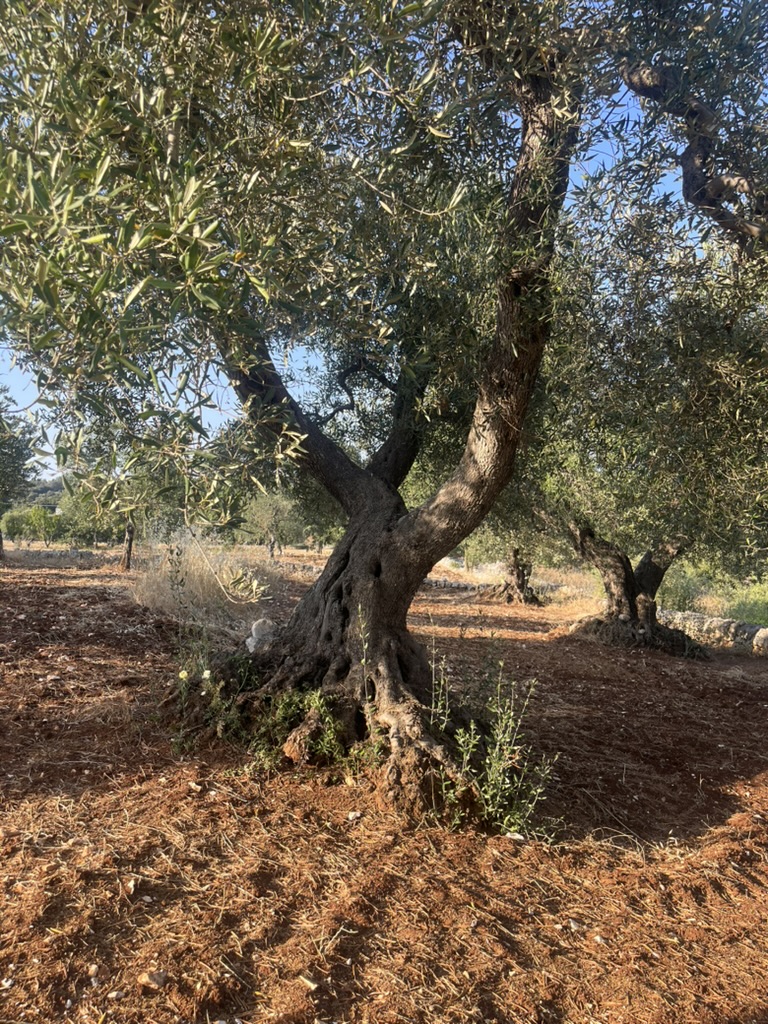
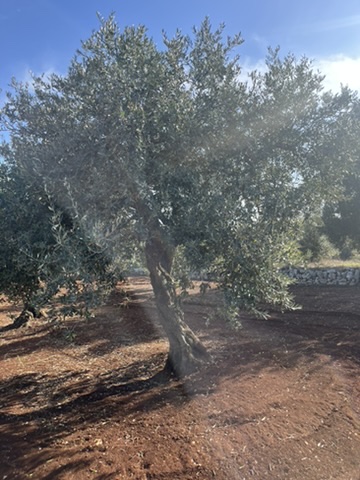
An ancient trunk is a landscape in itself — gnarled, hollowed, sometimes wide enough to stand inside. The bark weathers to silver and bronze; the wood grows so slowly that a single year's ring is barely visible.
Many of the oldest are partly hollow and still bear fruit, channelling everything through what heartwood remains. The hollow itself becomes shelter for insects and birds — decay turned back into habitat.
A tree this old does not age like humans do. It becomes itself more fully with time.
The trees vary widely in age and yield. Some are in their prime; others bear little now but give shelter and food to the wildlife of the grove.
To know them individually — by temperament, by the shape of a crown — is to learn there is no such thing as a generic olive tree. Each has weathered its own droughts and its own harvests. A census here is not a count of resources but a map of the grove's memory.
The trees are distributed across the Hilltop Estate and Valley Estate, each creating a distinct microclimate and terroir.
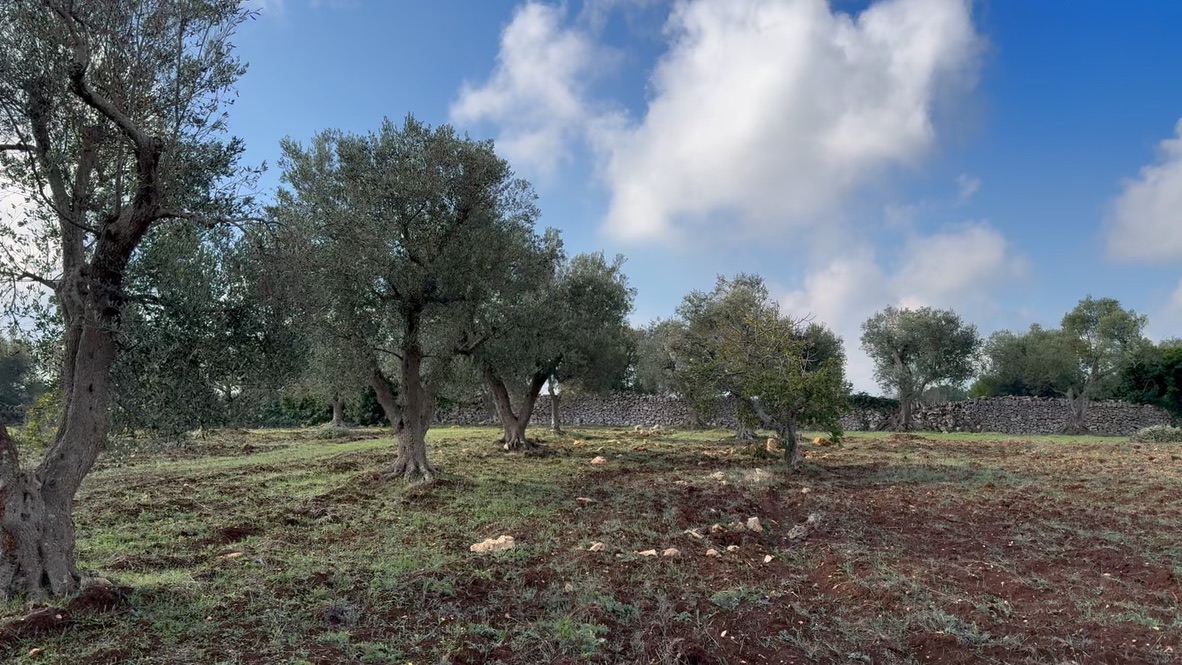 Le Varietà · The Olive Varieties
Two varieties, both classical to Puglia. Ogliarola Salentina is delicate and fruity, bright and herbaceous. Cellina di Nardò is robust and peppery, deeper and more complex. Together they give both single-varietal oils and blends.
Neither was chosen arbitrarily. Both evolved in this exact landscape — its soil chemistry, its sun angle, its frosts and its wind.
To grow these trees is to participate in a conversation spanning centuries.
In late April and May the trees bloom — thousands of tiny white flowers per tree, and the bees arrive. This is the moment that decides the year's fruit set; a late frost or heavy rain can undo it. By June the first green olives have formed.
A brief window of white flowers holds the year's entire promise, and there is nothing to do but read the weather and watch.
Through the long summer the olives grow. In June and July they are marble-sized and hard; by August they have reached full size, skin still green while the oils accumulate in the flesh.
Summer is heat converting into essence, and it teaches restraint — to tend carefully but not constantly.
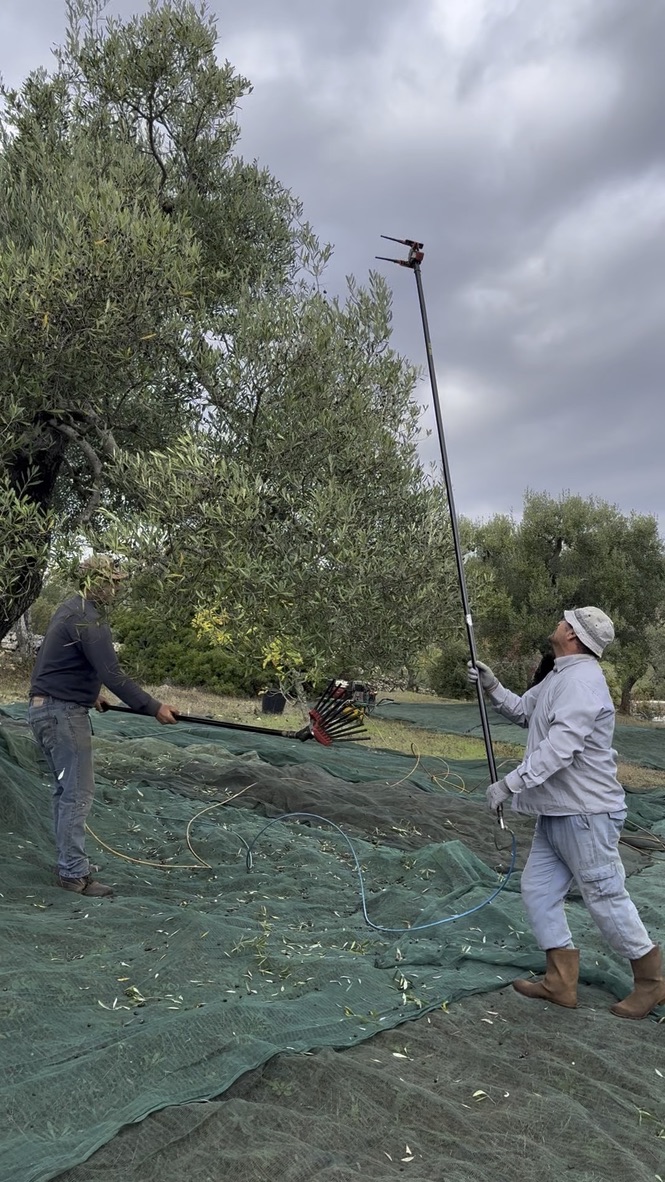
In autumn the fruit turns from green to purple to black, and the moment of picking sets the flavour of the oil: early gives fresh and herbaceous, late gives deep and rich. The team judges by colour and by taste, then moves fast.
It is never hasty. A year of patience converges into a few decisive days, and what comes out of them is one place's particular gift.
Quality is decided long before pressing — in the tree's health, the soil, the precision of the picking. A drought-stressed tree may give smaller fruit with concentrated flavour, or almost nothing at all.
We manage for quality, not volume: careful pruning, selective irrigation, timely harvest. Some years the tree says it is abundant. Other years it says it needs to rest.
What the elders hold is not ours to take — it is theirs to give.
An ancient olive is an ecosystem. Its canopy shelters insects, birds and small mammals; its trunk hosts lichens and beetles; its roots harbour the microbes the soil depends on. Its long life gives other species something permanent to build around.
To tend one is to tend a whole world. The tree does not belong to us. We belong to the tree.
The elders hold time in their rings and wisdom in their roots. The oil they give is life itself.
Come in any season. Sit beneath one of them, put a hand on bark older than most empires, and taste the oil pressed from its fruit — five centuries of sun and wind, and of stewards who understood that wealth lies in protection, not extraction.
You stand in a chain of stewardship reaching back to people you will never meet and forward to people not yet born. The oil on your tongue carries their labour. The land is not ours to own, but ours to serve.
 Home
Home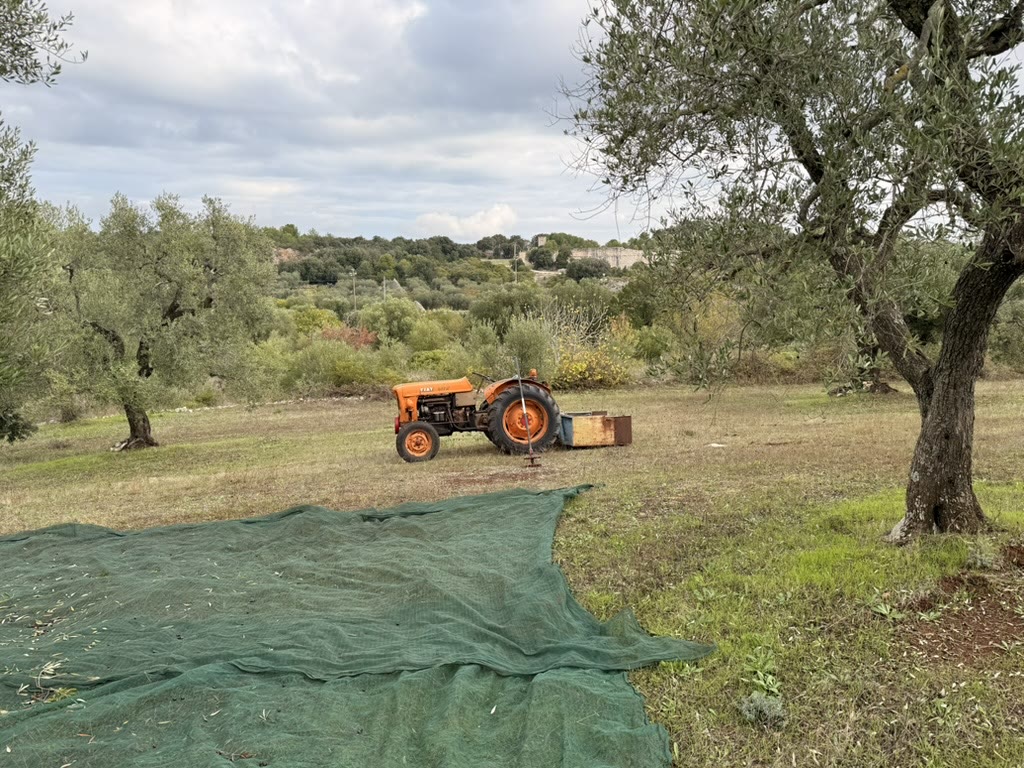 The Farm
 The Land
 The Renovations
 Overview
 The Olives
 The Harvest
 The Pressing
 2025 Vintage
 Bee Sanctuary
 Biodiversity
 The Steward