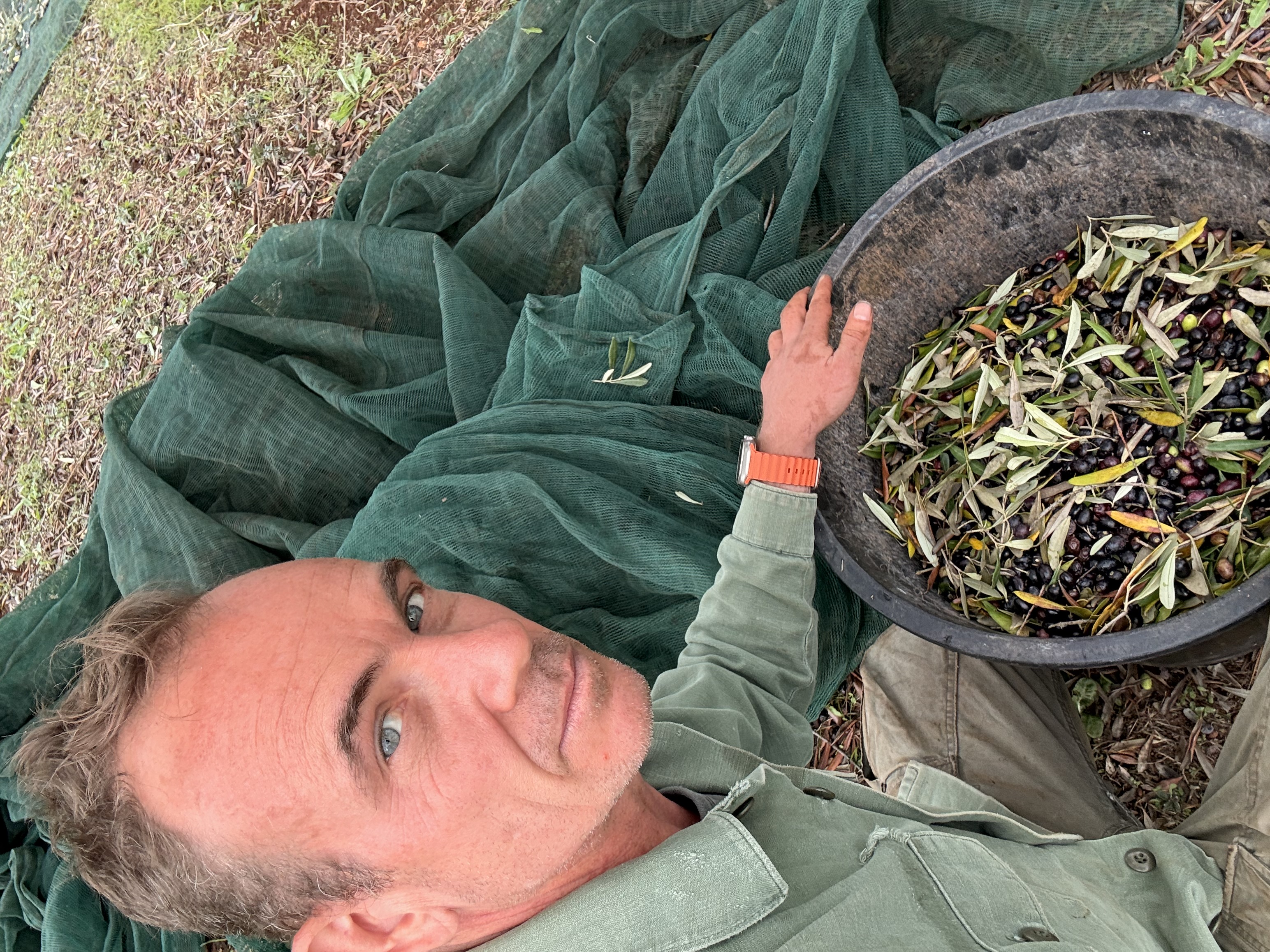
Daniel Zumofen, MD, is a board-certified neurosurgeon and Professor of Clinical Neurology at SUNY Downstate in Brooklyn. He trained at the University of Zurich. He completed his fellowship in interventional neuroradiology at NYU Langone. He navigates the brain's most intricate vasculature — aneurysms, arteriovenous malformations, the impossible geography where a fraction of a millimeter separates life from everything else.
He speaks five languages. He has published extensively on cerebrovascular interventions. He is, by any measure, a man of science and precision.
And yet the same hands that hold a microcatheter inside a human brain tend ancient olive trees in the Valle d'Itria, and the same mind that reads an angiogram reads the soil and the seasons. Not a contradiction. One attention, undivided.
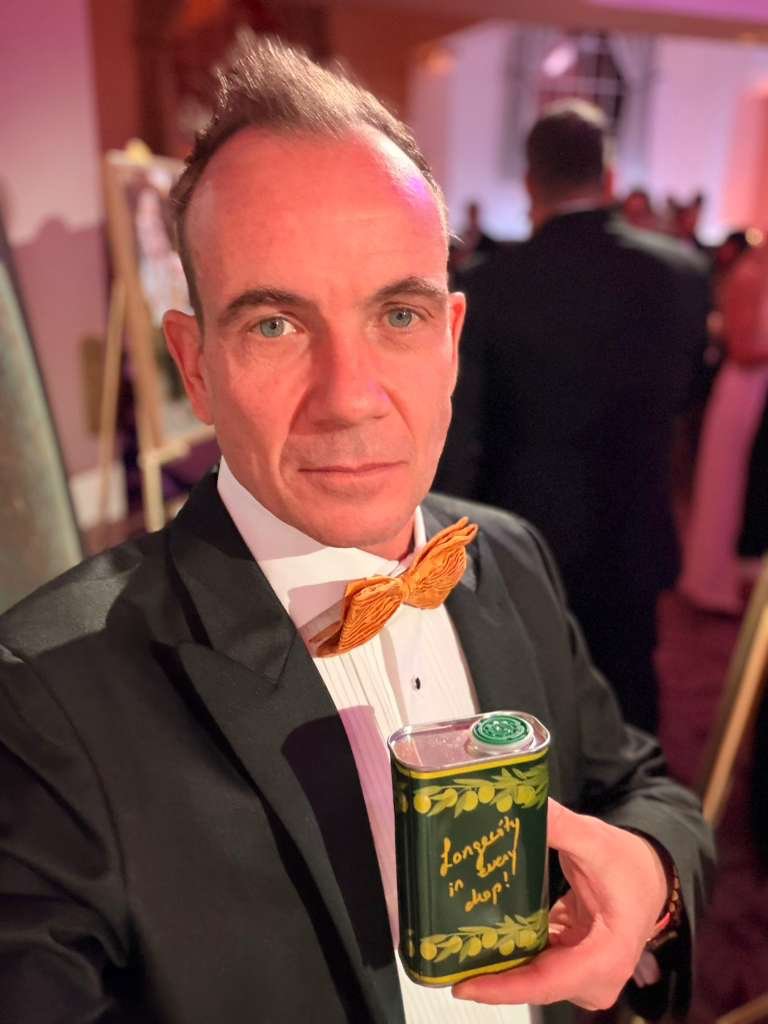 Il Guardiano · Between Two Worlds
In the operating room he controls every variable. In the grove he controls nothing, and that is the point. The trees decide the quantity — not the market, not the machinery. Abundant years give generously; frost and drought give little. He does not argue with either.
A surgeon learns early that the body knows things the mind does not. The land is the same: study it endlessly, and still at some point you have to stop imposing and start listening.
To be a steward is to become a student. The land is the teacher. The work is the learning.
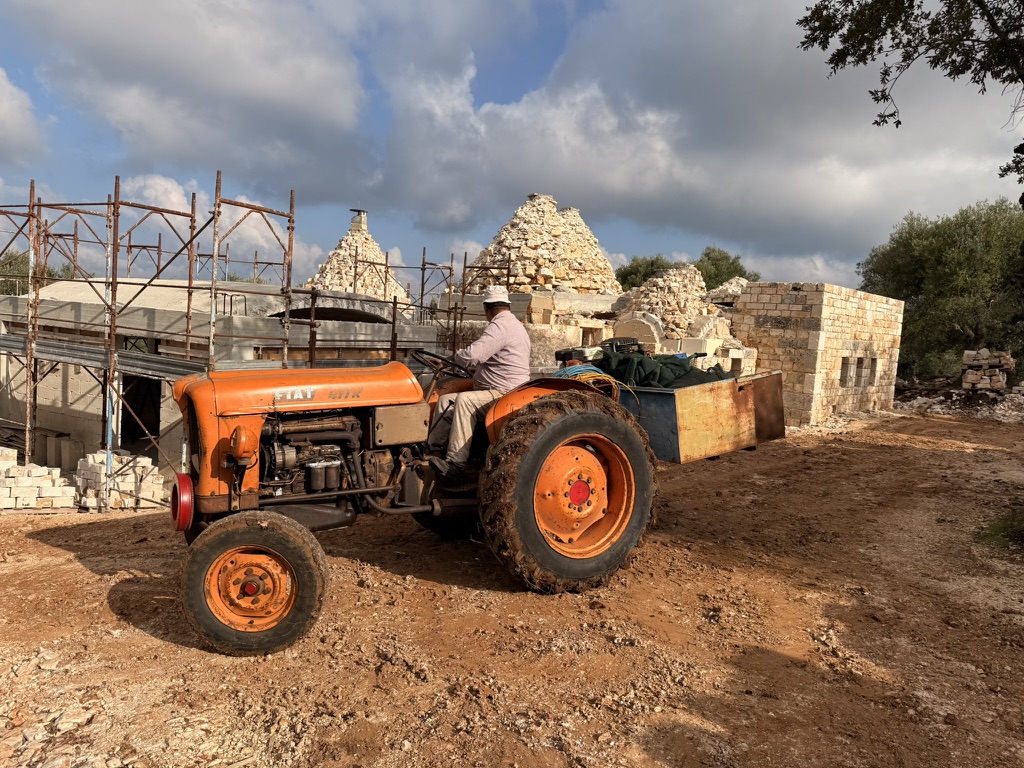
The tractor — not a machine of conquest, but a tool of care
In New York he drives through traffic to reach the operating room. In Puglia he drives a 1960s Fiat 411R through the groves at dawn — weathered, proven, and known intimately: the sound of the engine, the angle it prefers on a steep terrace, the way it takes the narrow paths between walls.
The tractor does not race. It moves at the pace the work requires — even the machinery here serves slowness.
The tractor is a living link to the farm's history, a keeper of memory and method.
 L'Alleanza · The Partnership
In surgery you learn the body is a system: every vessel and nerve exists in relationship, and damage to one is felt by the whole. The farm is no different. The olives shelter the soil and feed the birds; the bees are not a side note but the reason any of it works.
The walls shelter the bees, the bees pollinate the flowers and almonds, the wildflowers hold the soil, the soil feeds the trees, and the trees shelter all of it. He tends the web the way he tends a patient.
To be a steward is to become part of a conversation that is much larger than oneself. The land is listening. The steward learns to listen back.
 Le Mani nella Terra · Hands in the Earth
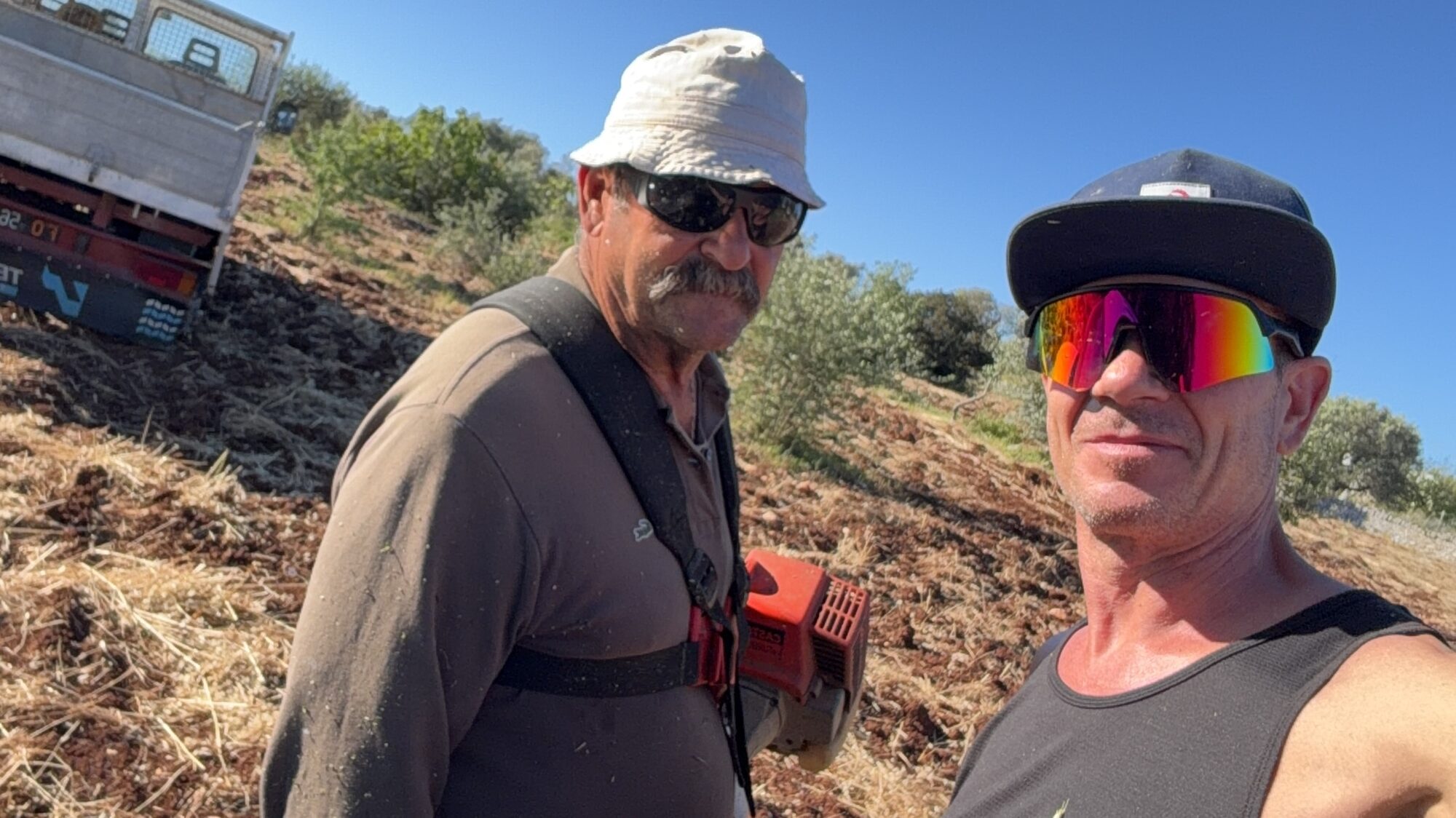
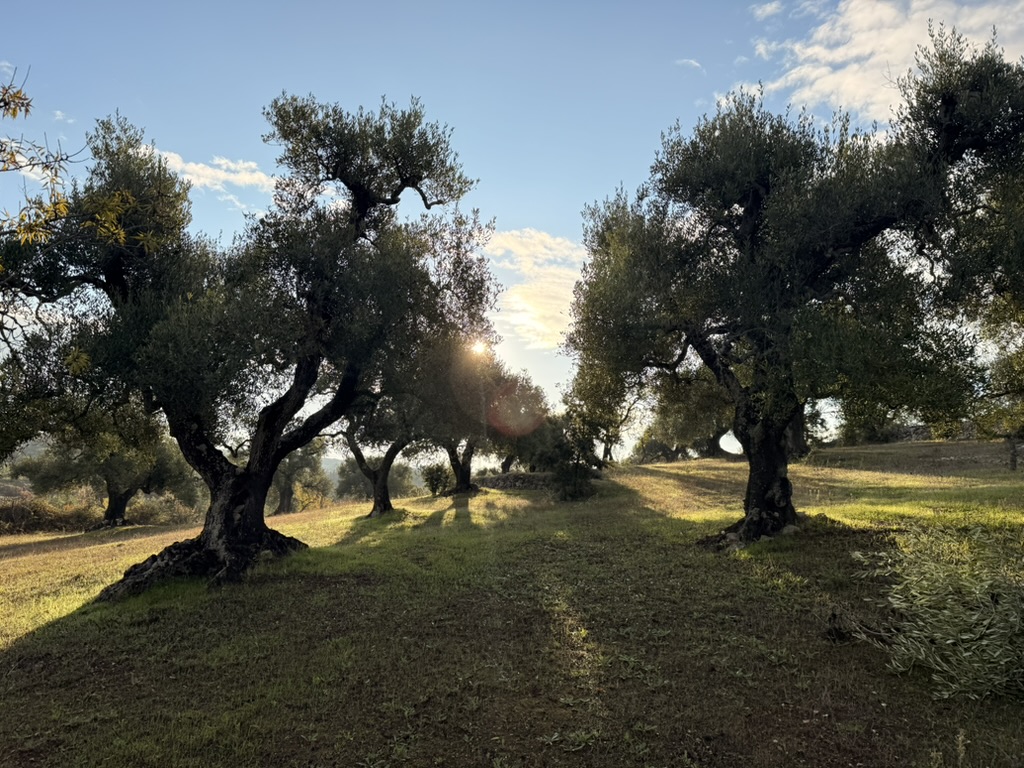
Alongside Daniel work the people who know this land in their hands — clearing undergrowth between the terraces, tending the walls, keeping the grove open to light and air. Plain, physical work: a morning of brush cleared by hand, the trees given room.
There is no ceremony to it — two people on a hillside doing what the season asks. The covenant is kept in ordinary mornings, not grand gestures.
A neurosurgeon knows you cannot force healing — you can only make the conditions for it. The land is approached the same way. Each year the farm should be richer: better soil, more biodiversity, native species visibly returning.
No synthetic pesticides or fertilisers. Dry-stone walls maintained by hand. Wildflower corridors for the insects, traditional water management, a tractor that works with the topography rather than against it. The discipline of a twelve-hour surgery, applied to an estate.
To regenerate is not to restore what was lost. It is to create the conditions for the land to flourish on its own terms.
Guests come as witnesses rather than tourists. They walk the terraces, put a hand on the stones, join the harvest if they want to, and taste the oil knowing what went into it.
When he is here, he is fully here. Guests do not meet a doctor performing stewardship; they meet a man on his knees in the dirt, hands stained with olive pulp. That is what people remember.
When you understand the work, you understand why it matters. When you understand why it matters, you begin to see yourself as a steward too.
To learn more about the farm, to arrange a visit, to ask about seasonal experiences, contact Daniel directly.
A Professor of Clinical Neurology in Brooklyn who speaks five languages and will discuss the haemodynamics of a cerebral aneurysm over breakfast, then spend the afternoon driving a vintage Fiat through groves five centuries old. He does not perform the duality; he simply is it. Nothing worth doing here can be rushed — not a brain surgery, not an olive harvest.
 Home
Home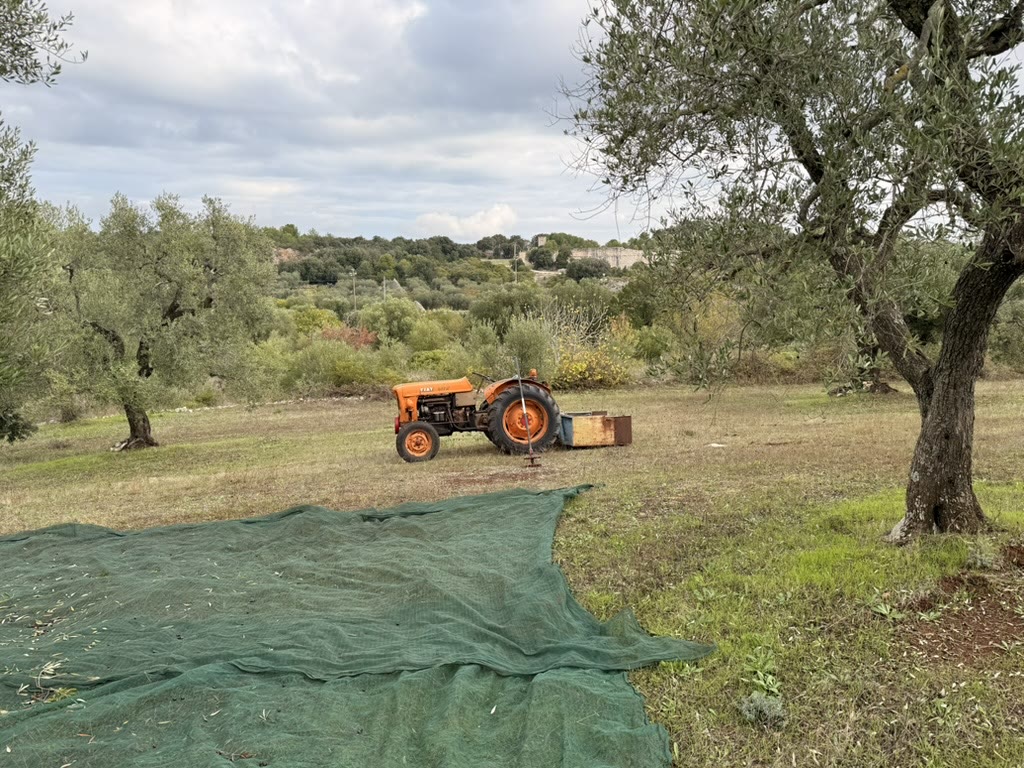 The Farm
 The Land
 The Renovations
 Overview
 The Trees
 The Olives
 The Harvest
 The Pressing
 2025 Vintage
 Bee Sanctuary
 Biodiversity