Guardianship through ecology
The Valle d'Itria is a climate of contrasts — summers of 30–35°C when the land holds its breath, winters of 8–12°C when life concentrates in the soil. Daniel reads it the way he reads the vasculature of the brain: a system where health is not the absence of disease but the presence of balance.
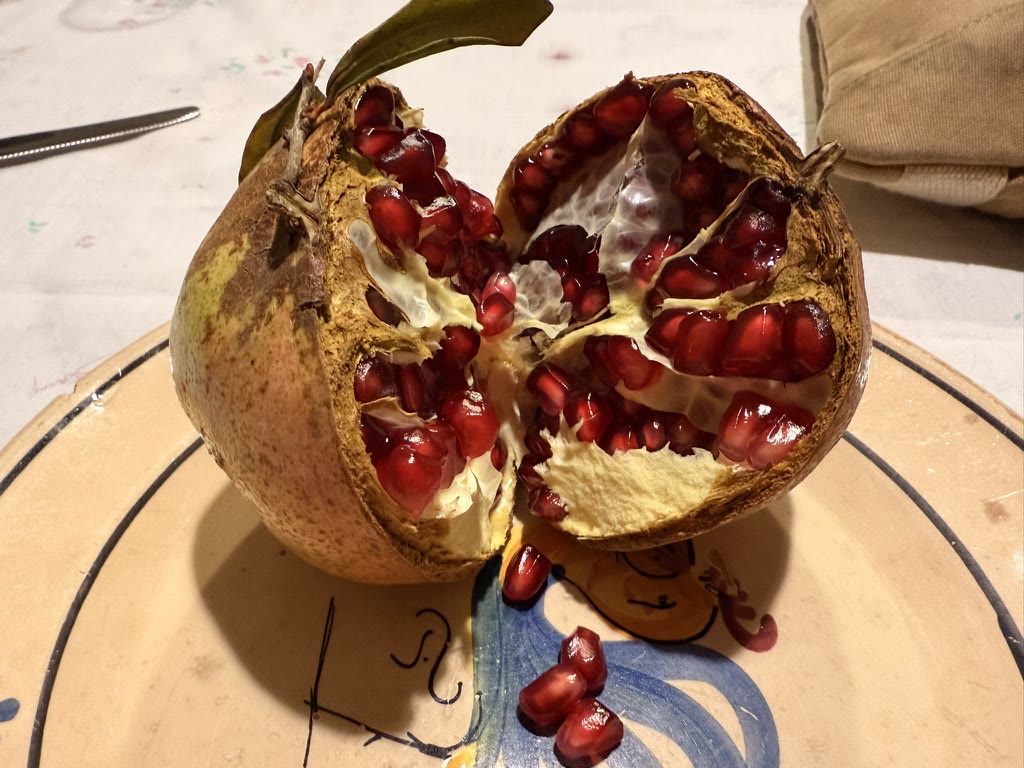
Among the olives: vineyards, almonds, figs, citrus, pomegranate and prickly pear, all on the same limestone and clay. Beneath them the native scrub persists — mastic, myrtle, rosemary, juniper and thyme, the aromatics that scent the wind.
Dry-stone walls and Mediterranean meadows host a delicate flora of wild orchids, cyclamens, poppies, and aromatic herbs. These are not decorations. They are the foundation upon which everything else depends.
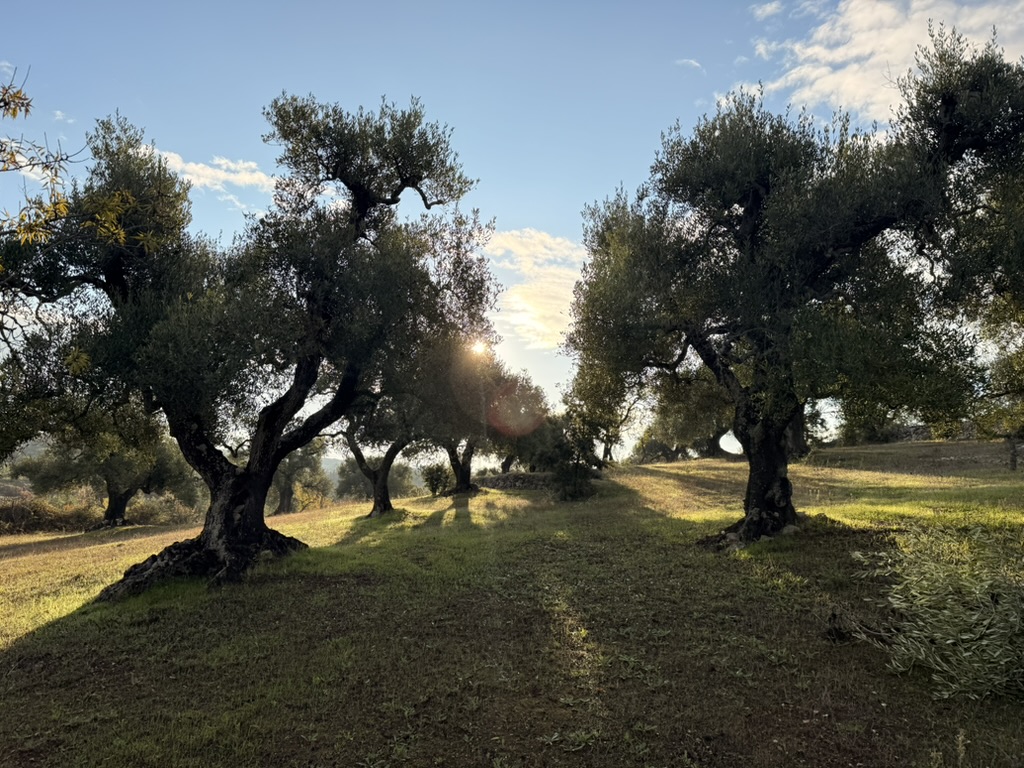
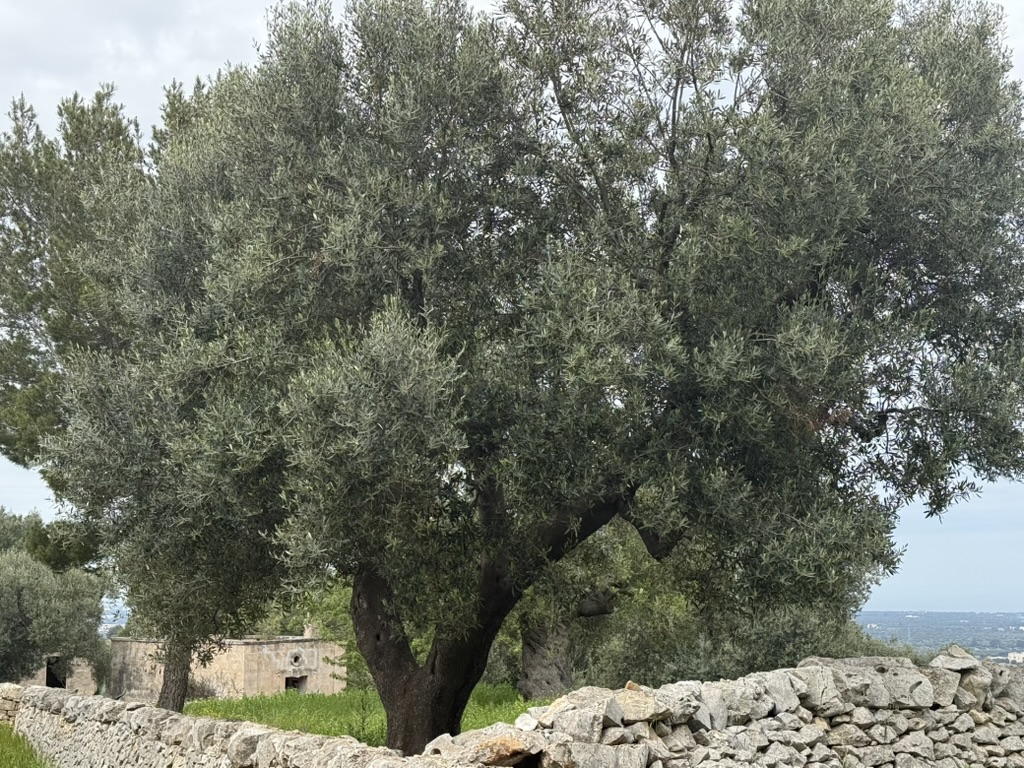 Mediterranean Canopy · Endless horizons
Holm oak and downy oak form the secondary canopy, with Aleppo pine and carob between. Spring brings the wildflowers, and with them the butterflies, bees and insects the rest of the food web rests on.
At ground level: hedgehogs in the undergrowth, hares in the meadows, foxes on the terraces, bats at dusk, porcupines after dark. Above: swallows, hoopoes probing the soil, woodpeckers sounding out the old trees, owls, and kestrels holding over the ridge.
Lizards sun on the stone, geckos stay invisible until they move, harmless snakes thread the grass. And each spring the frogs and toads return — the surest indicator that the system is healthy.
At the smallest scale, insects orchestrate life itself. Butterflies pollinate. Bees — the keystone species — move through every flower. Without them, the entire architecture collapses.
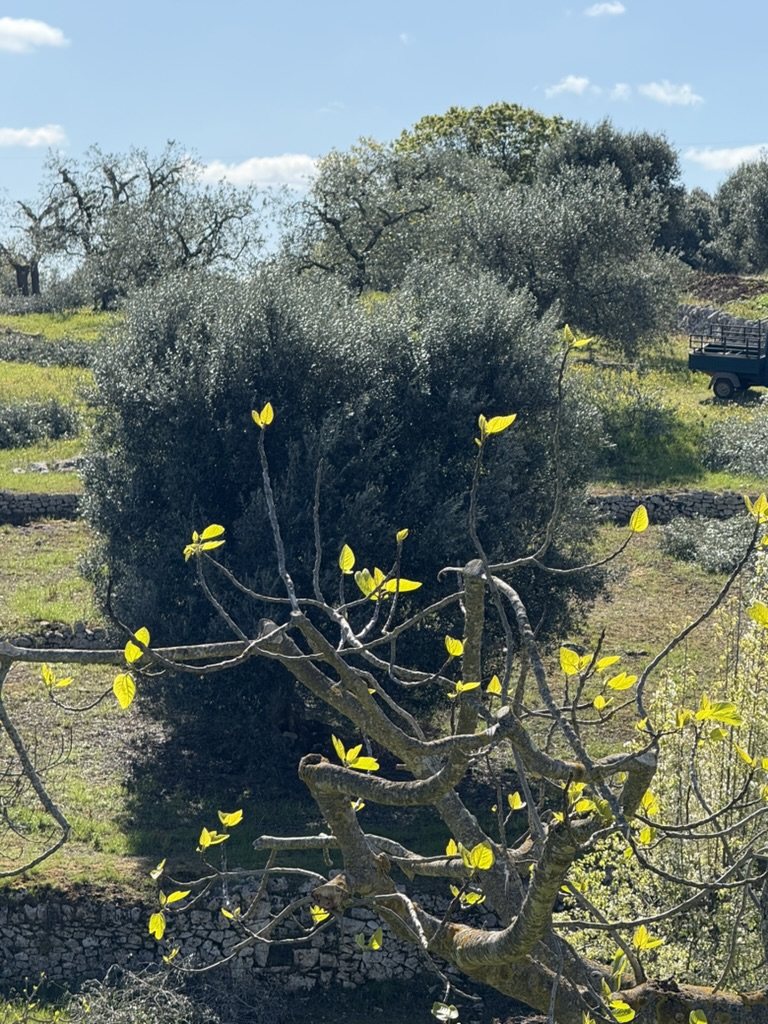
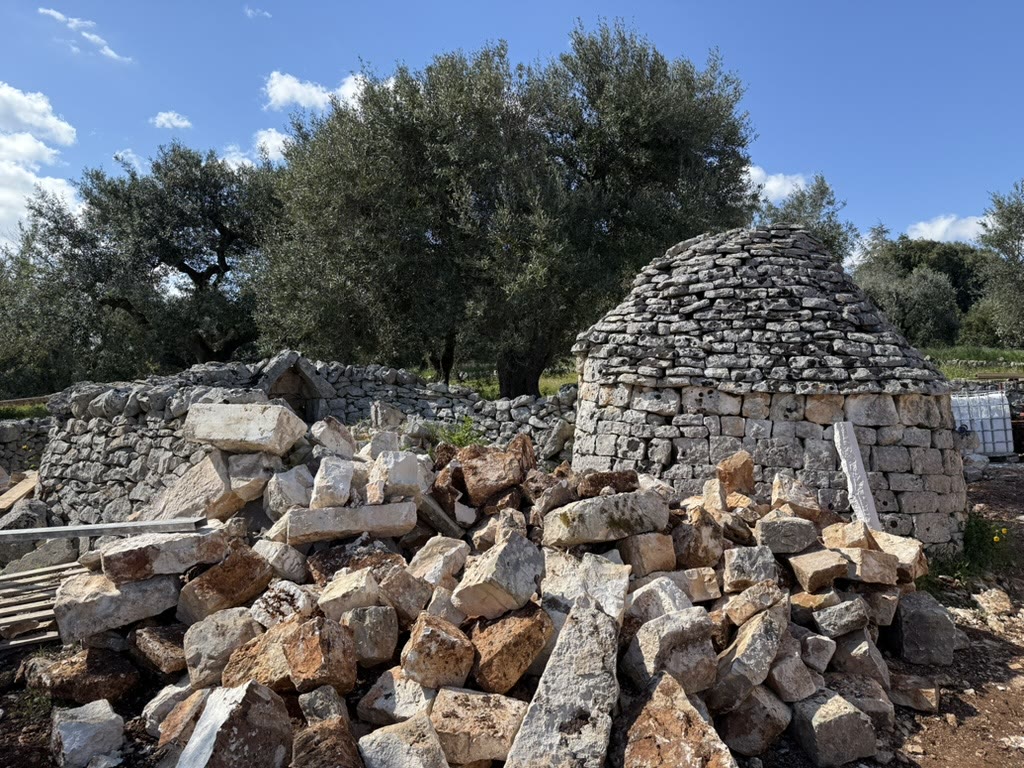
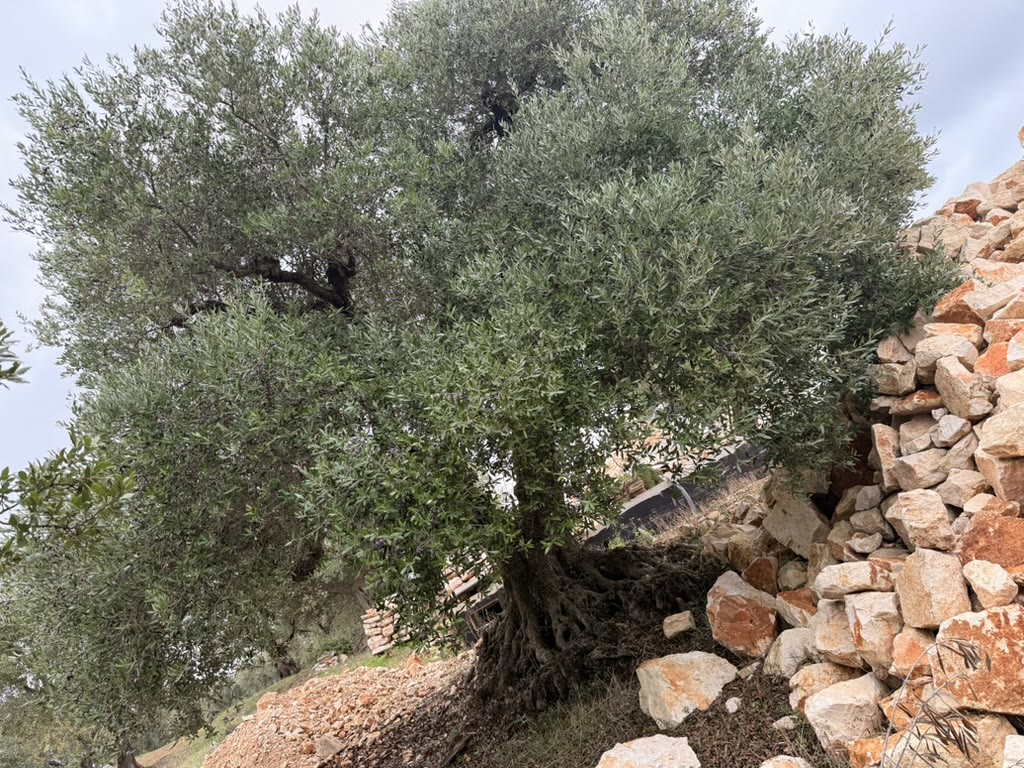
All cultivation honors the existing ecology. Pesticides are absent. Herbicides do not exist here. Instead, the land heals itself through the architecture of relationships — predator and prey, plant and pollinator, soil and root.
What we harvest, we return. Composting cycles organic matter back into soil. Rainwater is harvested and infiltrated rather than shed. Natural mulching protects the rhizosphere. The land gives; we give back.
We measure success not in monoculture yield but in species diversity. Wildflower corridors edge every field. Cover crops diversify the root zone. Terraces and dry-stone walls become microhabitats. A diverse ecosystem is a resilient one.
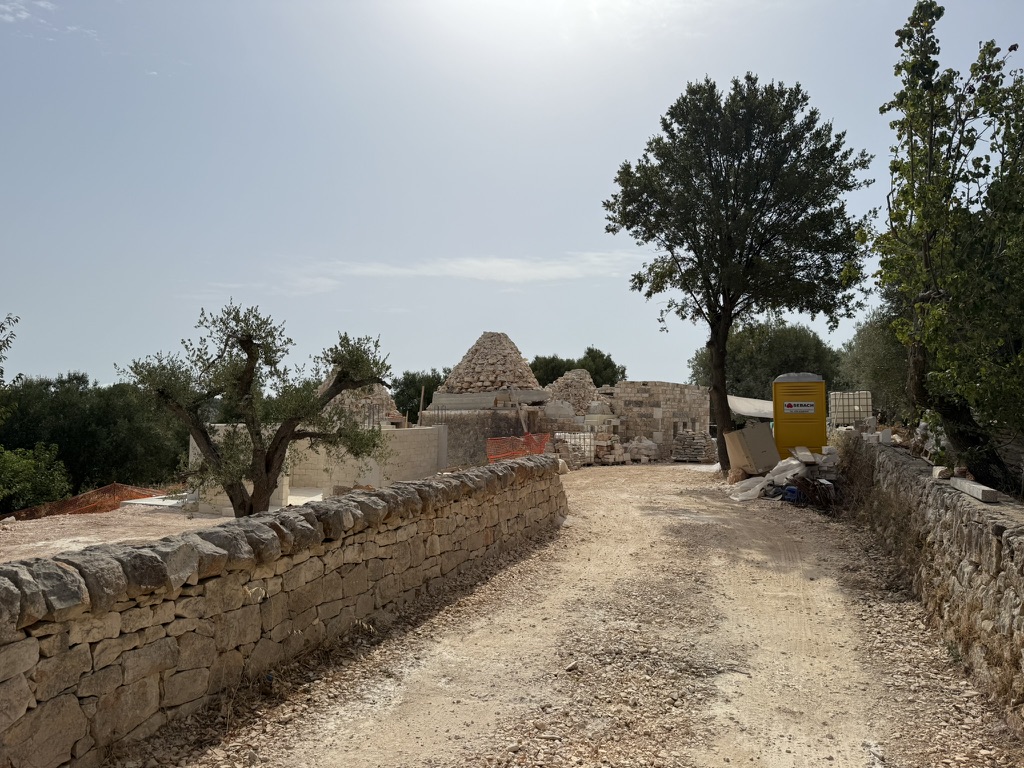
Thousand-year-old practices prove their worth through time. We restore traditional terraces and dry-stone walls not for nostalgia but because they work — they conserve water, prevent erosion, and create ecological niches that modern agriculture destroys.
 UNESCO Heritage · Living Landscape
The land at Beyond Olives lies within heritage-protected zones. One of our properties sits within a UNESCO World Heritage Site — specifically designated for its olive landscape heritage.
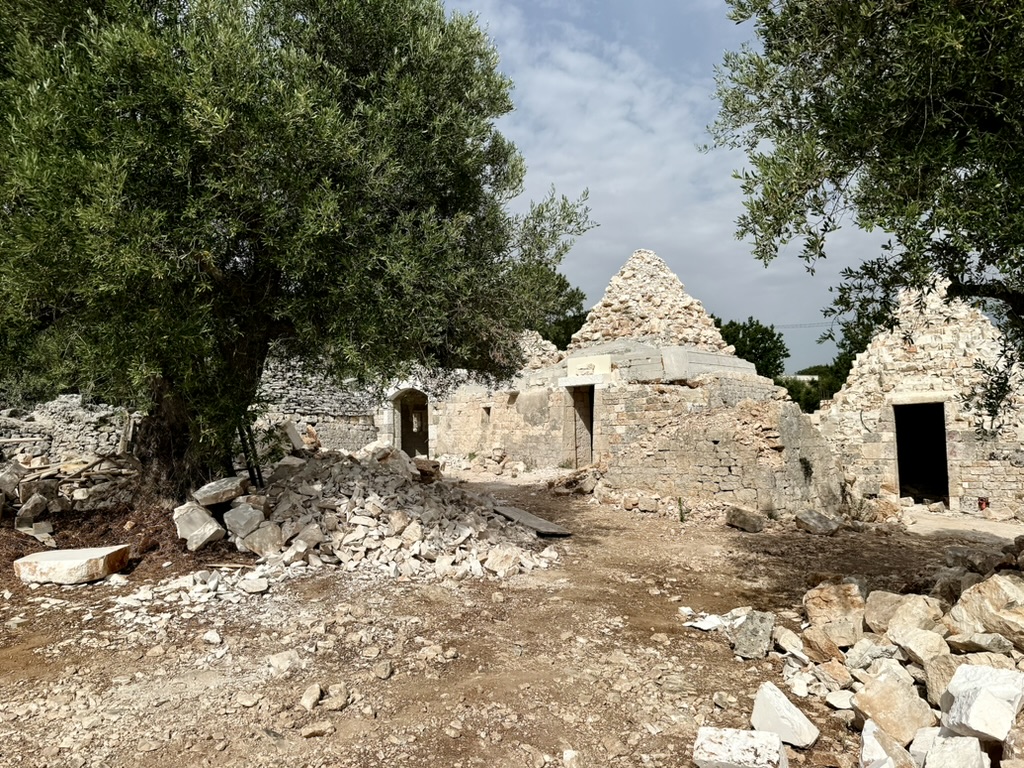
This designation is not merely symbolic. It means the traditional agricultural practices, the trulli architecture, the dry-stone terraces, and the centuries-old methods of cultivation are recognized globally as irreplaceable cultural heritage.
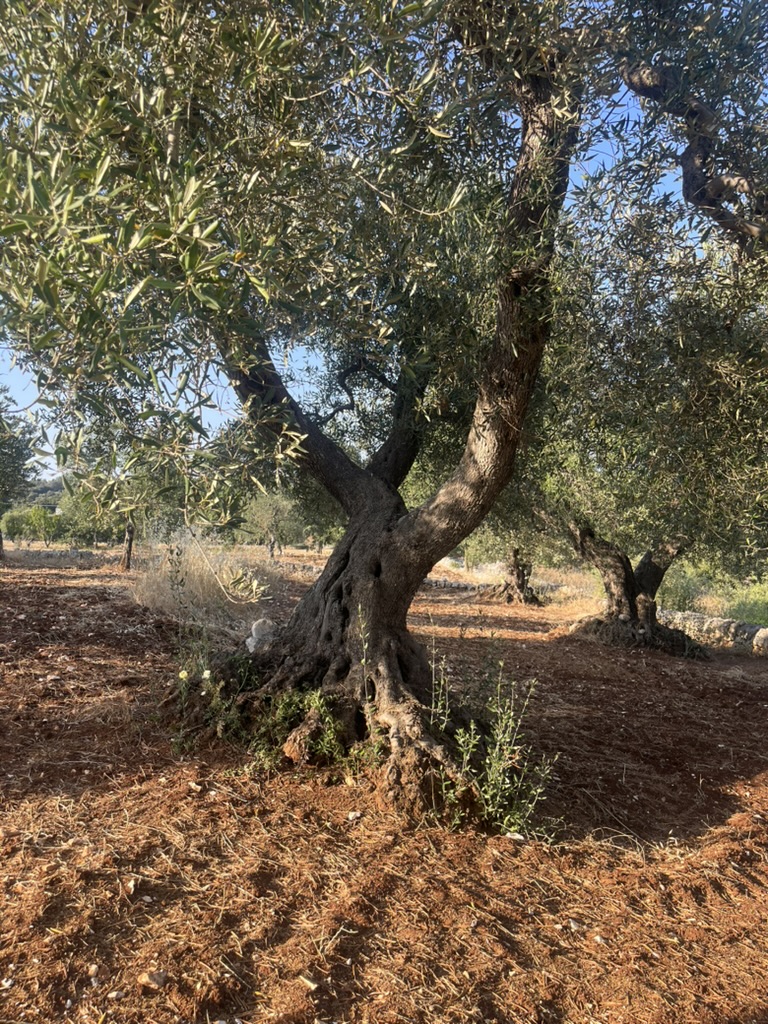
Every harvest, every wall repaired, every tree tended continues something a thousand years old. What is protected is not only the structures but the knowledge — of soil, water, plant and season — built up here over millennia.
This responsibility is not a burden. It is a privilege — and a measure of how deeply we belong to this place.
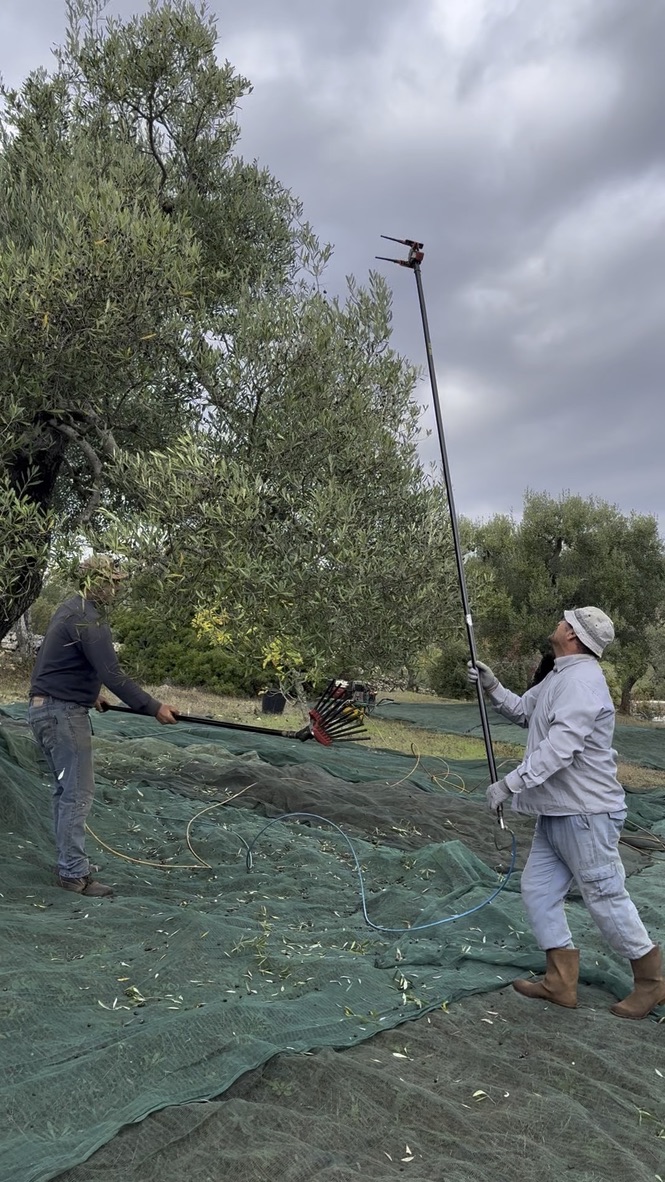
Each element holds up the others. The groves give canopy and roots that keep the soil in place; the autumn nets catch fruit without disturbing the wildflowers or the ground-nesting insects beneath; the trulli shelter geckos and barn owls as well as people. Biodiversity here is not a separate initiative but the consequence of tending each part carefully.
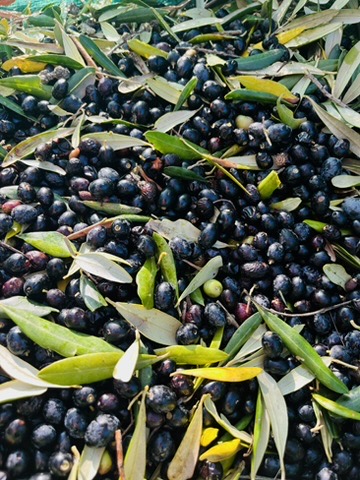
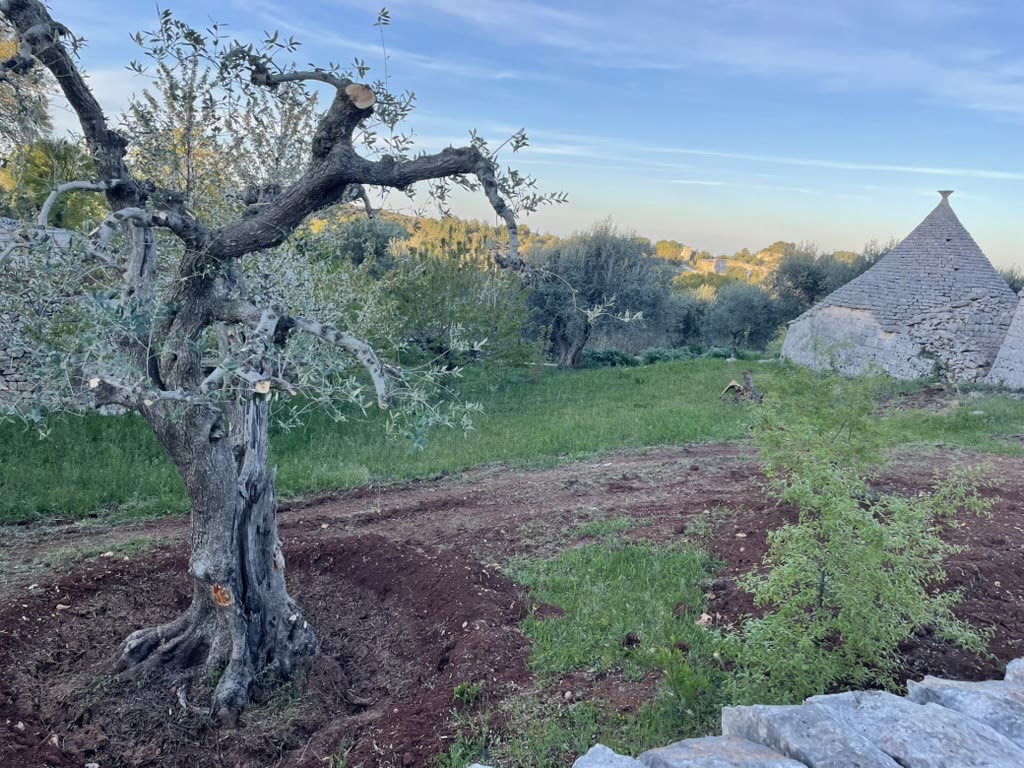
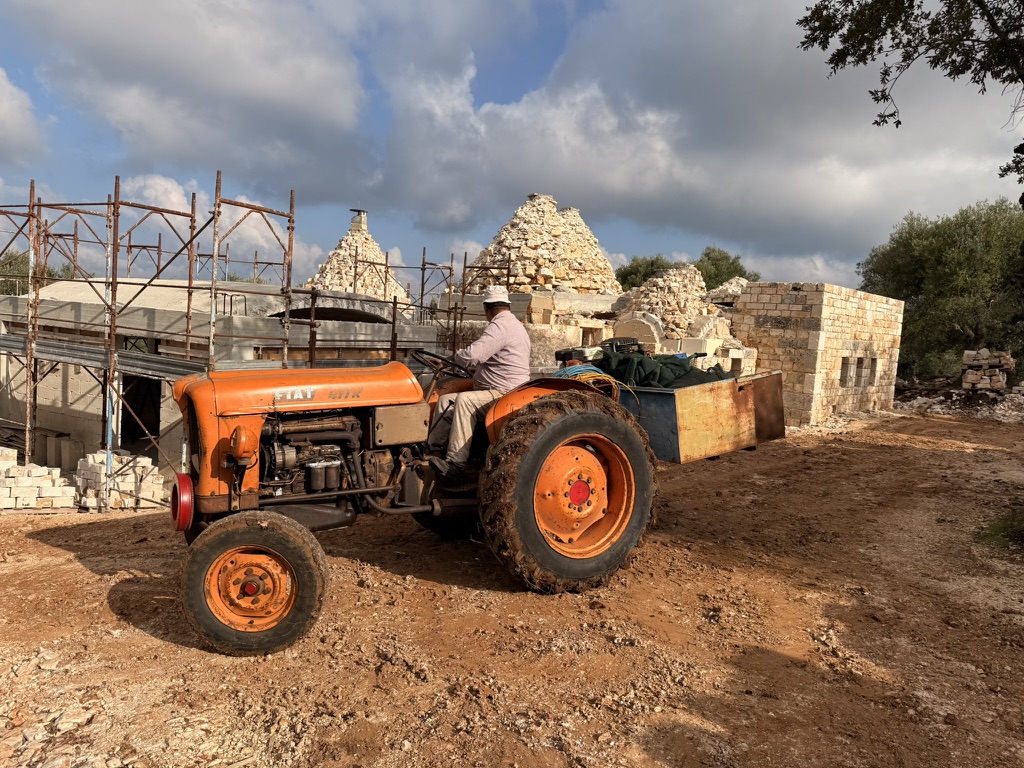
We measure it precisely: native hive survival above 90%, soil carbon rising season by season, biodiversity indices climbing as species return, heritage structures stabilised and renewed.
 Home
Home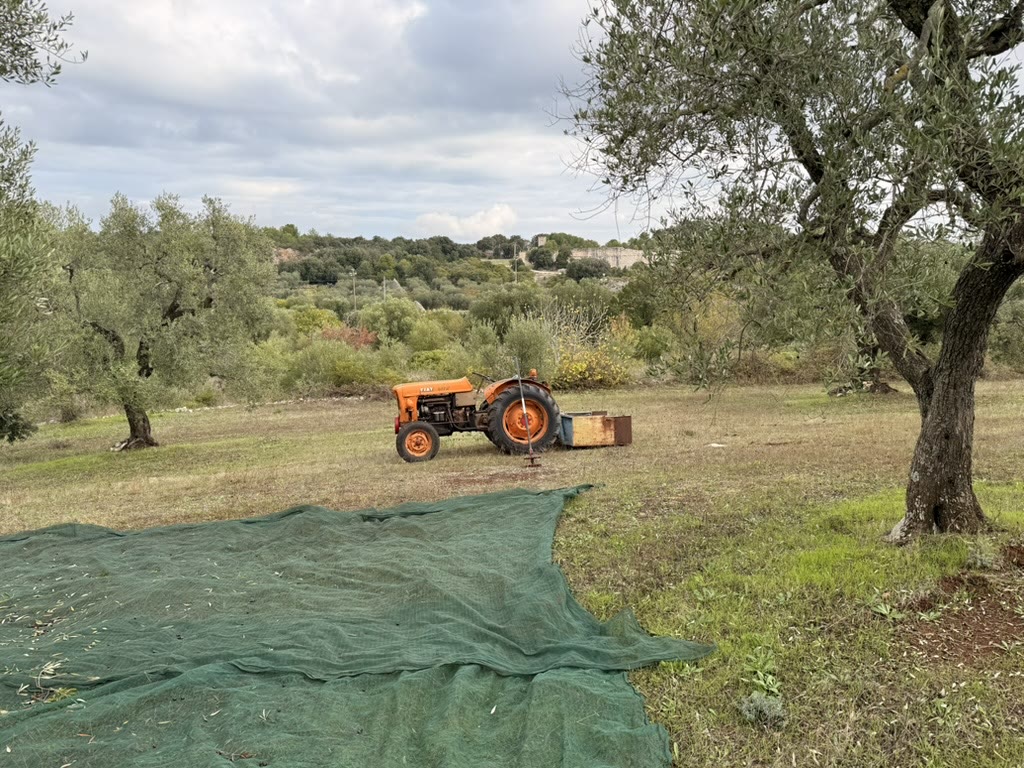 The Farm
 The Land
 The Renovations
 Overview
 The Trees
 The Olives
 The Harvest
 The Pressing
 2025 Vintage
 Biodiversity
 The Steward