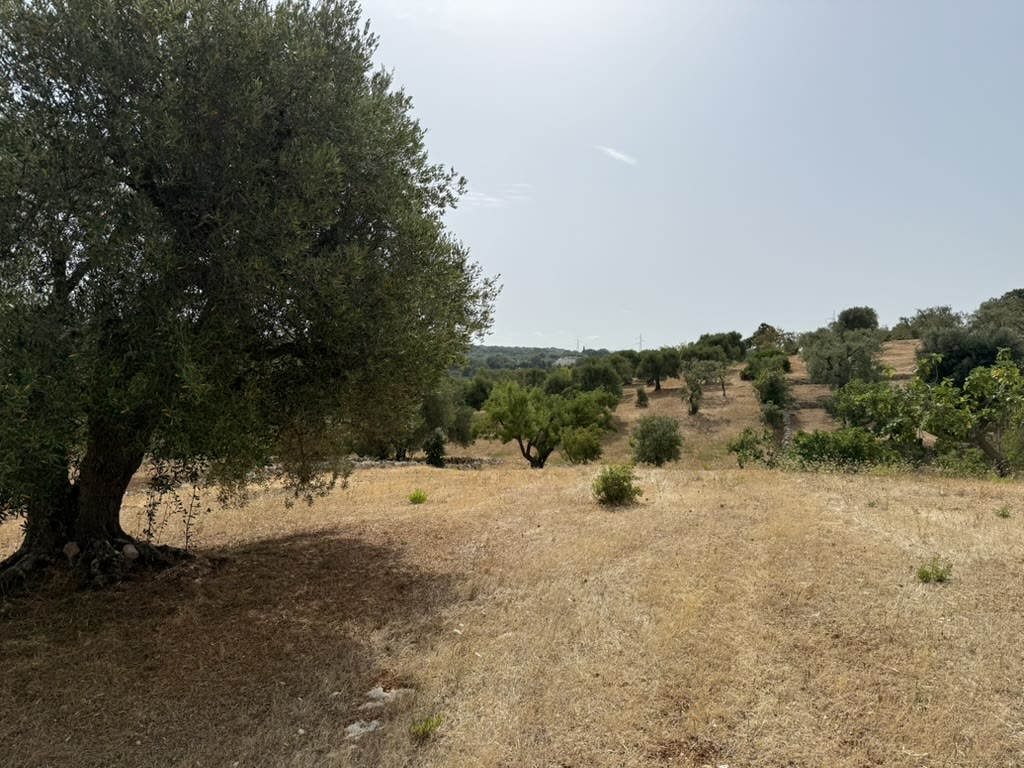
A working farm in the truest sense — ancient groves, daily labour, a vintage Fiat tractor, and stone walls that hold both weight and memory. Daniel Zumofen tends it with the attention he brings to a twelve-hour neurosurgery: nothing overlooked, nothing rushed.
Every season brings its harvest. Every stone finds its place. Here the work is not merely practical — it is a conversation between hand and land that no amount of medical training could have prepared him for.
 Il Trattore · The Heart of the Farm
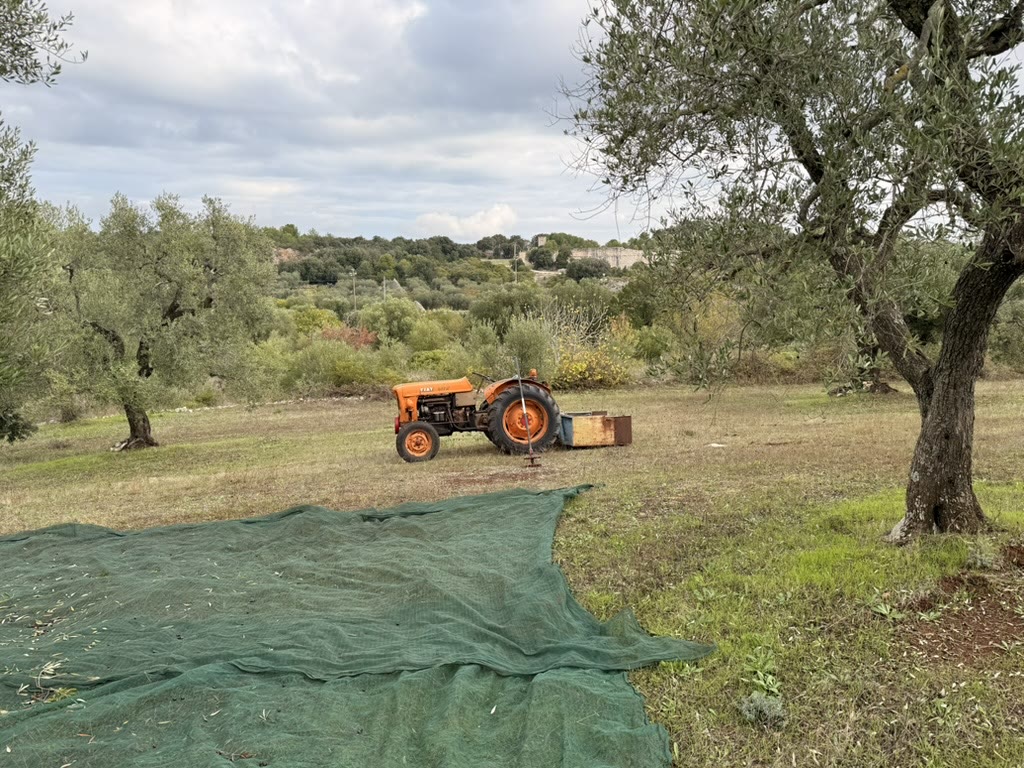
The orange Fiat 411R is more than equipment. It has worked these fields for decades, its colour weathered by sun and dust — post-war Italian engineering built on a simple philosophy: make something that lasts.
Every morning its engine echoes across the terraces, along dirt roads that have known generations of tractors. The machine works at the pace of the land, not against it.
The tractor moves the work forward. But the work is what gives the tractor meaning.
Grateful Land — the earth that remembers those who tend it with respect
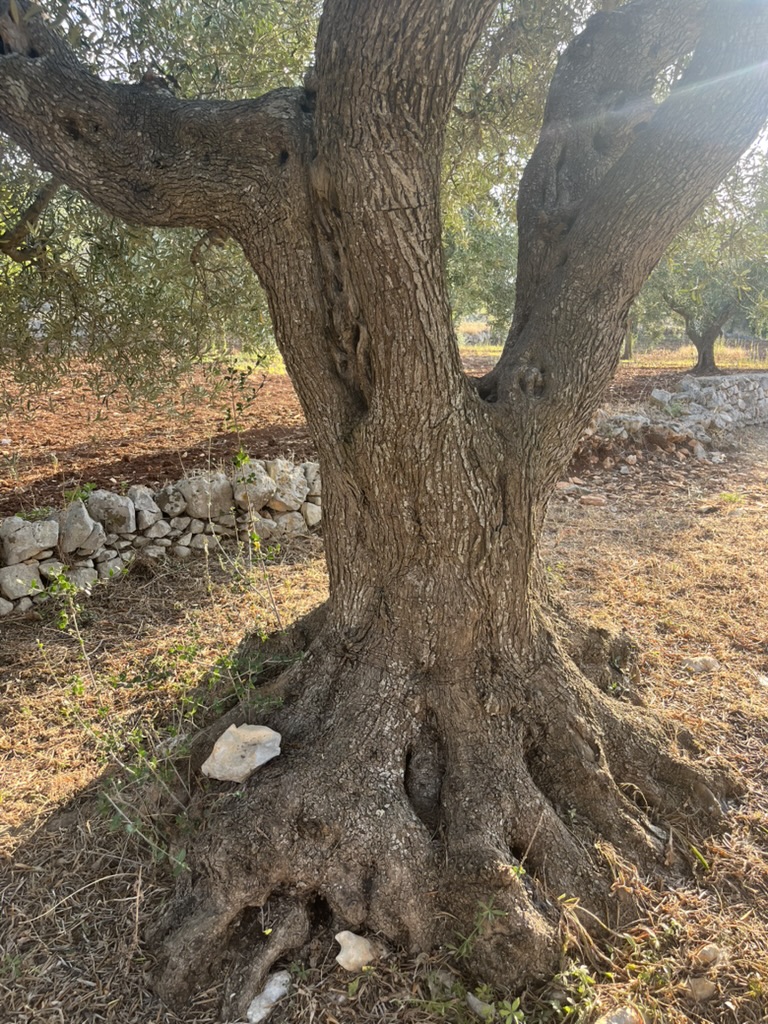
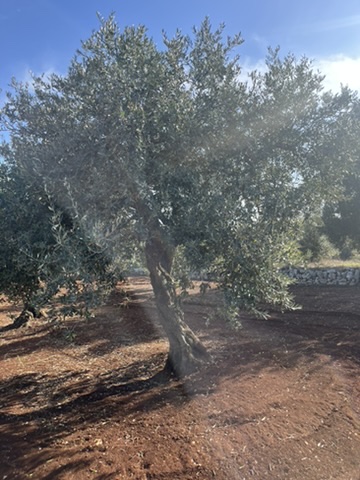
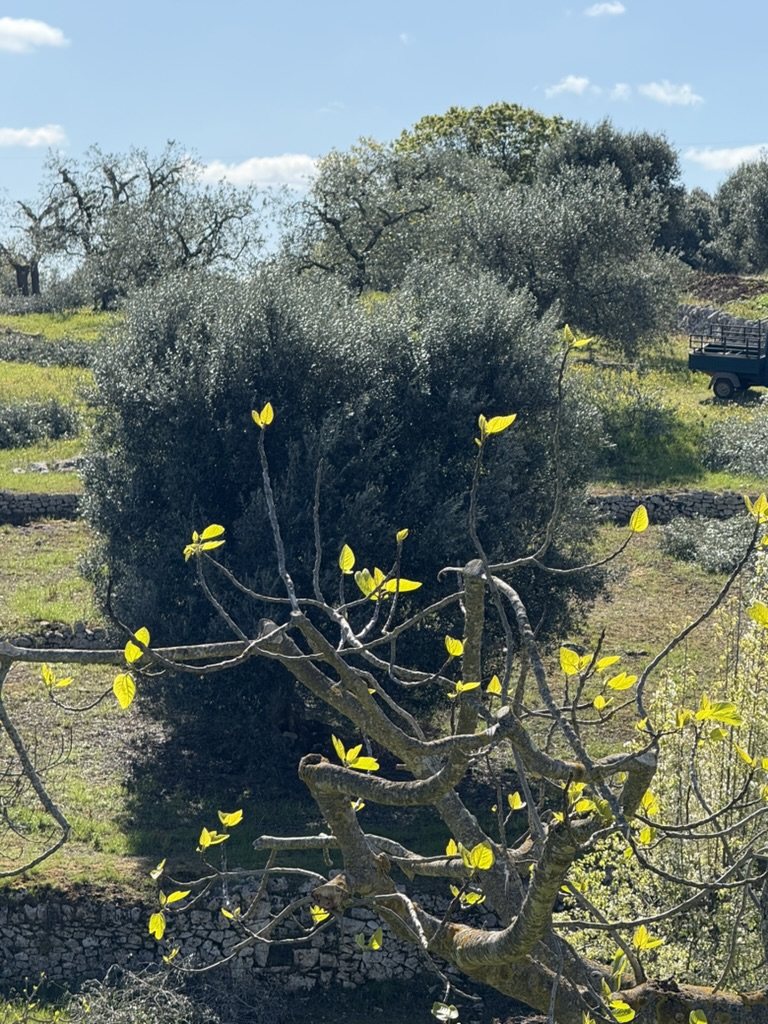
Fifteen to twenty acres across three ecological zones, each with its own character and microclimate, many of its olives over 200 years old. Not a monoculture but a tapestry — olives, almonds, figs, wildflowers, stone walls, and the creatures that depend on them.
The rhythms of the farm align with the Mediterranean calendar—winter rest, spring growth, summer ripening, autumn harvest.
 Muri a Secco · Dry-Stone Heritage
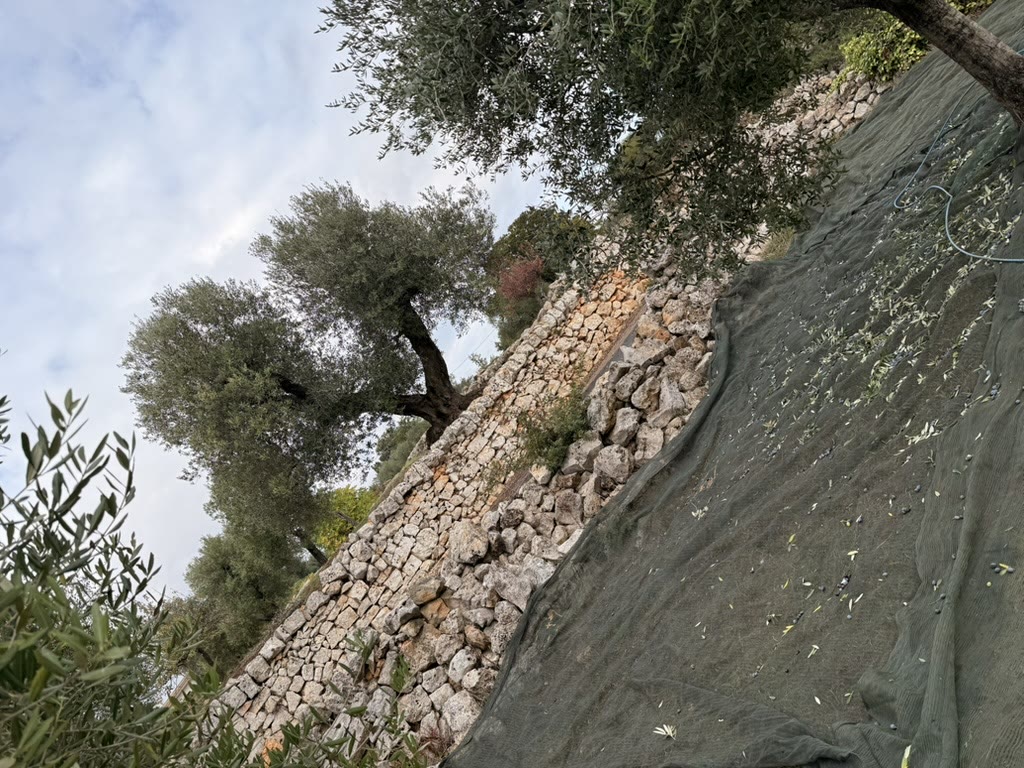
Kilometres of dry-stone wall — muri a secco — run through the farm, built centuries ago without mortar. They divide land, terrace it for water, and make the microclimates where olive roots shelter and bees find refuge.
They are working structures, not monuments. Every few years a section needs rebuilding — a craft that dies if it is not practised. We do it by hand, stone by stone.
To restore a stone wall is to converse with the past. The stones teach you how they were meant to fit.
East-facing terraces with ~100 centuries-old olives rooted in karstic limestone. Stone walls give shelter and thermal mass; the tractor works the steep paths. This is our anchor — the first land we acquired, and the oldest part of the farm.
The heart of production. ~50 mature olives grow among almond and fig trees on fertile slopes fed by natural springs. This zone yields the farm's finest oil and becomes the hub of activity at harvest.
Open grasslands beside the existing estates, with younger olive stands and room to grow — strategic for biodiversity corridors, bee habitat, and a contiguous landscape. Still an aspiration: the piece that would complete the estate.
 La Raccolta · The Harvest
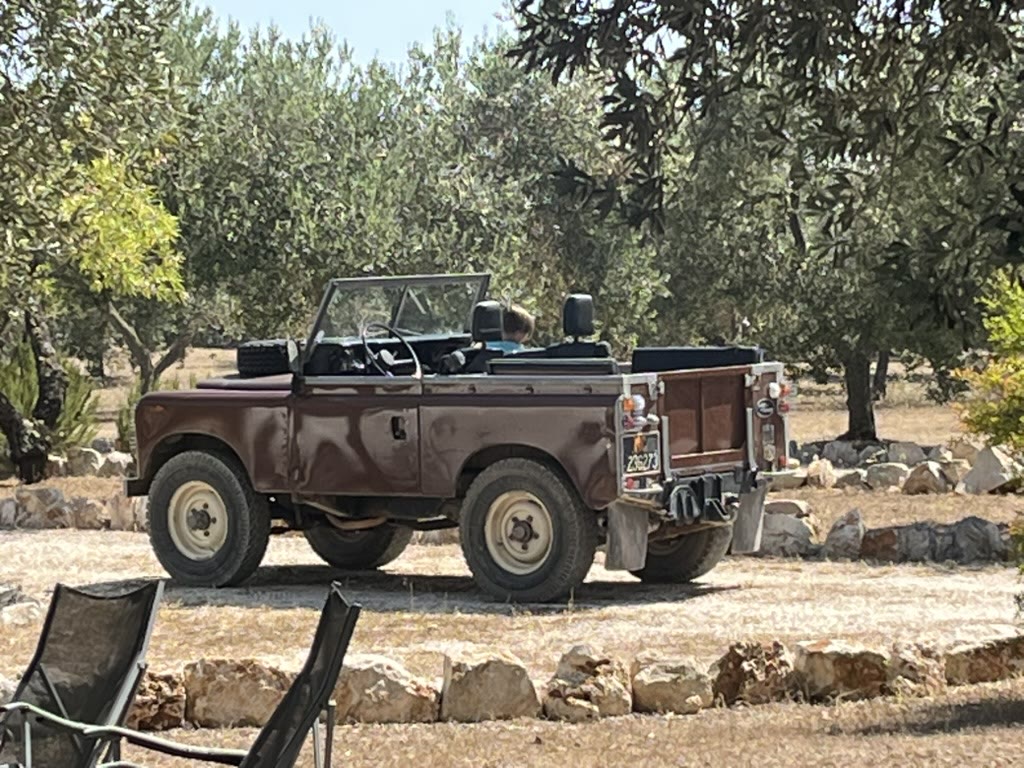
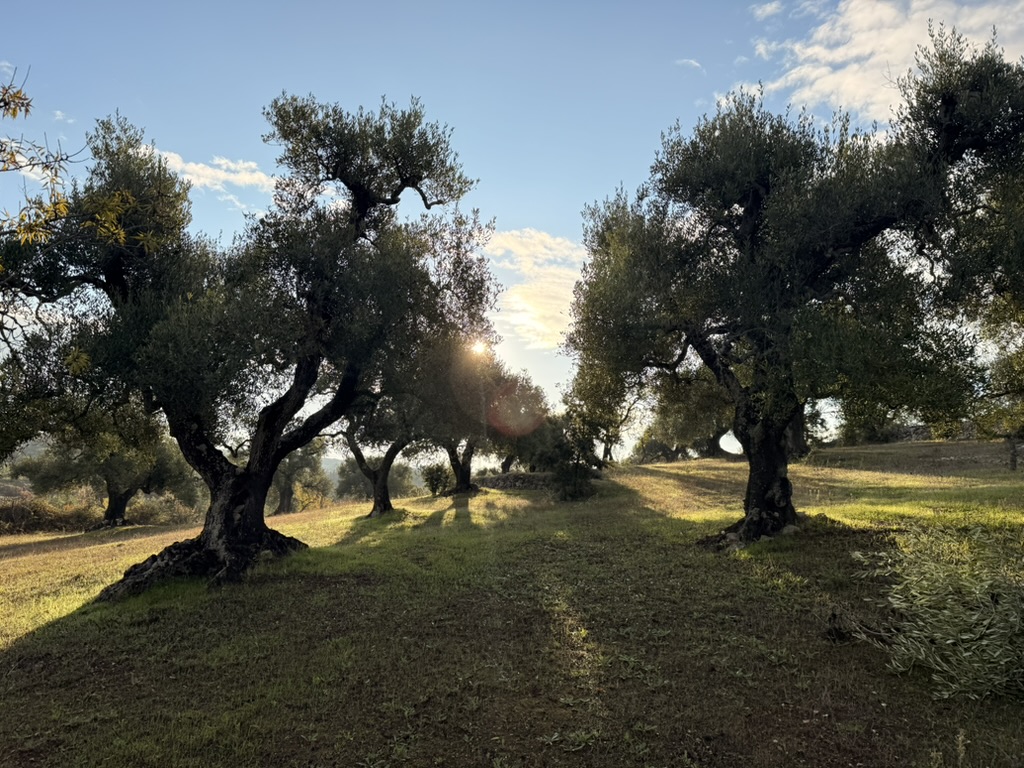
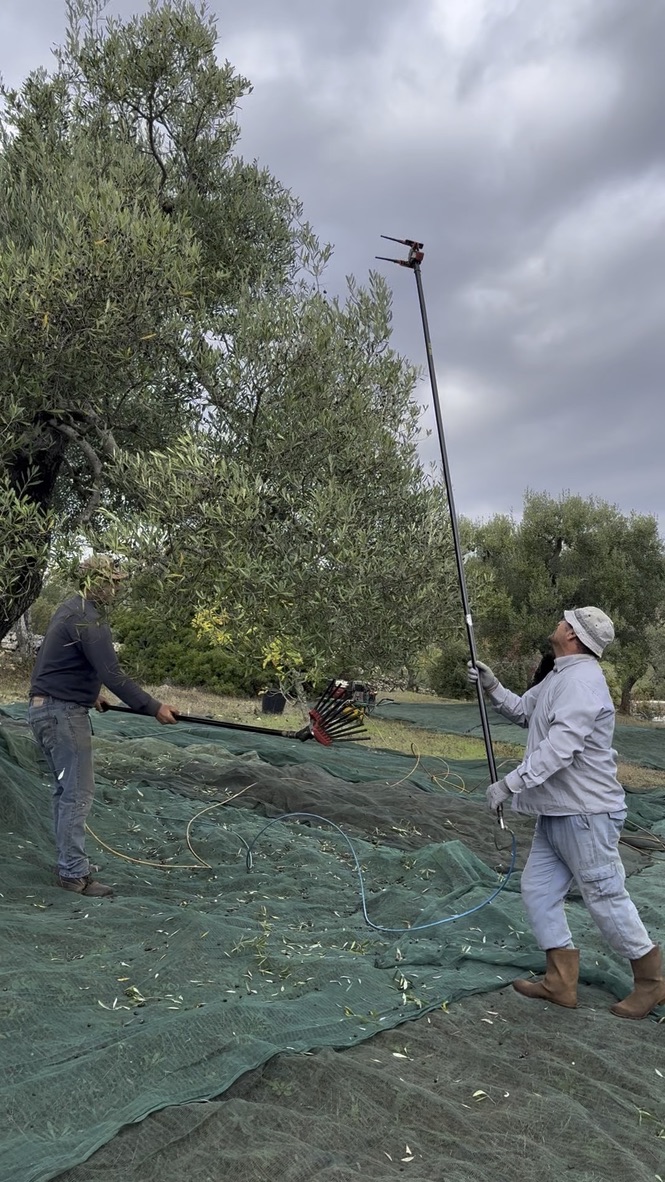
Between October and December the picking teams arrive at dawn. Nets go down beneath the trees, and practised hands strip the olives from the branches with the care of people picking flowers, not fruit.
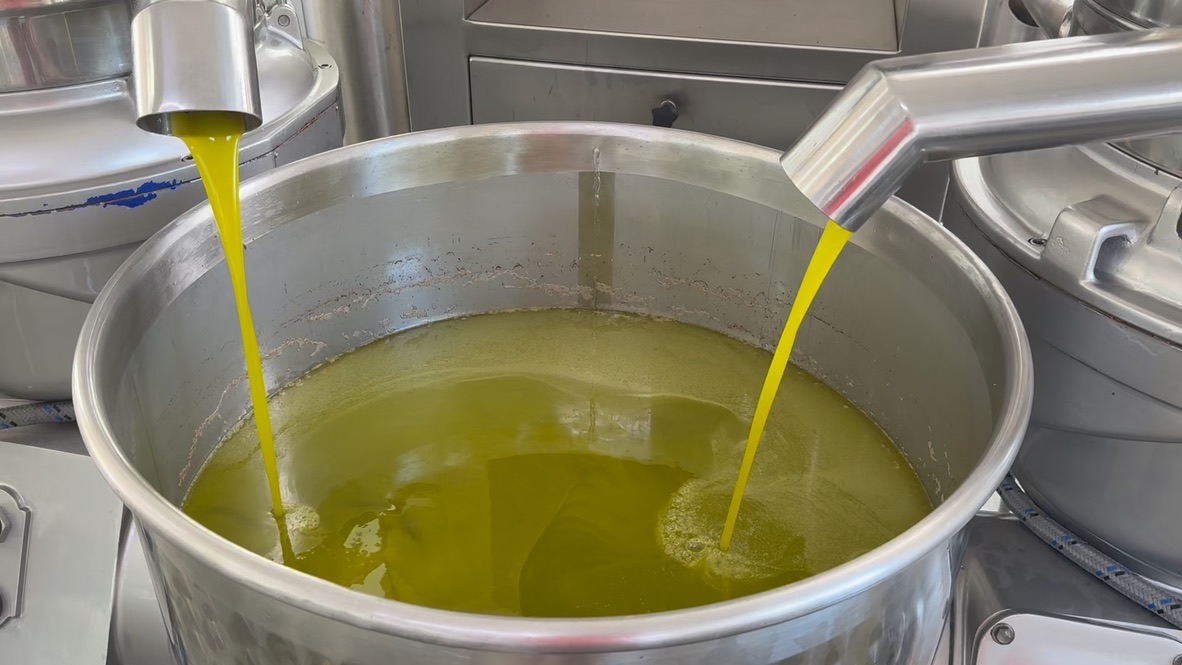
The fruit reaches the press within hours, which is what keeps the flavour in it. The work is rhythmic and largely silent — shaking branches, rustling nets, the rumble of the tractor.
The harvest is not extraction. It is gathering. It is receiving what the tree offers to those who tend it with care.
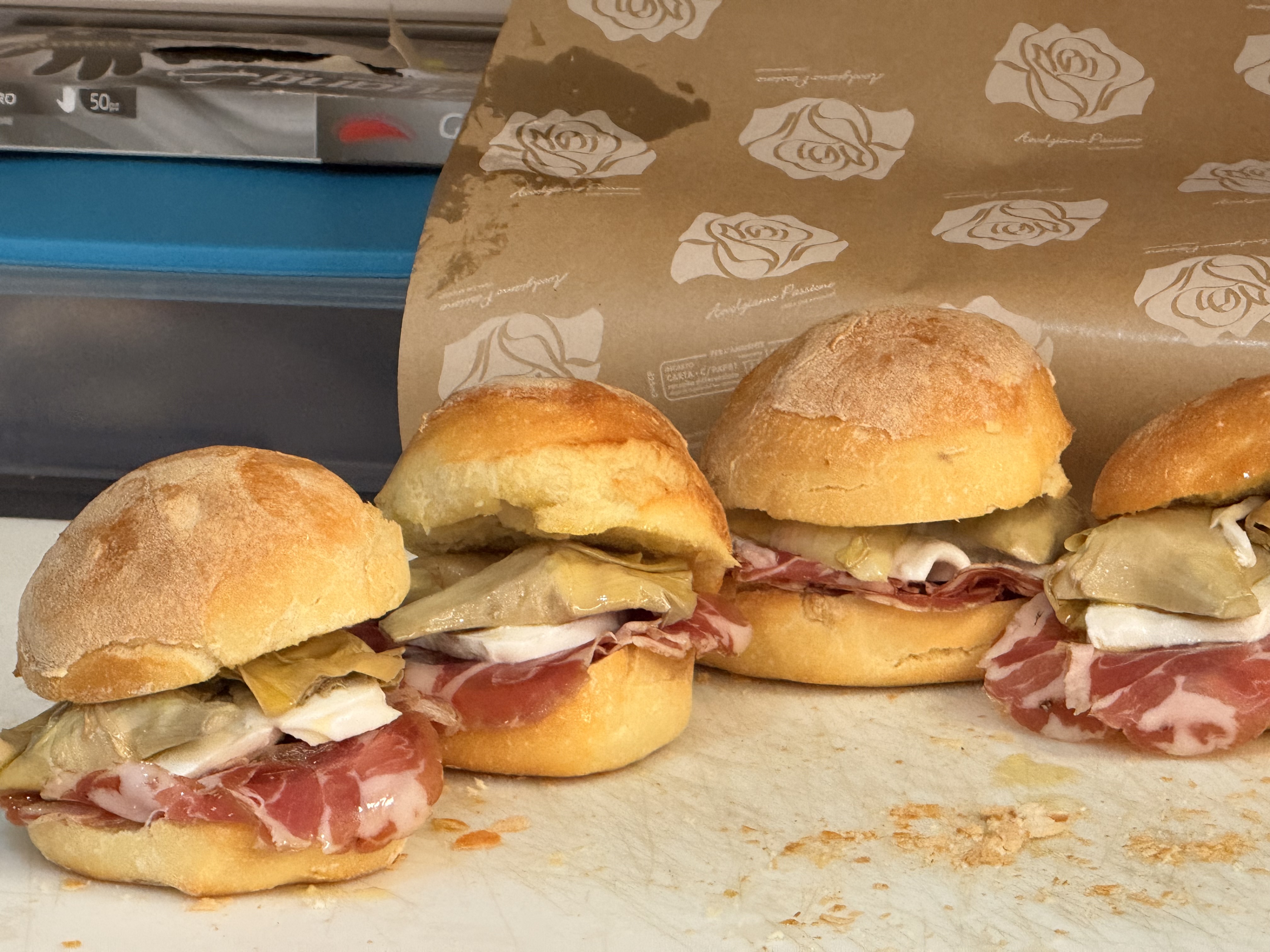 Il Pranzo · The Farm Table
Eating is not separate from working. Lunch is taken in the shade — bread, cheese, cured meats from local producers, and always oil from last year's harvest.
Panini, tomatoes in season, almonds from the grove, water from the spring; in the evening, pasta with wild herbs gathered at the edge of the terraces. Food that tastes of a place because it came from it.
To eat from the farm is to taste the labor, the soil, the sun, and the hands that gathered it. This is food with memory.
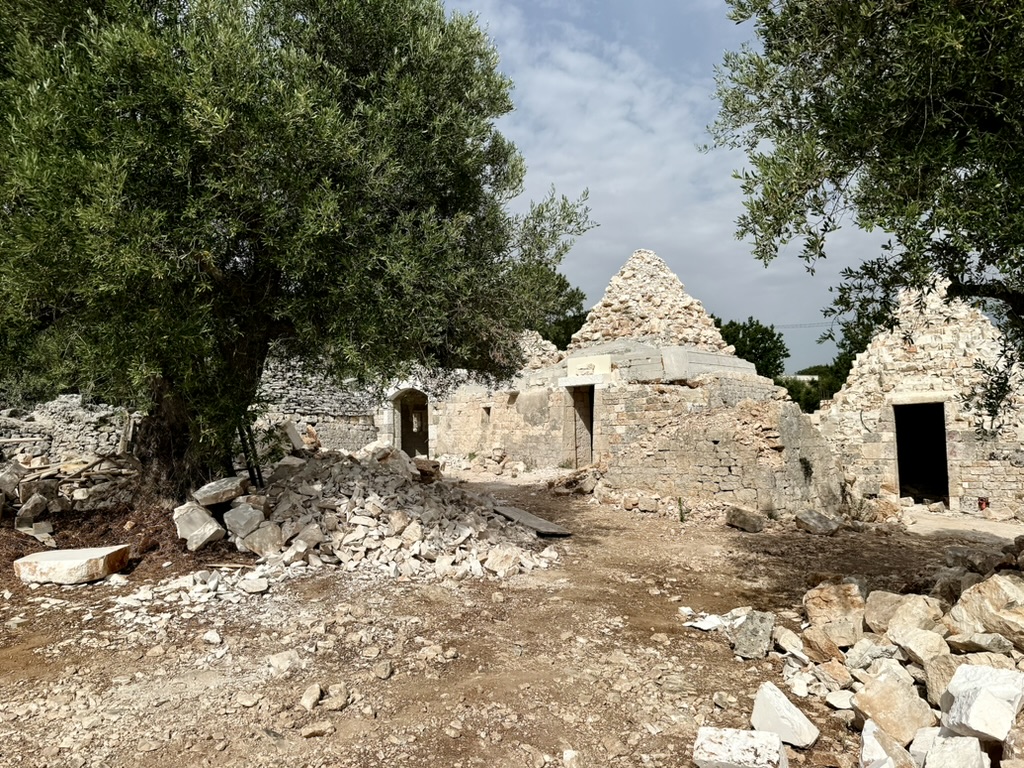
On the hilltop stands a trullo — the traditional Puglian dwelling with its cone-shaped stone roof, built centuries ago without mortar or nails from precisely cut limestone.
We are restoring it stone by stone, with the methods its original builders used. The work is slow: each stone must be understood before it can be placed.
When it is finished it will be a guesthouse and a gathering place — and a daily reminder that real intelligence comes from long observation of one place.
The stones were placed by people who knew this land intimately. To restore them is to continue their conversation.
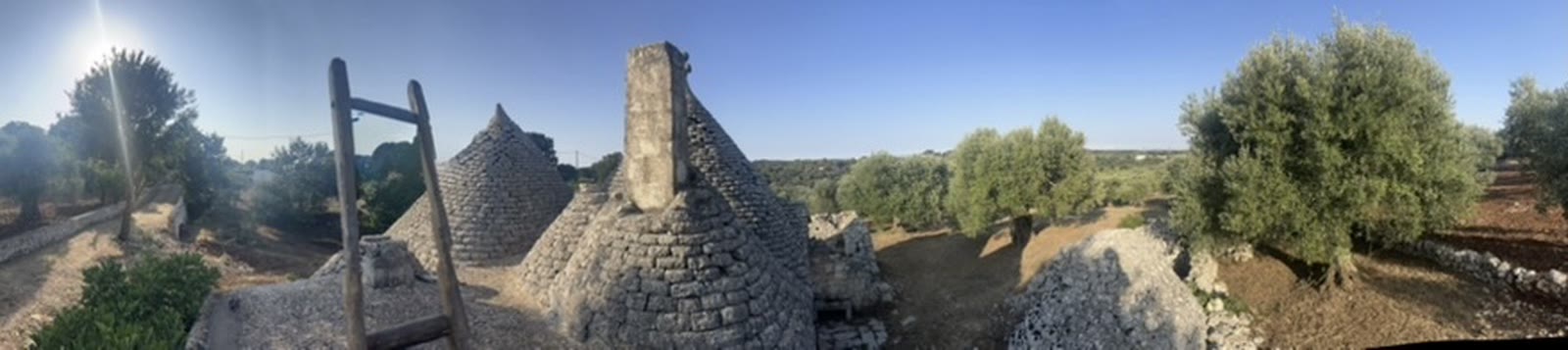 La Veduta · The View From Above
From the roof of the trullo both estates unfold — the hilltop terraces descending toward the valley, stone walls drawing their geometry across the land, and beyond them the limestone hills of the Valle d'Itria.
It is a working landscape, not a manicured one, and it changes with the season: winter reveals the structure of the land, spring the wildflowers, autumn the energy of the harvest.
The landscape is a text, and the farm is a careful reading of that text, learning its lessons, honoring its constraints, and participating in its ongoing story.
Come and walk the terraces, touch the stones, see the tractor at work, taste the oil that was made here.
Come at harvest, at spring planting, or in the heat of summer — each season shows a different side of the place. And come to stand beneath the elder trees, whose oil is pressed from fruit that ripened in the same sun now warming your face.
 Home
Home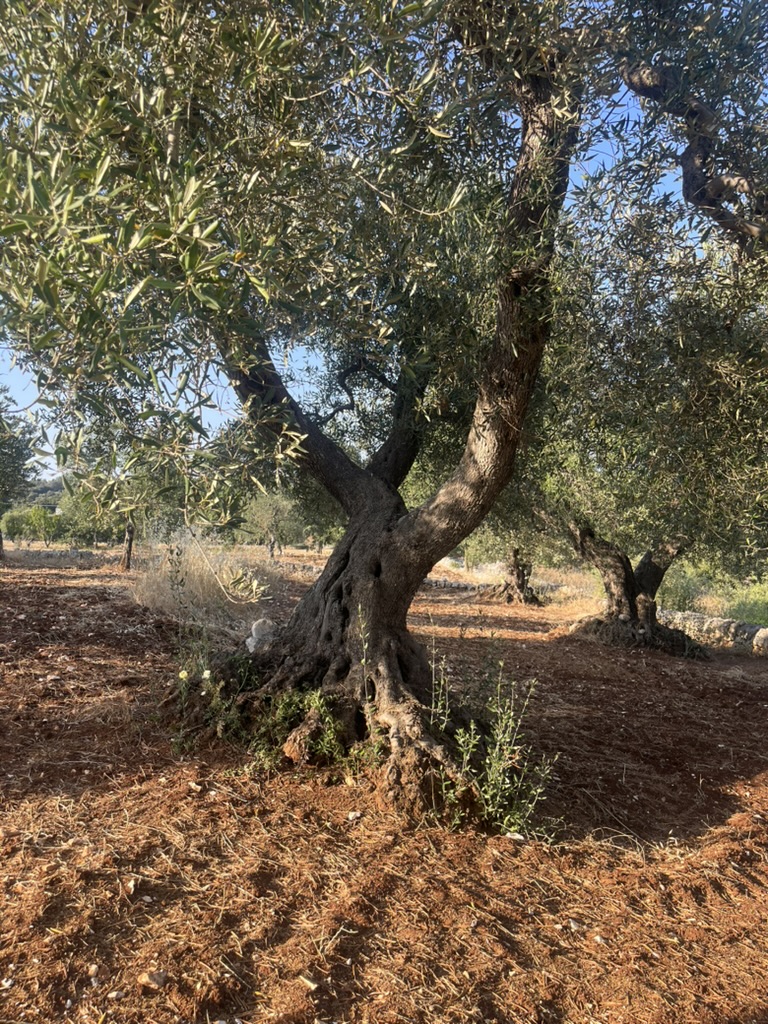 The Land
 The Renovations
 Overview
 The Trees
 The Olives
 The Harvest
 The Pressing
 2025 Vintage
 Bee Sanctuary
 Biodiversity
 The Steward