The Valle d'Itria is not a landscape of accident. Every terrace was built by hand. Every stone was chosen. Every olive tree was planted by someone who would never taste its harvest. This is the land of the longue durée — where human intention and geological time hold each other in patience. For Daniel Zumofen, a neurosurgeon who works daily within the brain's architecture of millimeters, this landscape offered something he did not know he needed: a scale of time that dwarfs a human life, and a patience that makes even a twelve-hour surgery feel rushed.
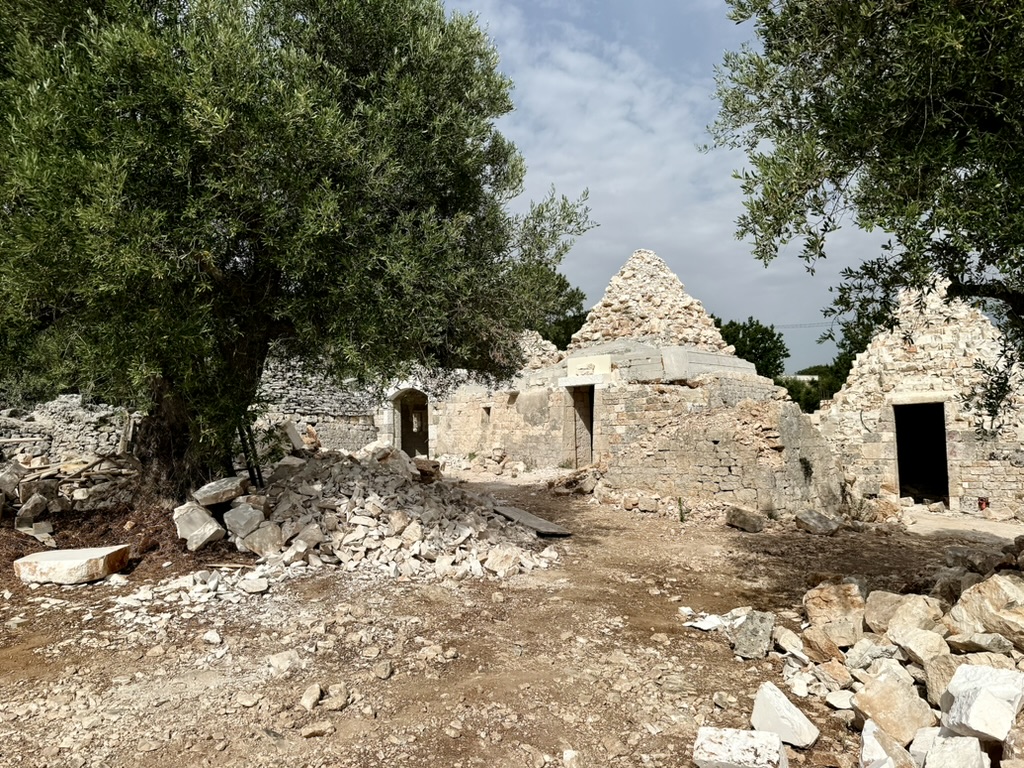
Our two estates sit at the intersection of natural zones: the hilltop UNESCO olive groves with their centuries-old trees, and the valley's karstic limestone soils fed by underground springs. A trullo — currently being renovated — stands sentinel against the sky. Together these properties form a world in the making — terraced, layered, alive.
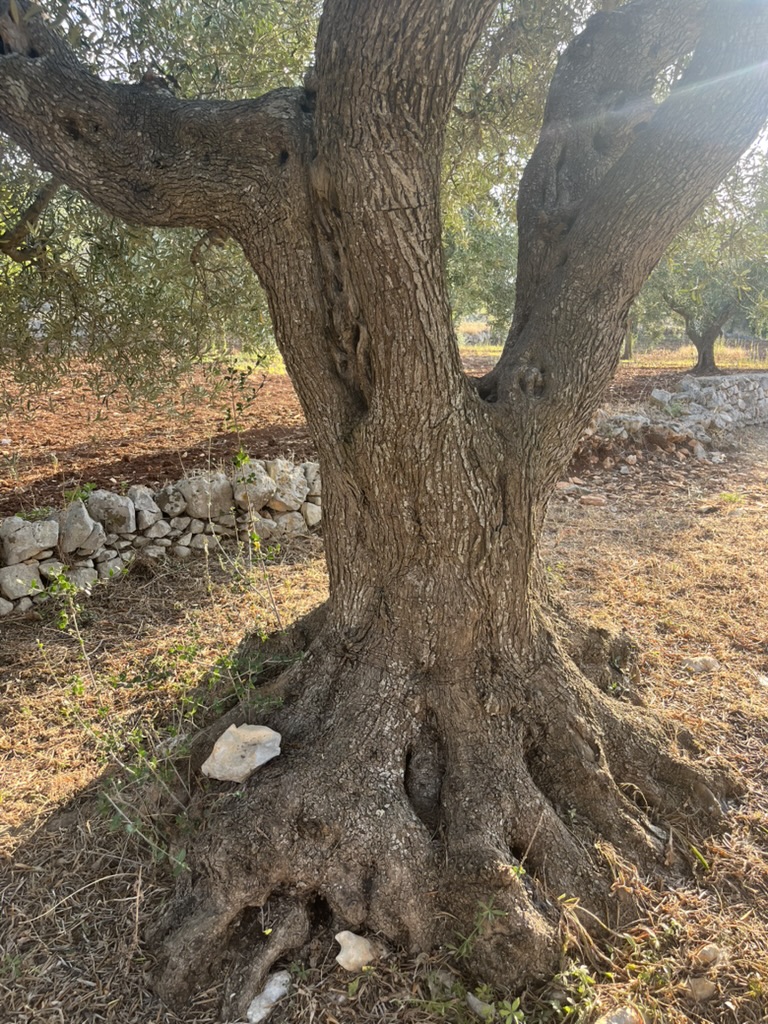 Ancient Growth · Five Centuries Old
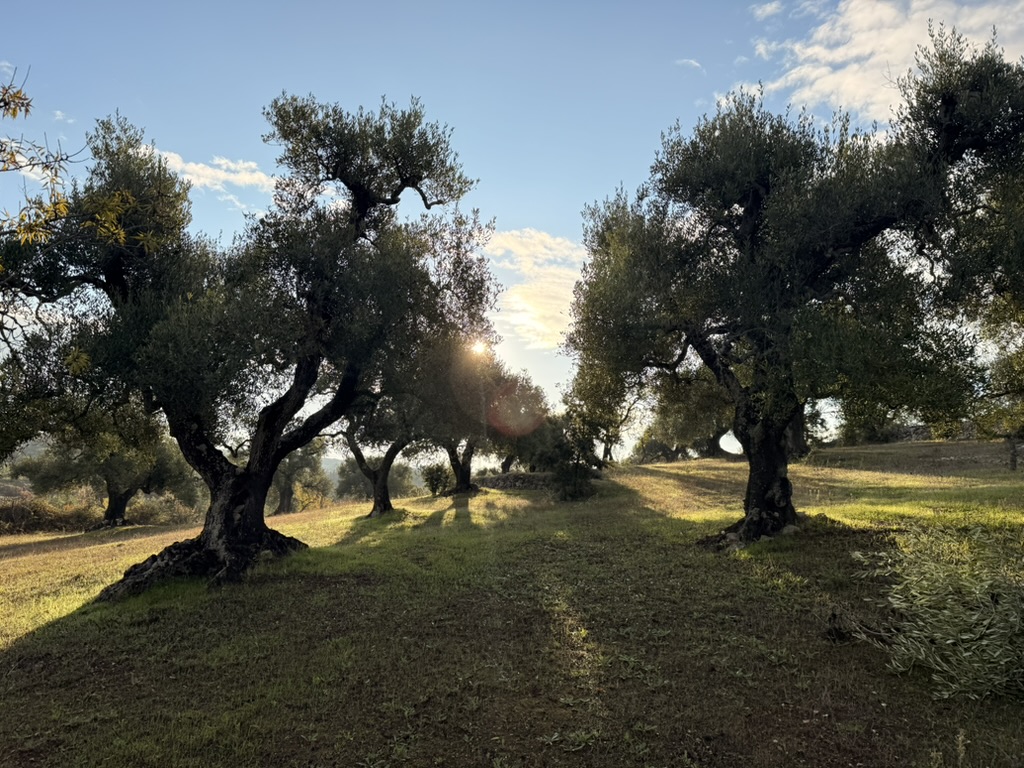
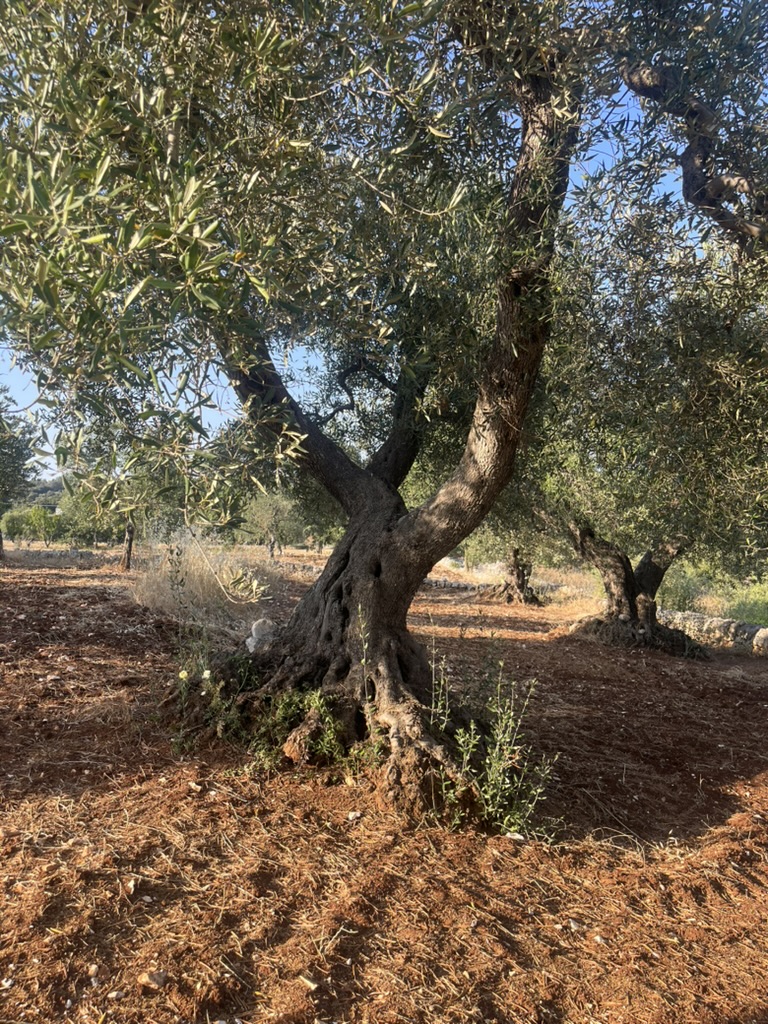
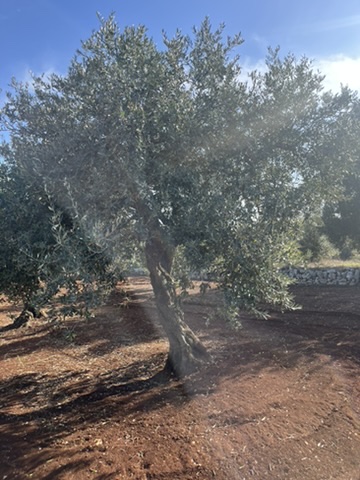
More than 200 of the olives are centuries old, some planted before the Renaissance — trunks as thick as a person, roots deeper than any foundation. Each is a calendar: drought years thin as paper in the rings, good years thick.
They have outlasted wars, famines and empires, and fed families the whole way through. Nothing here is wasted; there is only the slow work of time.
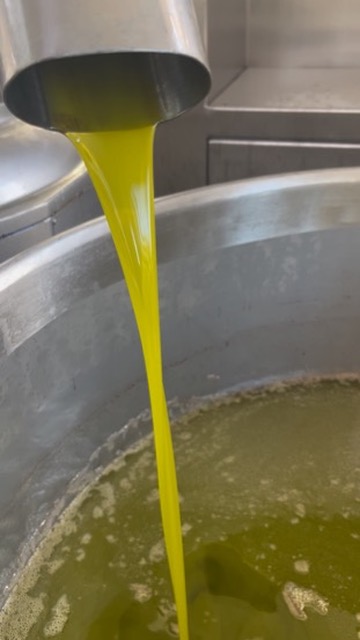
Each ancient tree produces 40–80 kg of olives annually, depending on the season. Their oil is dense, complex, deeply green. They ask little: sunlight, infrequent water, the shelter of the land itself.
The full measure of what we steward
Three distinct ecological zones, each with its own character and its own part to play — ancient trees, dry-stone walls and native biodiversity working as one system.
UNESCO recognition for traditional dry-stone wall construction and preservation
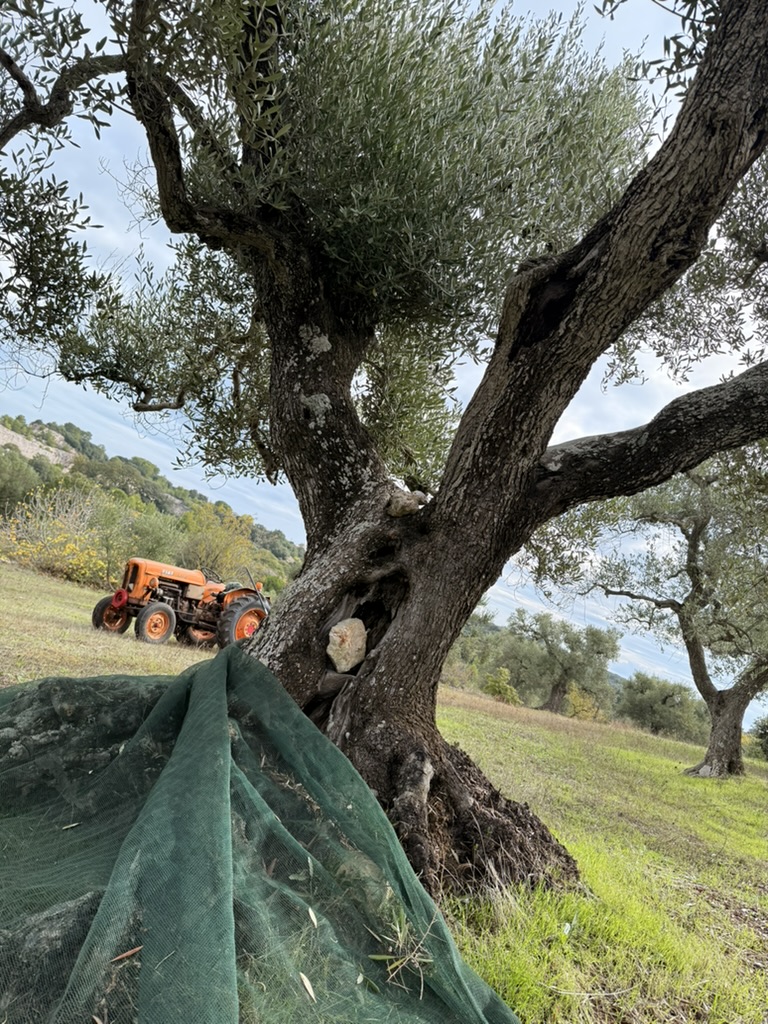 Living Heritage · Dry-Stone Craftsmanship
Over 500 meters of dry-stone walls terrace our property. Built without mortar, held together only by gravity and the wisdom of hands. These walls are UNESCO-recognized heritage elements—they are the bones of the land itself.
Every stone chosen for weight and shape: the largest at the base, smaller ones fitted above, so the wall breathes with the seasons and still holds. Walls like these have outlasted earthquakes and centuries of weather.
They are not merely functional—they regulate temperature, hold moisture, provide habitat for reptiles and insects, and create the very shelves upon which ancient olives stand. They are the Mediterranean landscape's oldest engineering achievement.
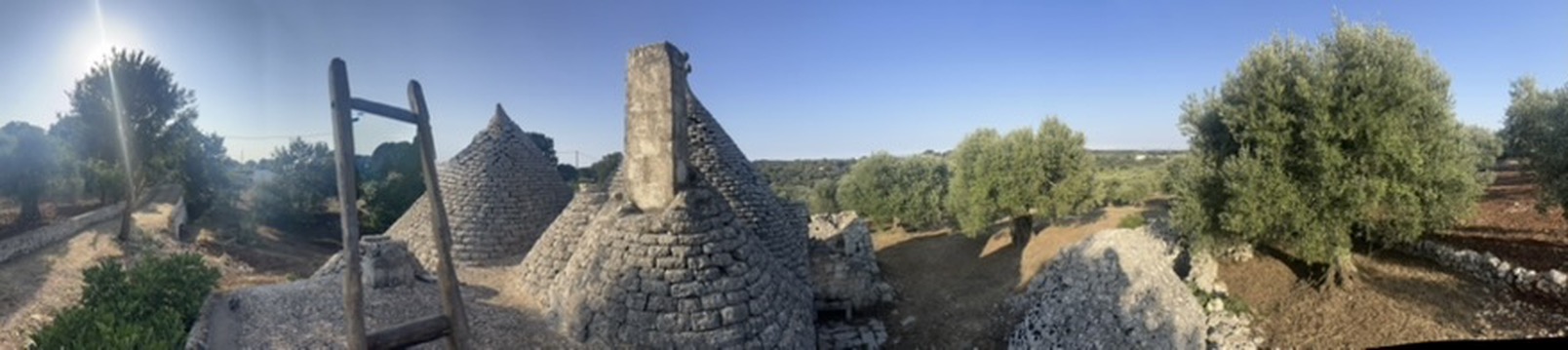 Sacred Geometry · Trullo Stones
A trullo stands on the hilltop — the cone-roofed stone form found only in the Valle d'Itria, built without mortar so that roof and wall are one. It is thought to date from the 16th century, perhaps earlier. Shelter, storage, spiritual marker, or all three.
It is being restored stone by stone in the original limestone and by the original methods. When it is finished it becomes a guesthouse — a place with a particular kind of silence in it.
From its roof you see the whole estate: olives sloping to the valley, red earth between the rows, dry-stone walls holding it all in place.
East-facing terraces, roughly 100 centuries-old olives on UNESCO dry-stone walls. High sun for spring growth and summer ripening. The trullo under renovation stands here, and the landscape heritage is protected in perpetuity.
Fertile limestone fed by underground aquifers. Around 50 century-old olives alongside almonds, figs and pomegranates, with natural springs keeping the ground moist. Red earth against white stone, and the deepest biodiversity on the estate.
Adjacent grassland with younger olives. High ground, panoramic, sheltered from the afternoon wind. Still an aspiration — the piece that would complete the contiguous landscape and extend the biodiversity corridors across the whole estate.
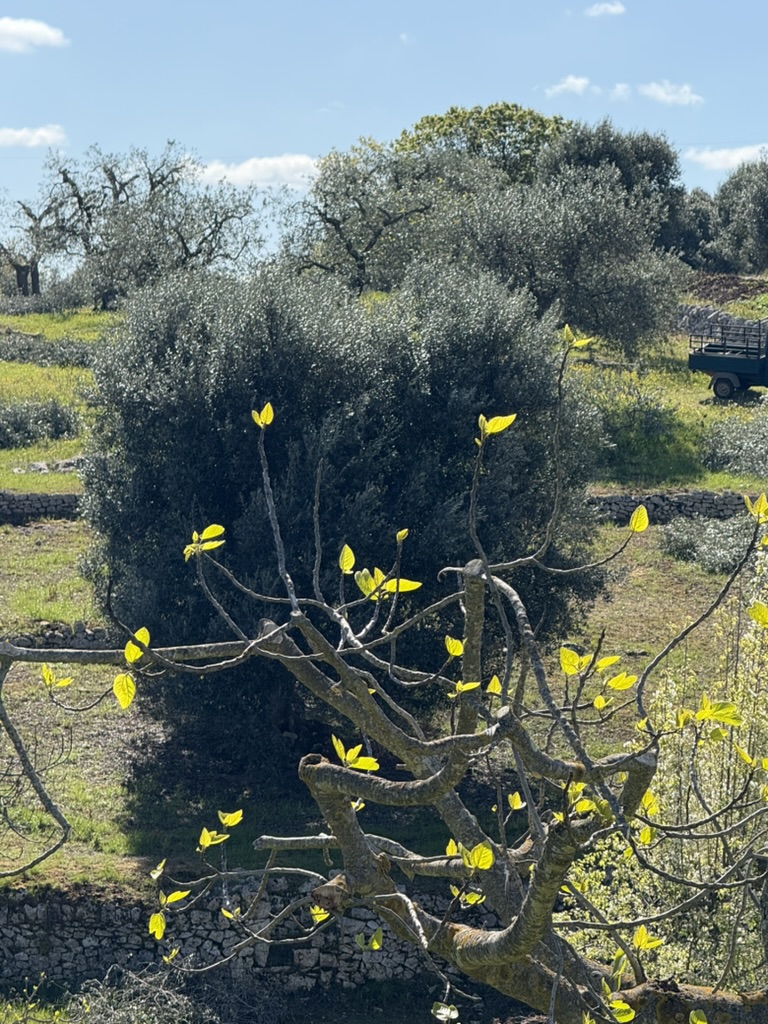 Cycles · The Seasons Speak
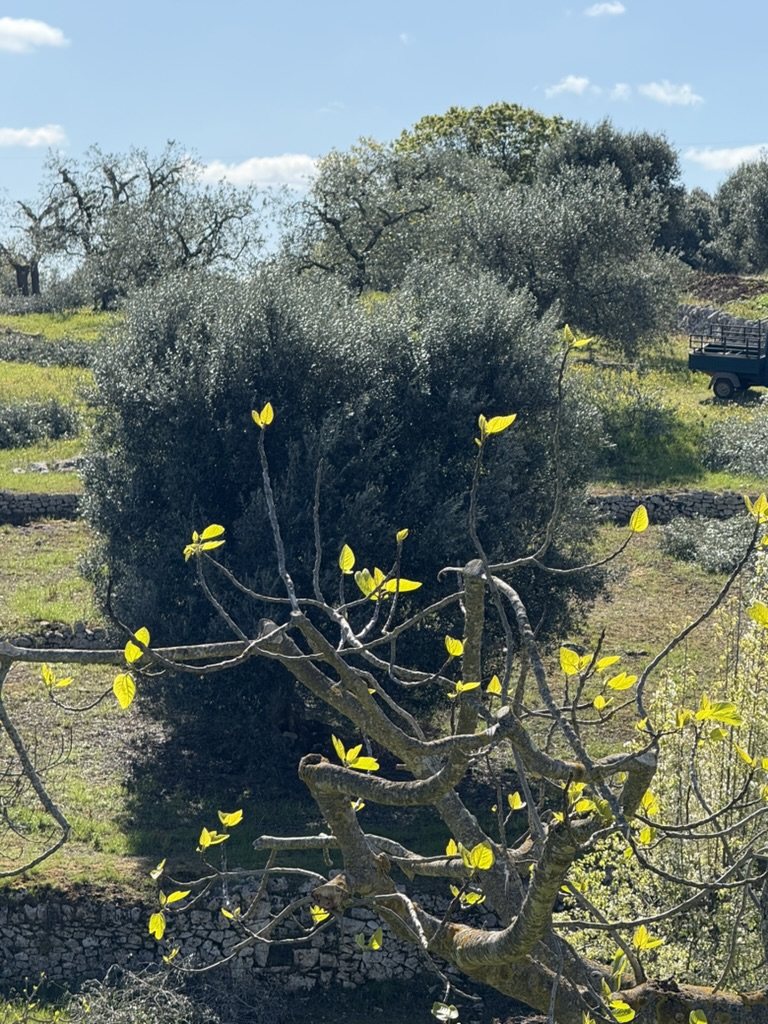
Spring: Fig leaves unfold. Almonds flower. Wildflowers fill the terraces. Olives bud. The land awakens with a thousand small greens.
Summer: Intense heat. The red earth bakes. Olives swell on the trees. Figs ripen to purple-red. Pomegranates hang heavy. The landscape intensifies—colors deepen, aromas concentrate.
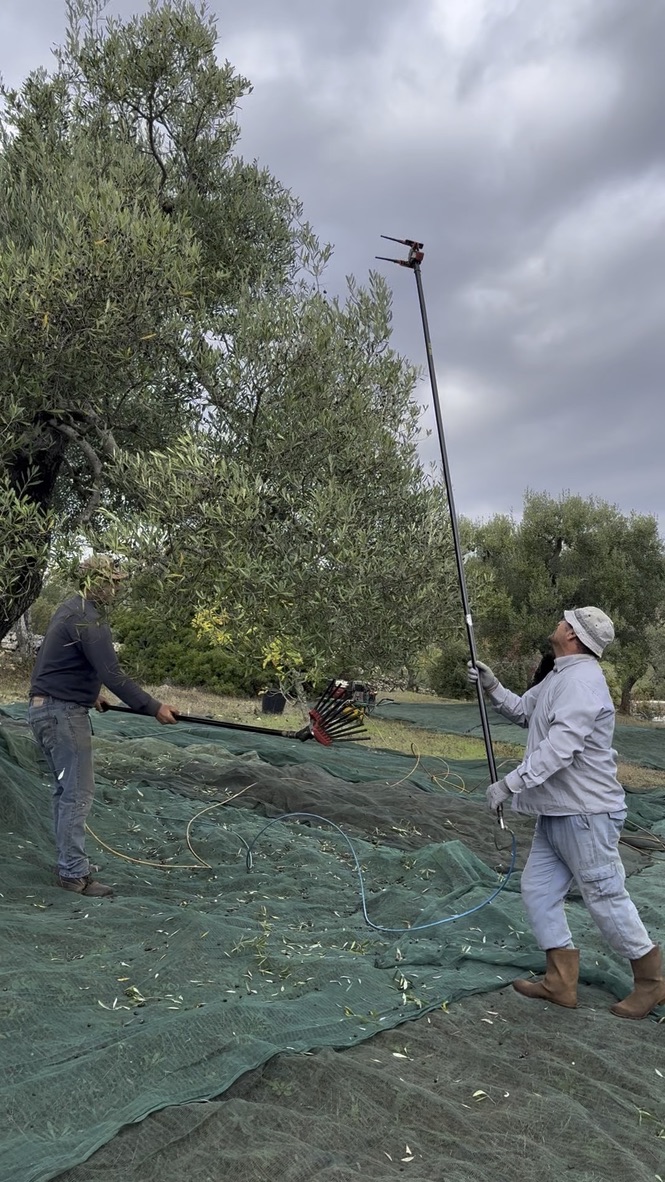
Autumn: Harvest time. Golden light through the groves. Ancient hand tools come out. Nets spread beneath the trees to catch the fruit. The year's work converges in a few compressed weeks.
Winter: Dormancy. The trees rest. The land is clean and quiet. Rain soaks the earth. Stone walls hold the memory of all the seasons that have passed. The cycle pauses before beginning again.
 Abundance · Fruit of the Land
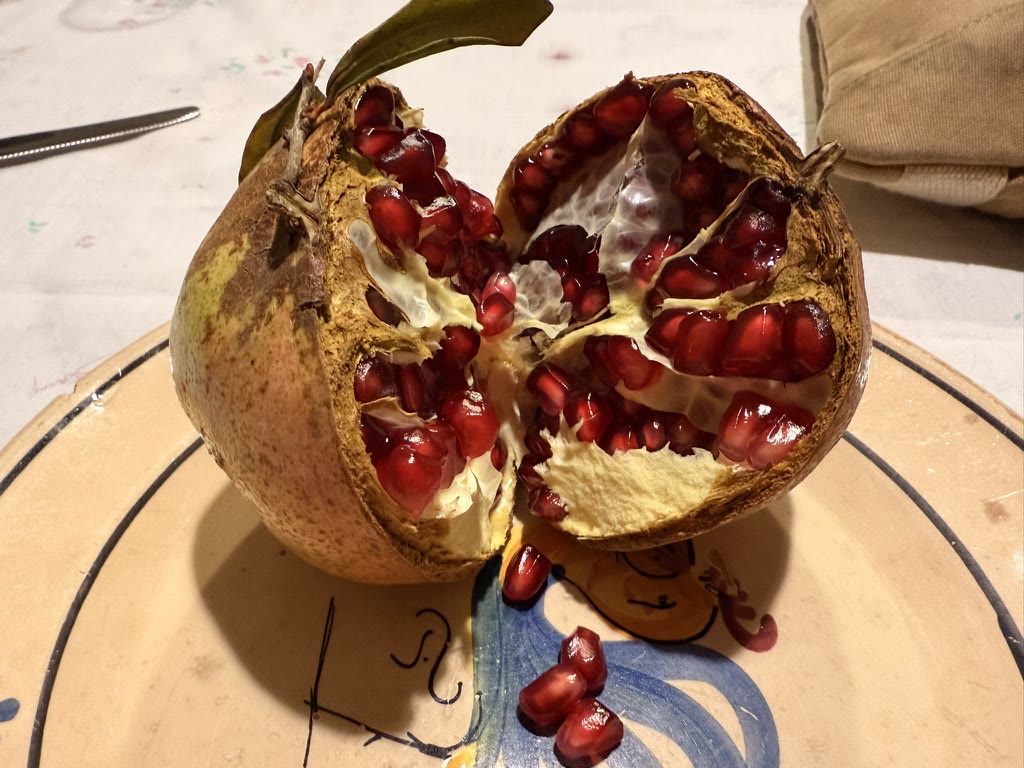
Our groves are not monoculture. Between the olive trees grow almonds (harvest: August–September), figs (July–September), pomegranates (September–October), stone fruits, and native Mediterranean herbs—thyme, oregano, rosemary, sage.
Wildflowers carpet the spaces between rows: poppies, daisies, wild lupines. Bees find nectar continuously from spring to autumn. Birds nest in the dense canopies. Lizards sun themselves on the dry-stone walls. This is biodiversity held in the landscape's original design.
We harvest what the land offers. Almonds are processed for oil or shared fresh. Figs are dried or preserved. Pomegranates are pressed for juice. What remains feeds the earth and the creatures who call it home.
Under the trees, under the walls, under the red dust that follows you home on your clothes, lies the terra rossa — limestone dissolved over millennia and stained by iron oxide.
The red earth remembers every drop of rain that has ever fallen here. It holds the memory of every season, every harvest, every generation of stewards who tended this land.
That mineral richness goes straight into the oil: an earthiness, a faint tannin structure, a sense of place that cannot be faked. Terroir is not the fruit alone but everything between earth and sky that made it.
Trees hold time.
We do not own this land; we are permitted to tend it. The trees were here first, the walls were built by hands long turned to dust.
The role is simple: preserve what is precious, improve what can be improved without disruption, and leave the land more alive than we found it.
We harvest seasonally, restore native habitat, protect the water, and let the land teach us about itself — trusting that when we listen well it gives what is actually needed.
 Home
Home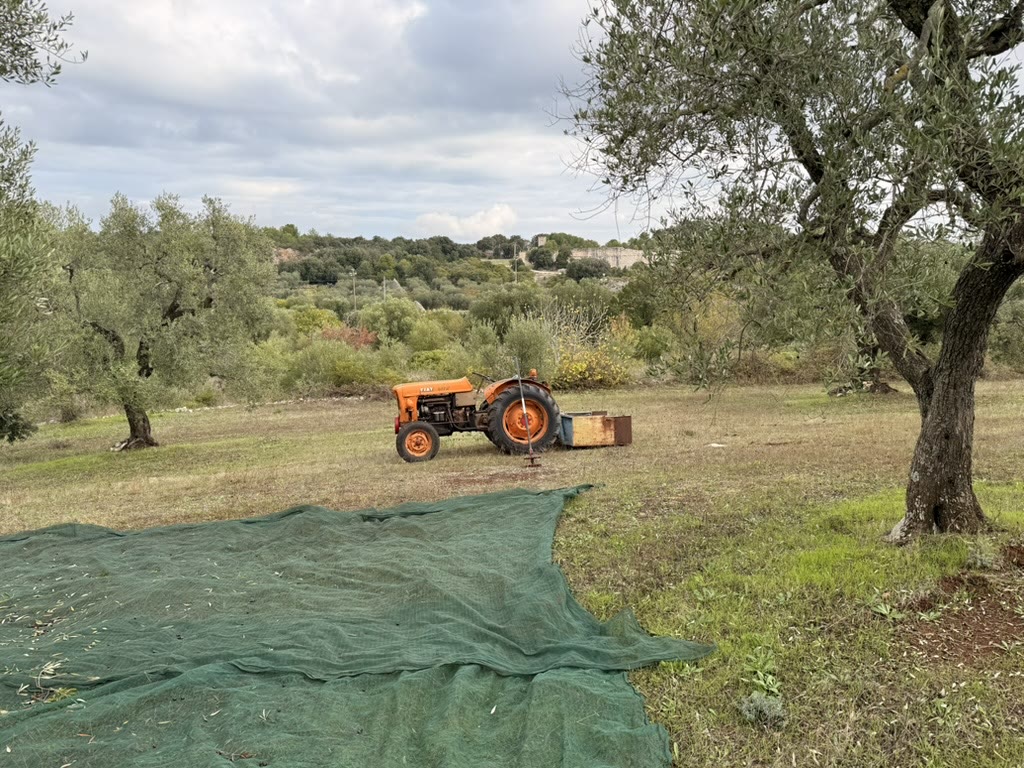 The Farm
 The Land
 The Renovations
 Overview
 The Olives
 The Harvest
 The Pressing
 2025 Vintage
 Bee Sanctuary
 The Steward