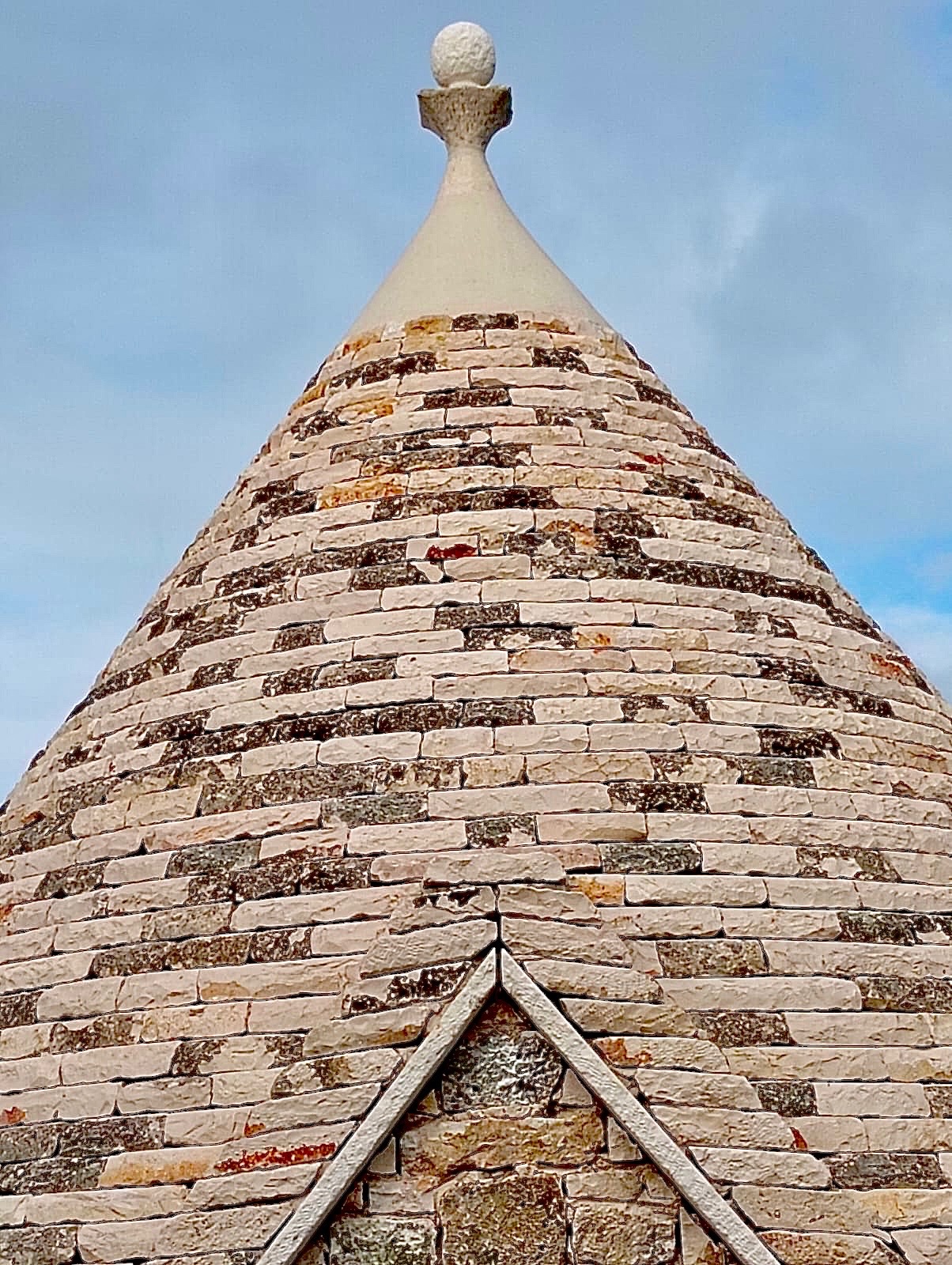
On the hilltop stands a trullo — a traditional dwelling of the Valle d'Itria, built centuries ago by methods that have not changed since. A single circular room under a cone of limestone blocks, stacked without mortar or nails, held together by nothing but precise fitting and the weight of the stone. Daniel, who works daily at the scale of microsurgery, recognised the craft at once: every element must find its exact place, or the whole thing fails.
It is not a museum piece but a lesson in architecture rooted in place. Circular plan for warmth, thick walls for insulation, conical roof to shed water, no mortar so the building can settle — every choice made by people who knew this climate and built with what the ground gave them.
 Il Restauro · The Restoration
The Puglian method is muri a secco: limestone fitted so precisely that no mortar is needed, each block supporting the next through geometry and weight alone. It takes an uncommon eye — knowing how a stone wants to sit, how the grain runs, how a small change of angle redistributes load across the whole.
The restoration follows the same method. No modern materials, no shortcuts — each stone studied and adjusted until it sits right. Not a performance of the past, but a living craft carried forward by the hands doing the work.
The stones teach you their language if you listen carefully enough. They show you how they want to be placed.
The renovation is an act of listening, not imposing
Weakened sections are dismantled stone by stone, each one numbered and its position recorded. Replacements come from local quarries, matched to the original in colour, grain and strength. Then the rebuilding begins.
It cannot be mechanised or hurried; one wall section can take weeks. The craftspeople who can do it are becoming rare, so the restoration preserves the craft as well as the building. The work becomes the teaching.
The craft of dry-stone building survives through practice. The trullo renovation is a living archive of that knowledge.
 Il Pinnacolo · The Pinnacle
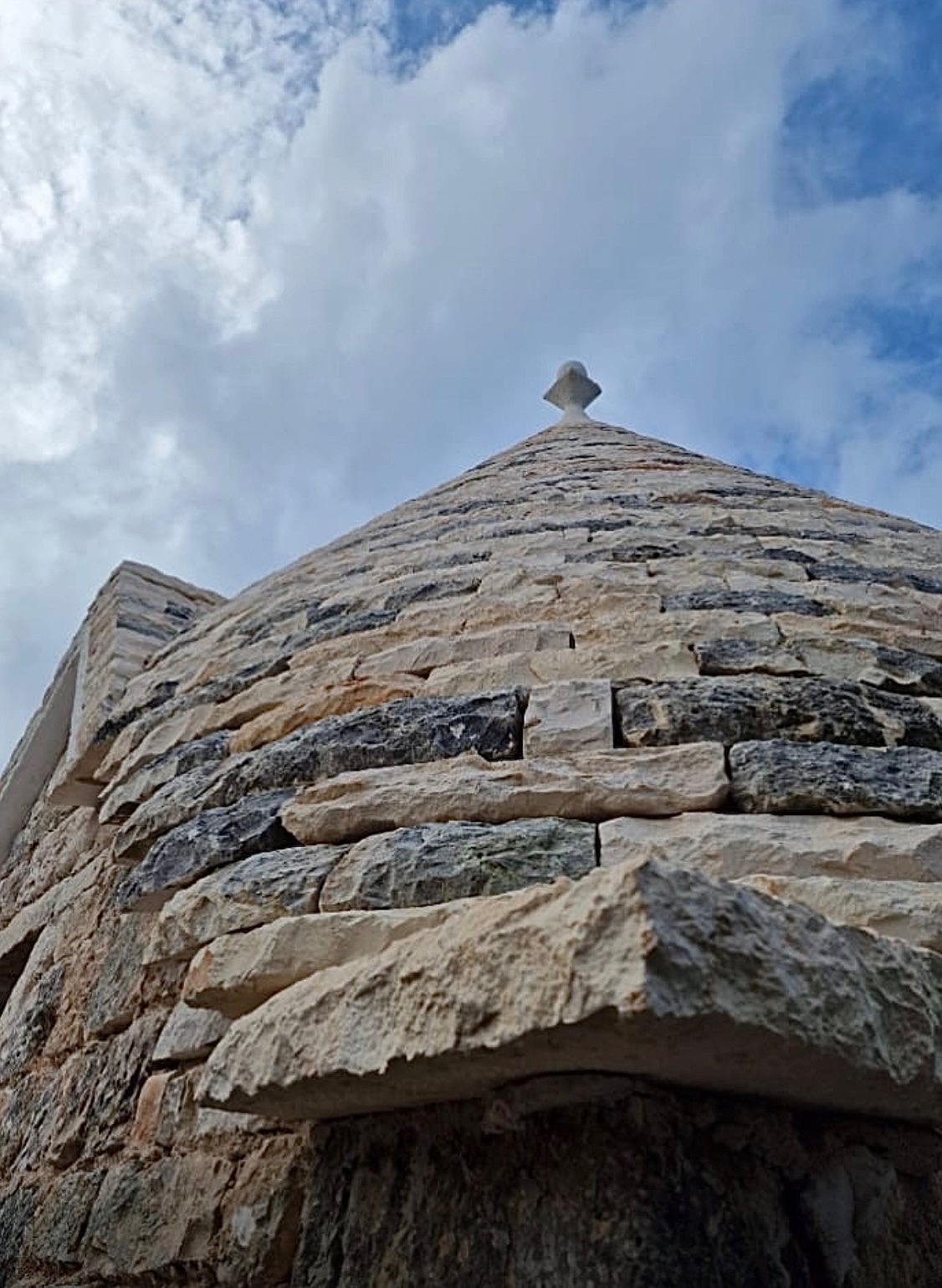
The circular plan spreads heat in winter and ventilates in summer. Walls of 60 centimetres or more hold thermal mass and steady the temperature inside. The conical roof sheds Mediterranean storms and lets hot air rise away in August.
The entrance is small, the windows few and carefully placed, the interior kept cool and dark. None of it is decoration — it is climatic intelligence, the accumulated observation of families who lived here.
By respecting these original design principles during restoration, the trullo remains suited to its place. No modern climate control is needed. The building does the work through its form.
When it is finished the trullo becomes a guesthouse — somewhere to sleep inside walls that have stood for centuries. The interior will be minimal: comfort enough to rest, and no more, so the space itself can speak.
Guests will feel the steadiness of the thick walls and the quality of light through small windows, and understand by living in it why this form was chosen and kept.
The trullo teaches that true design is not decoration. It is the precise response to place, climate, and the constraints of available materials. It is intelligence made visible in stone.
Kilometres of dry-stone wall divide the land, terrace the hillsides and shelter soil, water and wildlife. They are not monuments but working structures, needing regular maintenance and, now and then, real restoration.
It is the same craft as the trullo — stones chosen by hand, weight understood, placement exact. Keeping the walls sound keeps the knowledge alive too.
To restore a stone wall is to converse with the past. The stones teach you how they were meant to fit.
 Verso il Cielo · Skyward
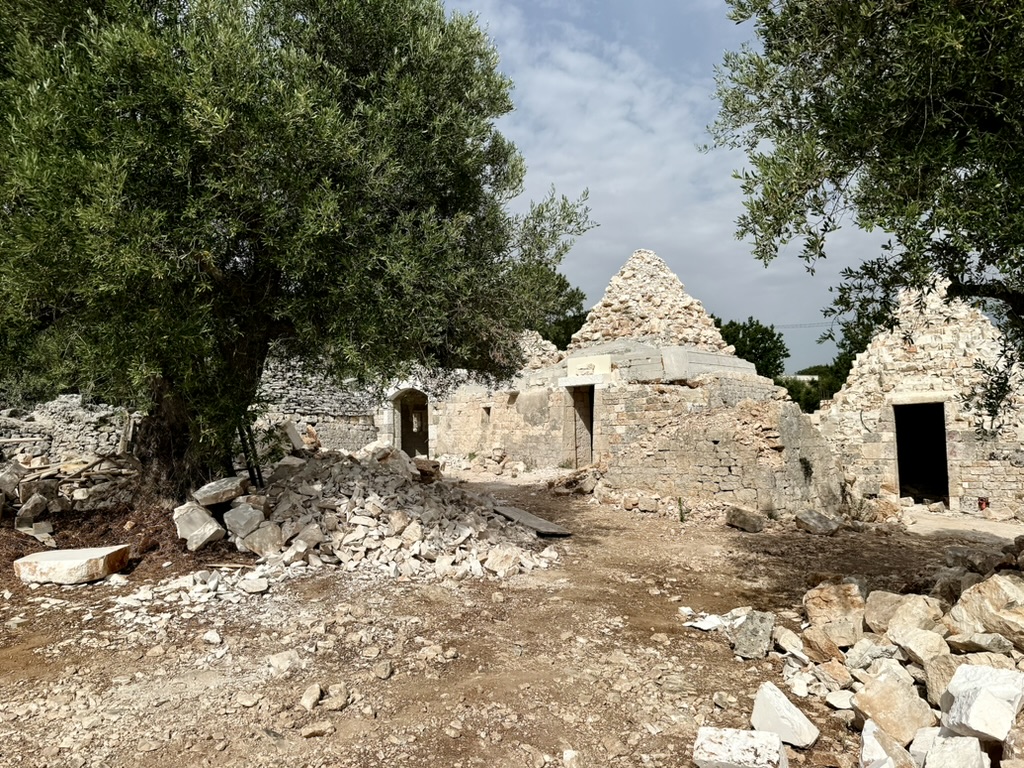
At the start the trullo was far gone: roof failed in places, interior open to the weather, the whole slowly returning to ruin. Rather than let it go or rebuild it quickly in modern materials, we took the slow way.
That means training craftspeople in skills nearly lost, and accepting years rather than months. It also means the building will endure, and that its completion will be a real continuation rather than an imitation of one.
The trullo's journey from ruin to restoration to habitation is the farm's journey: learning from the past, acting carefully in the present, and creating the conditions for a living future.
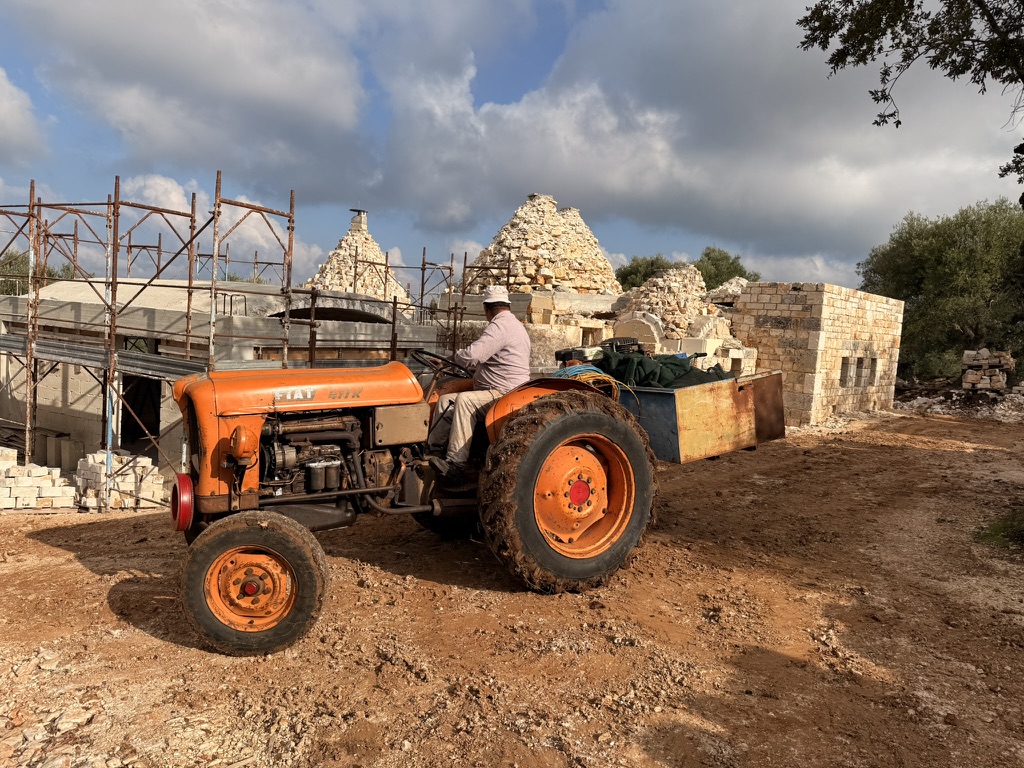
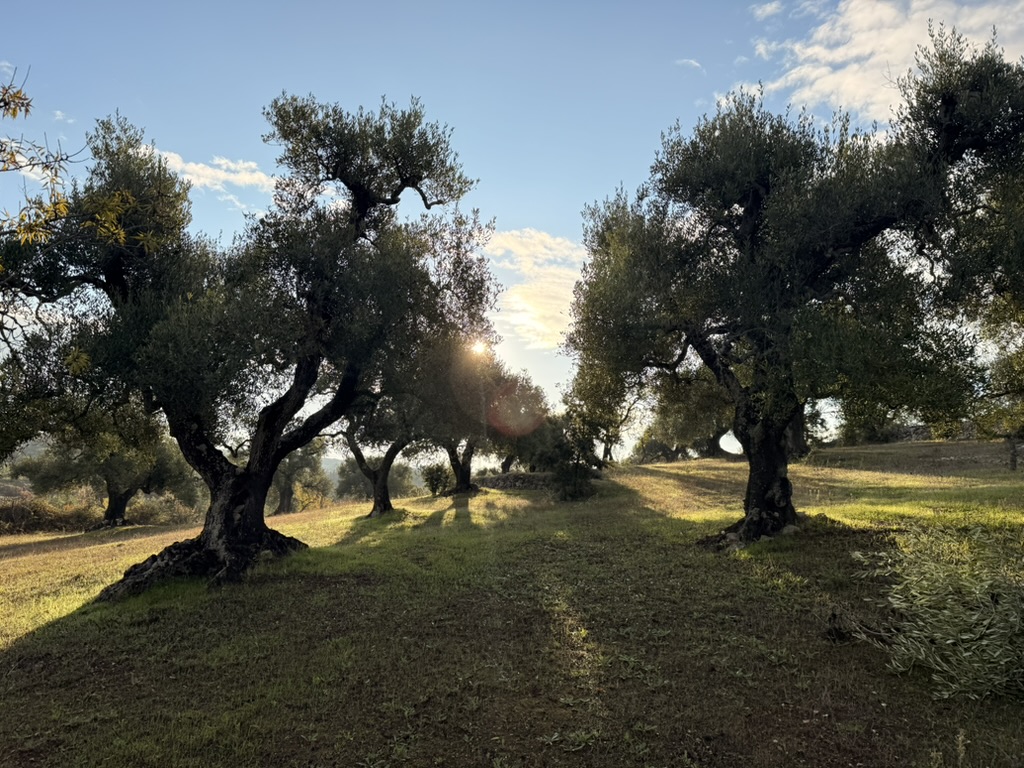
Photographs from the estate — the trullo and its outbuildings mid-restoration, the gathered stone, and the ancient grove that holds it all. A record of slow, careful work in the Valle d'Itria.
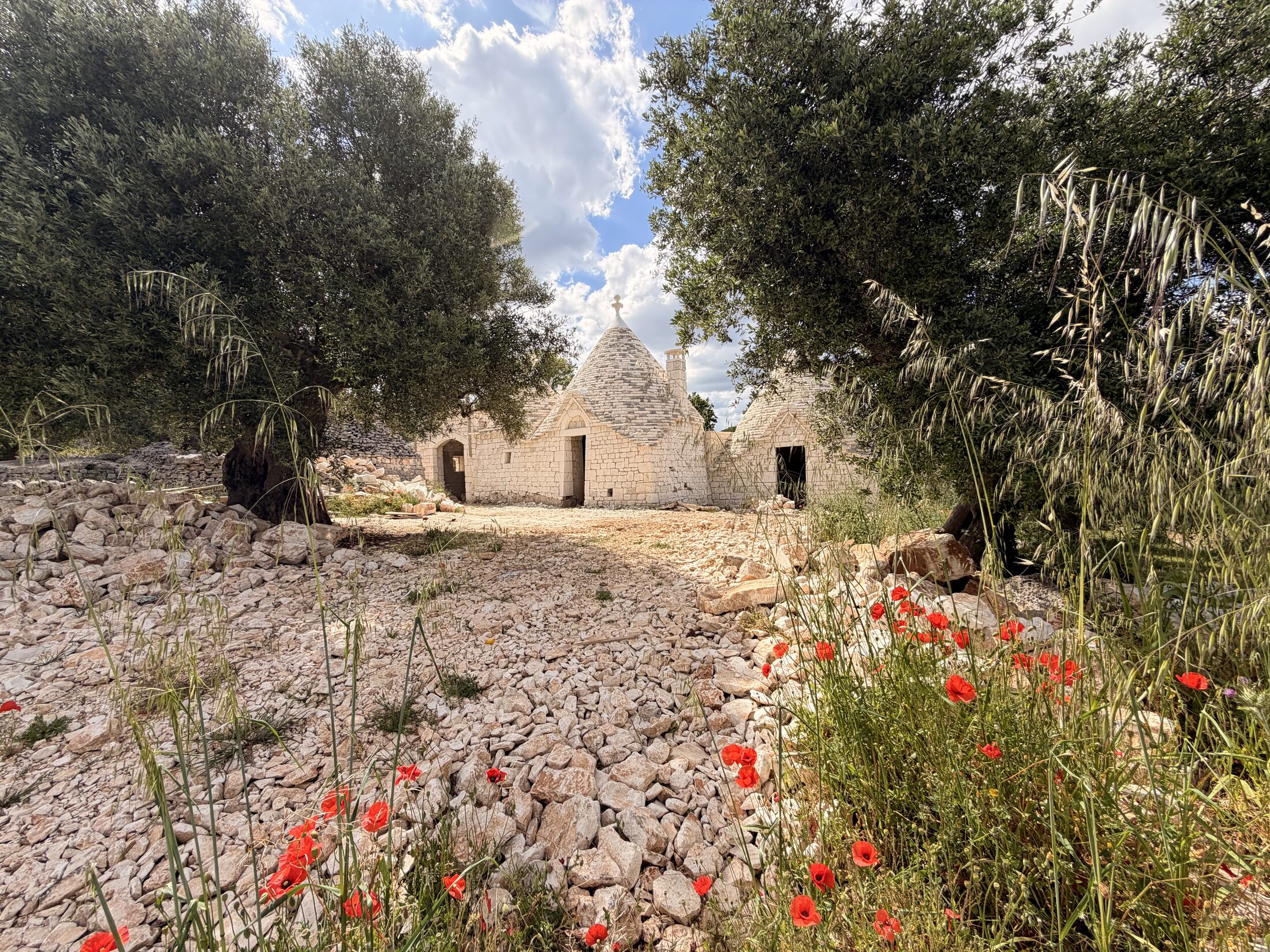
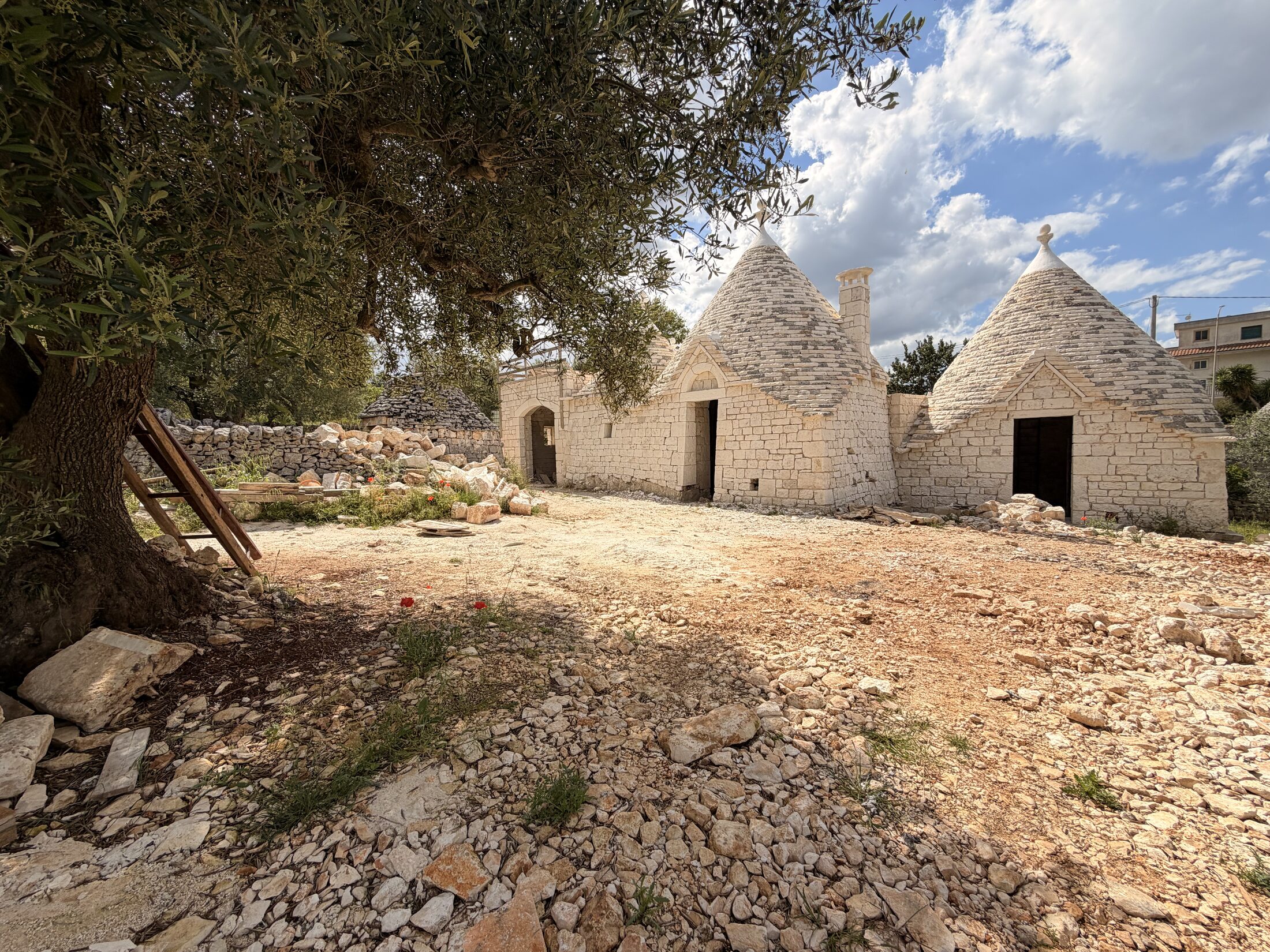
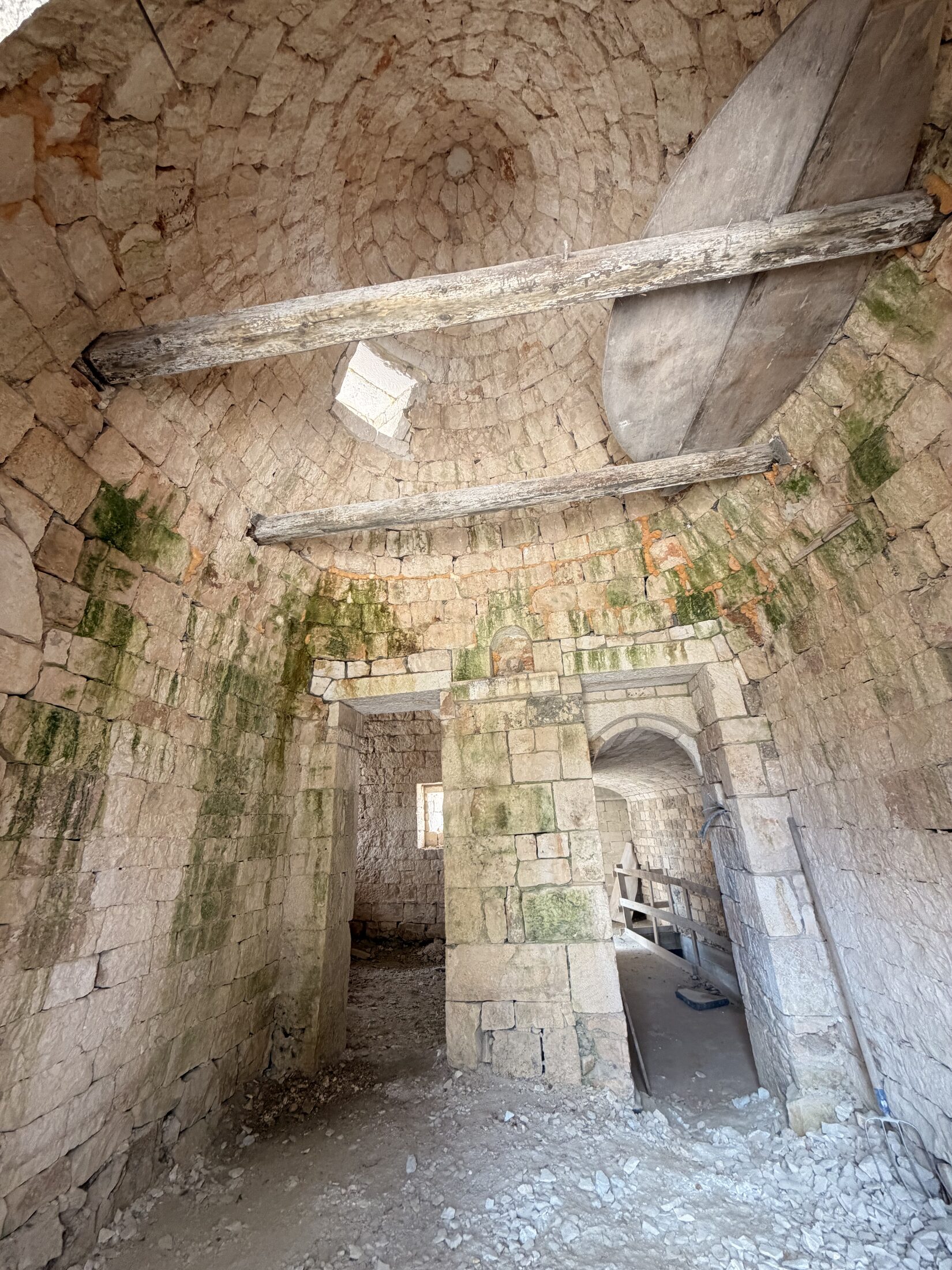
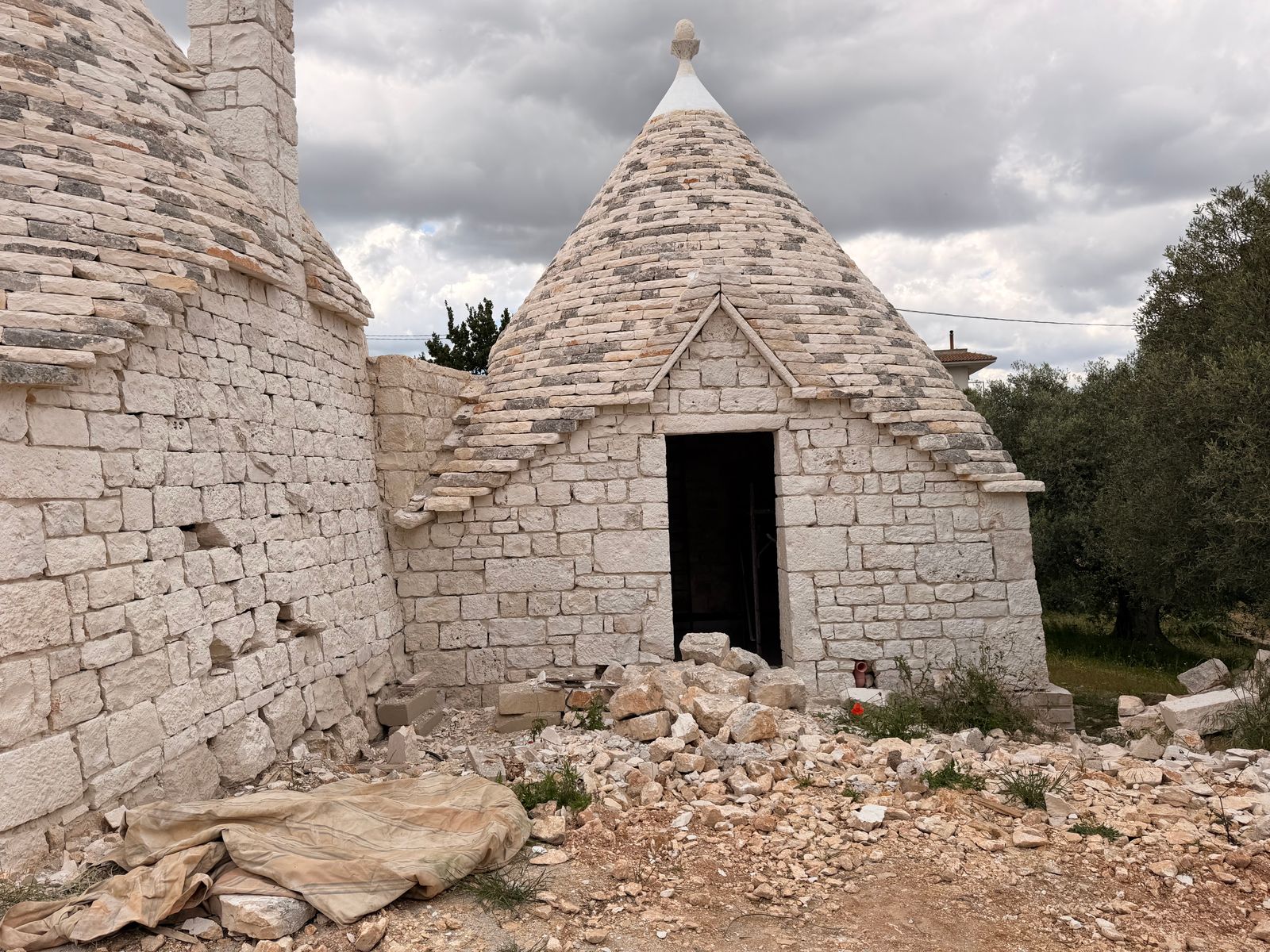
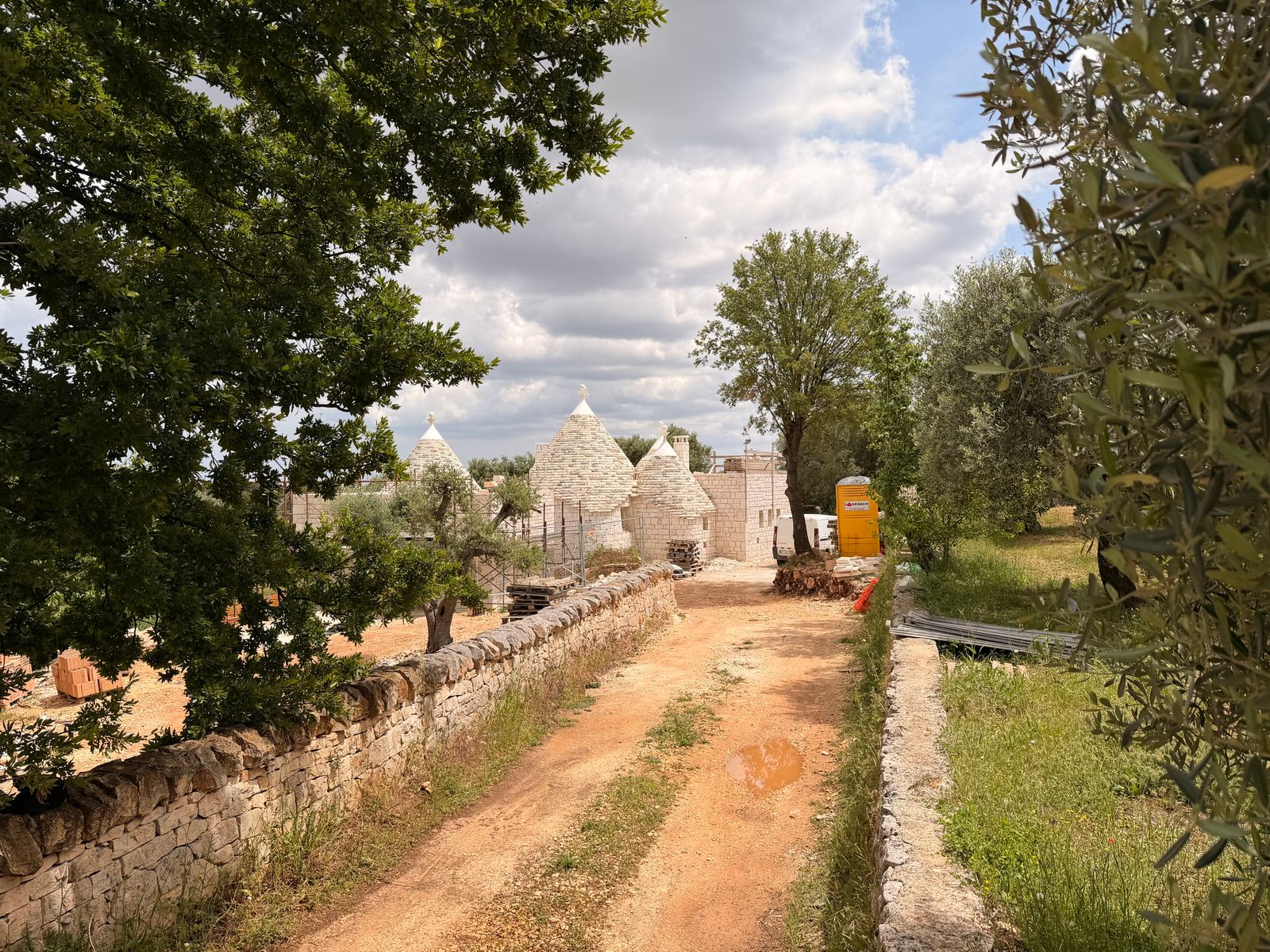
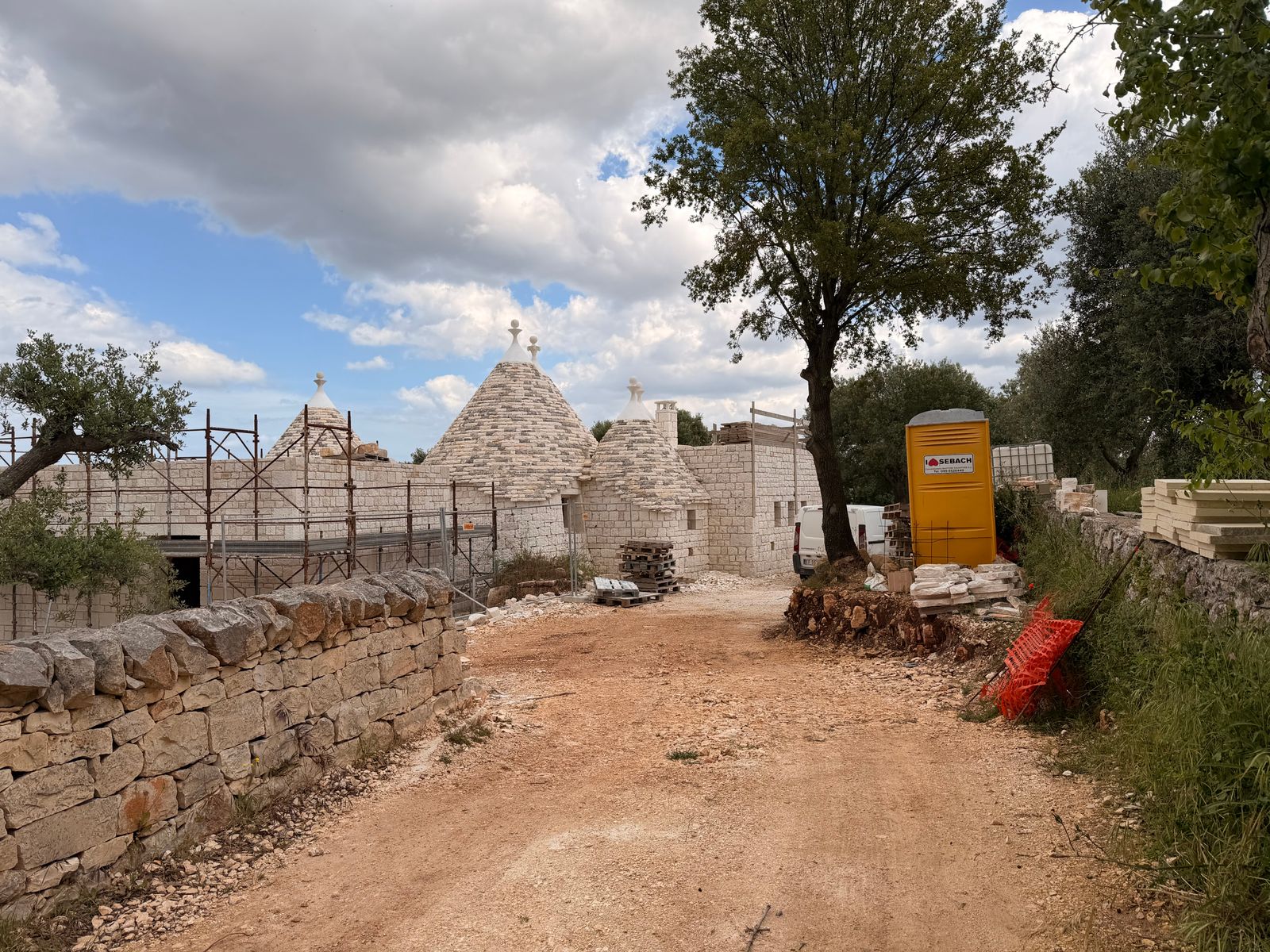
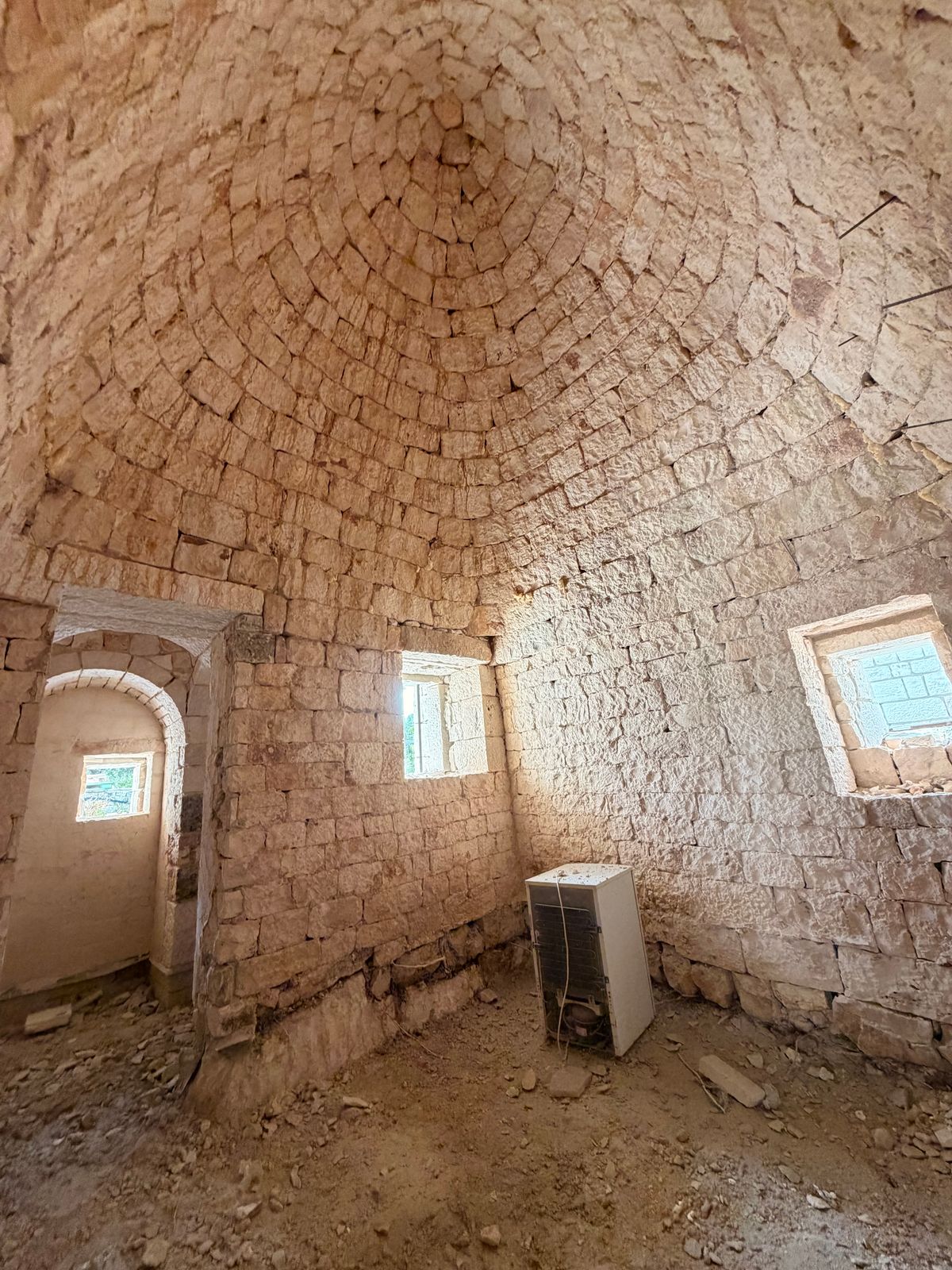
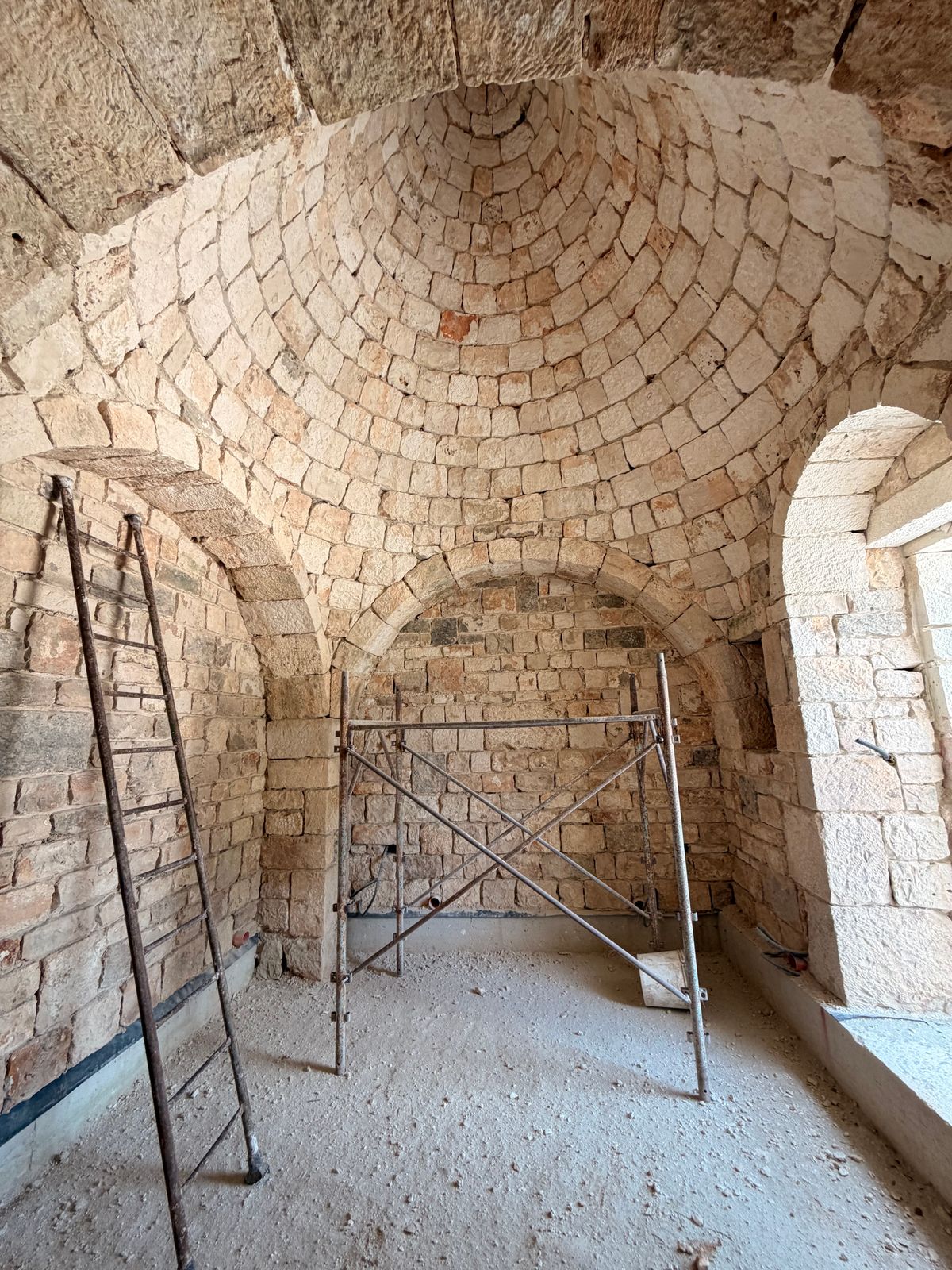
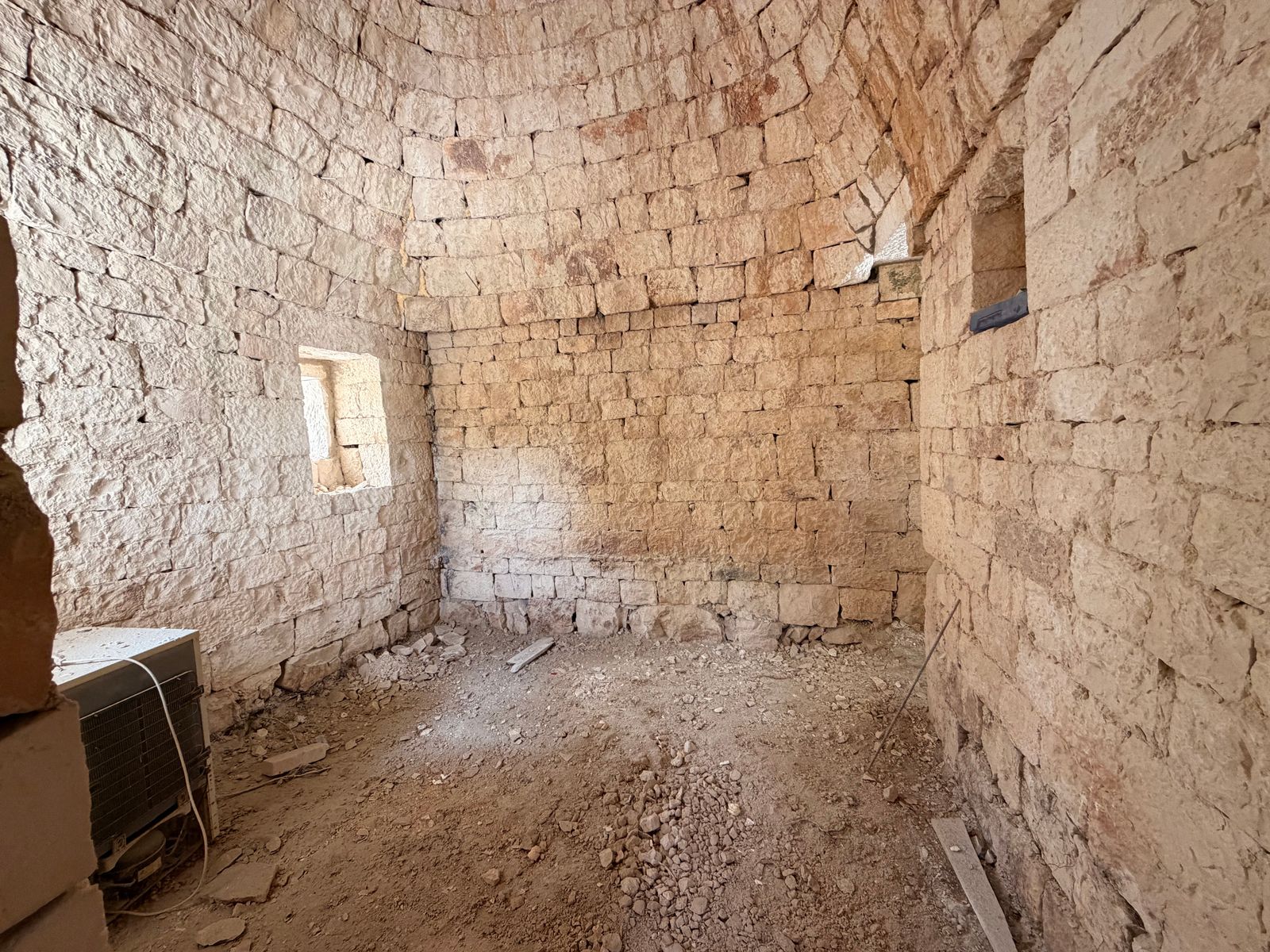
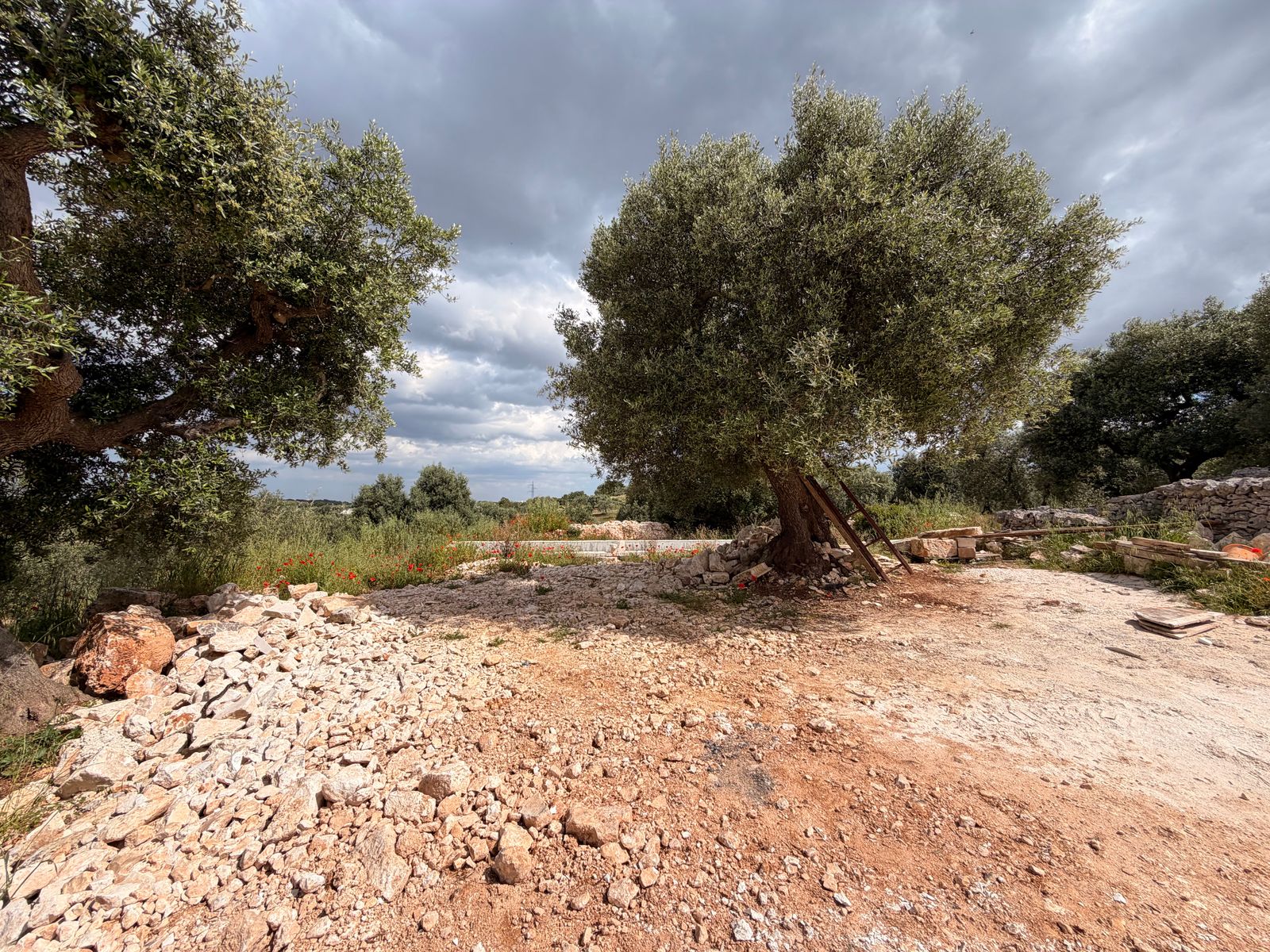
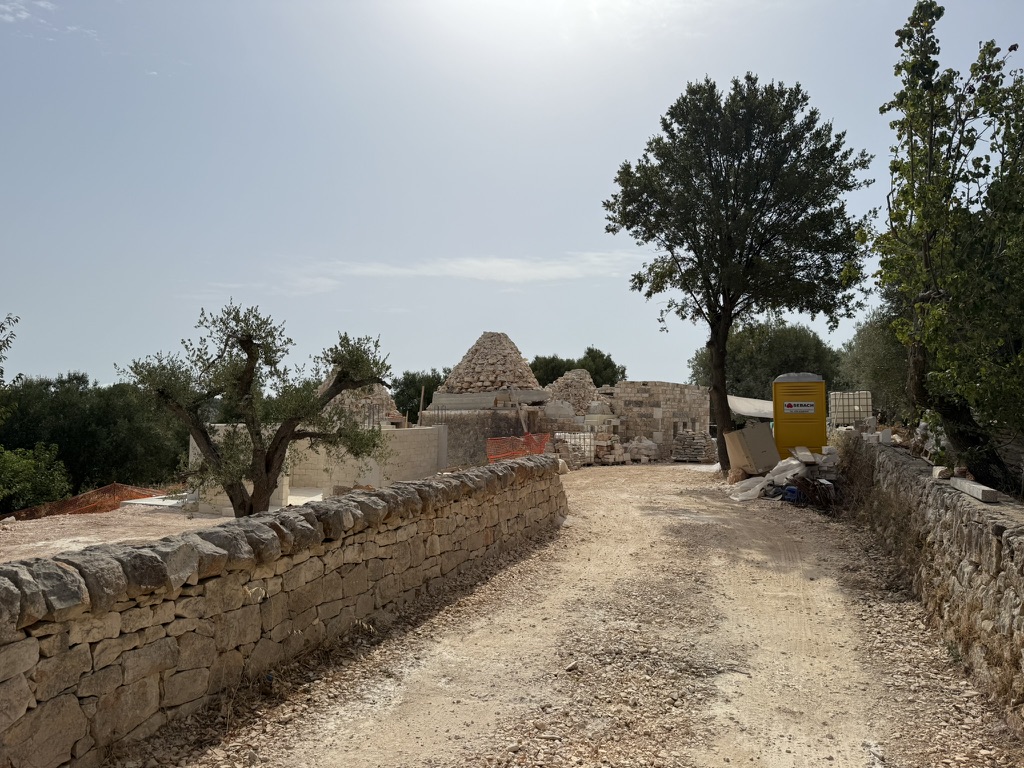
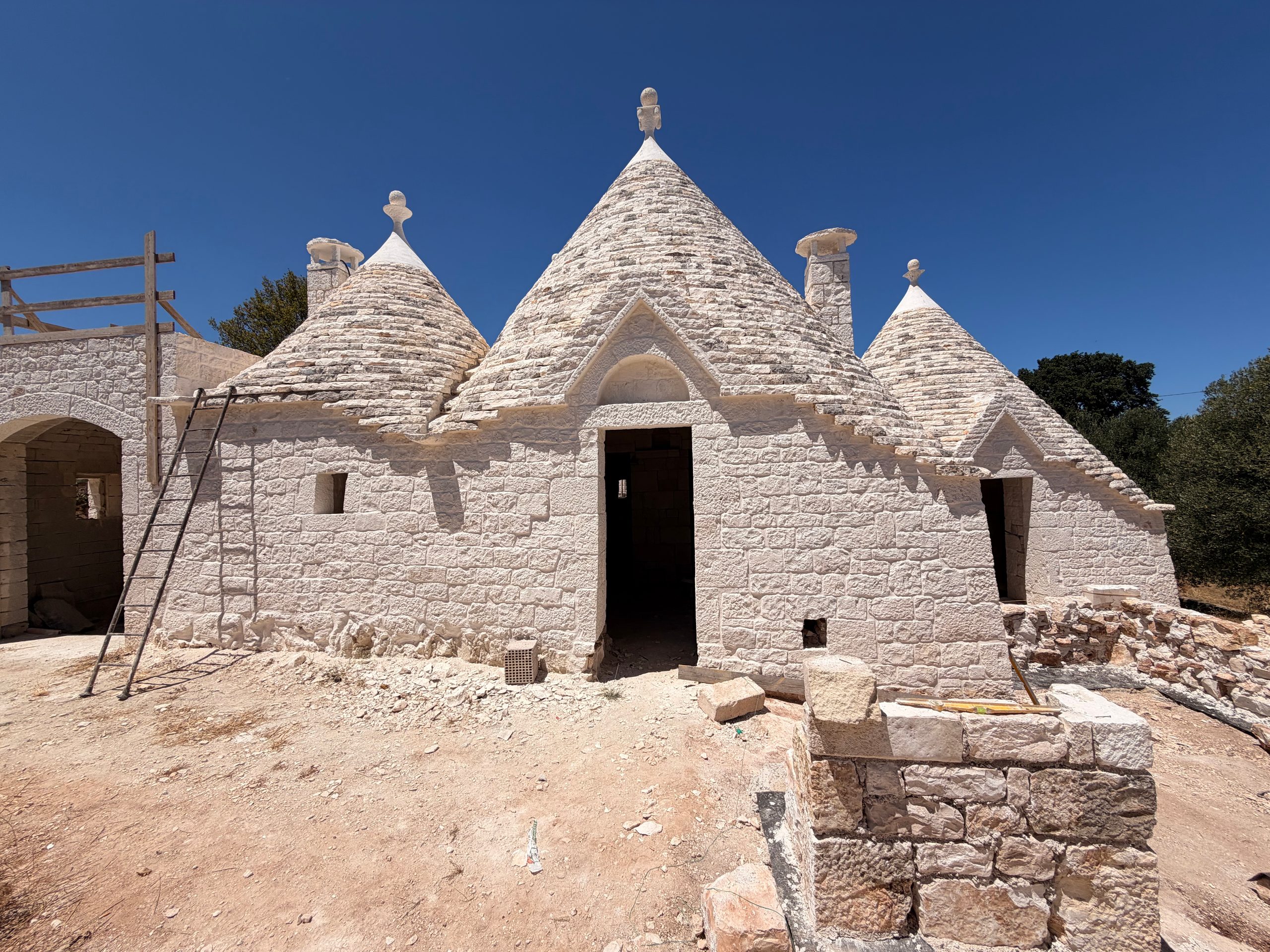
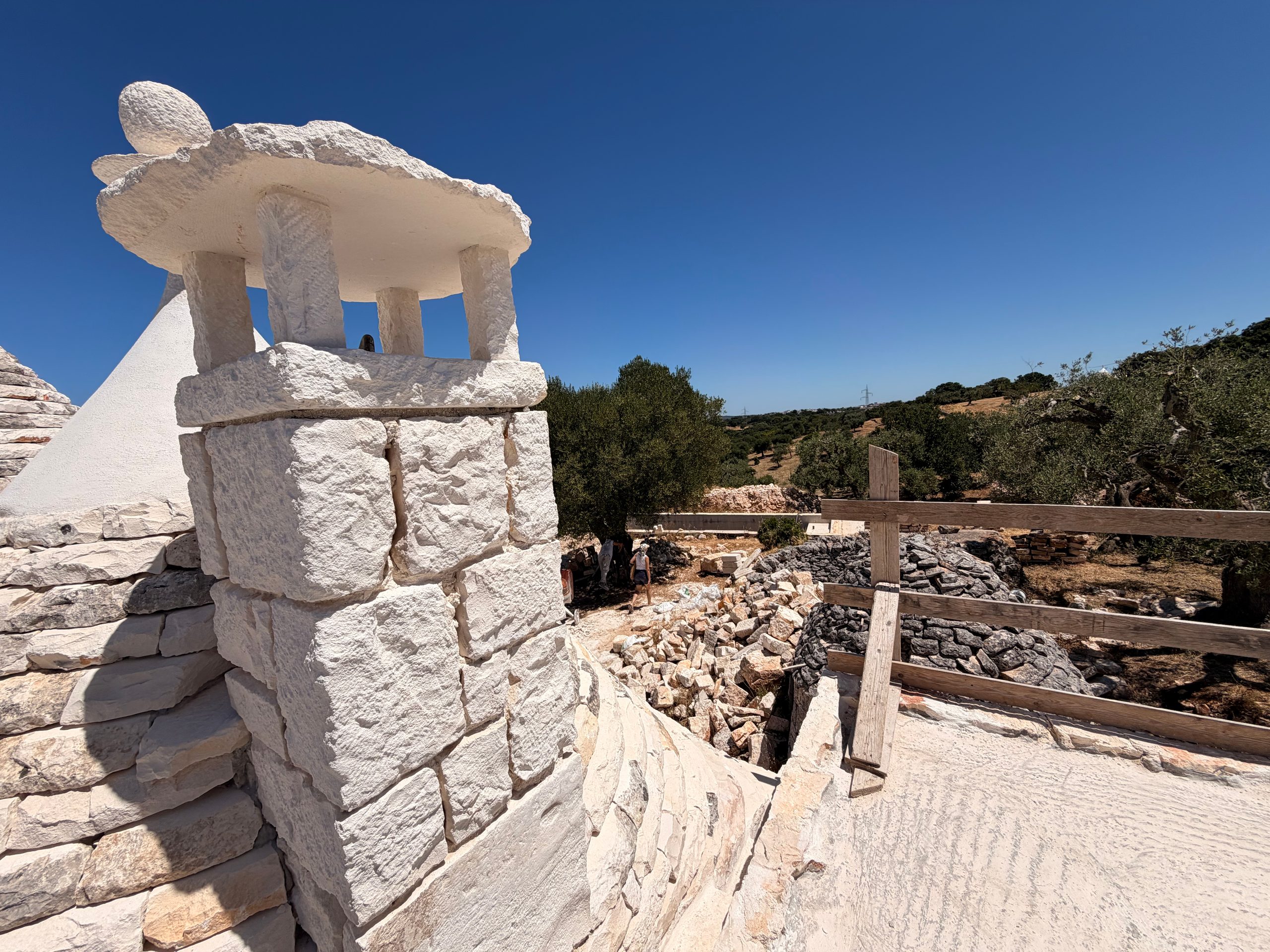
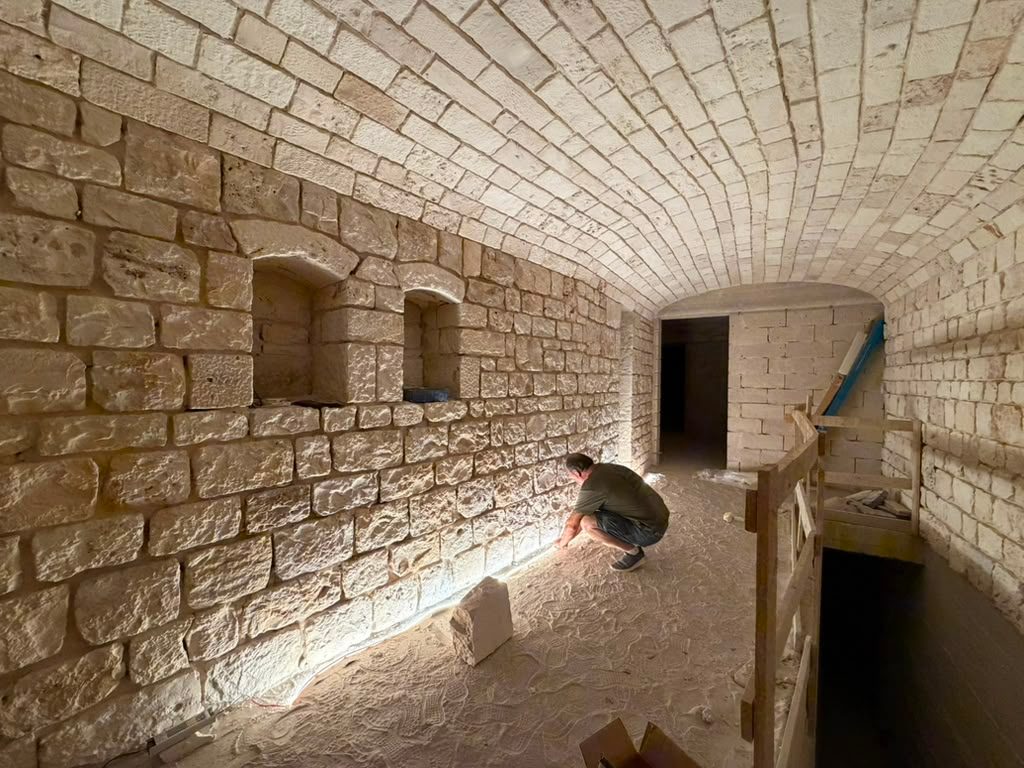
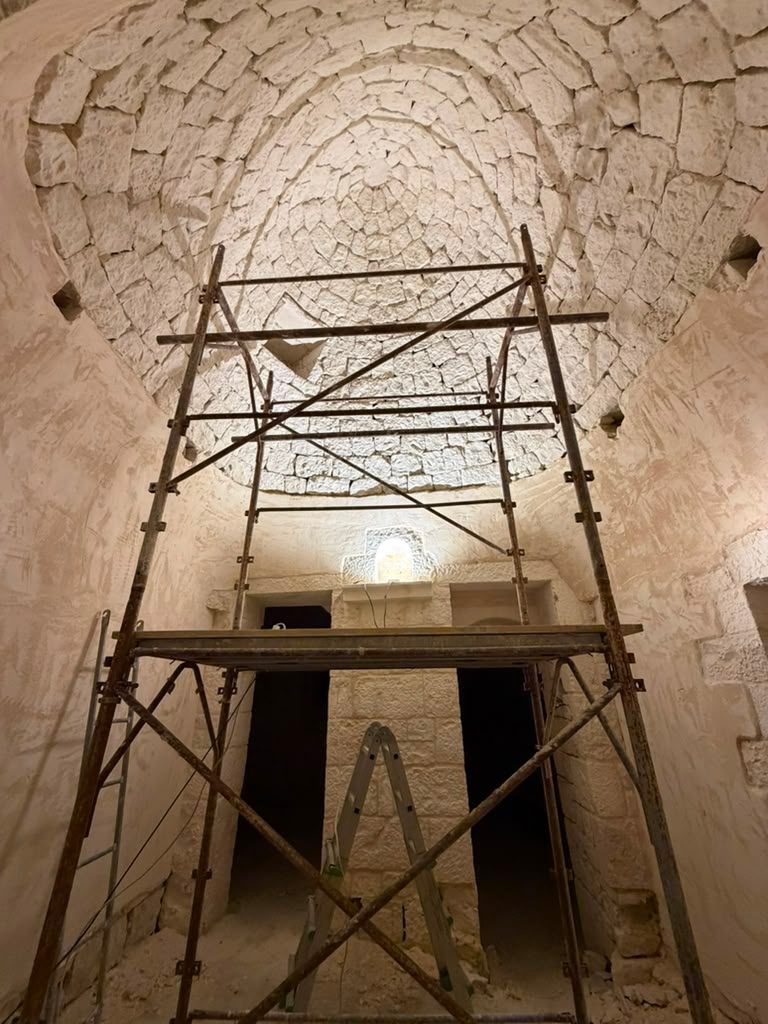
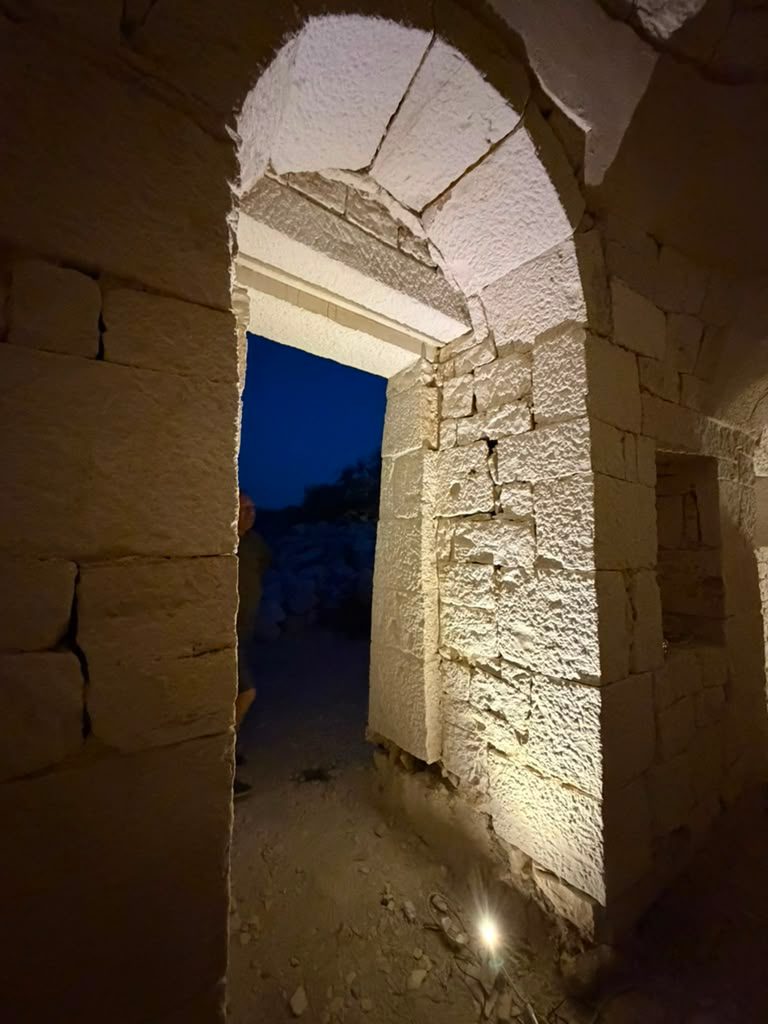
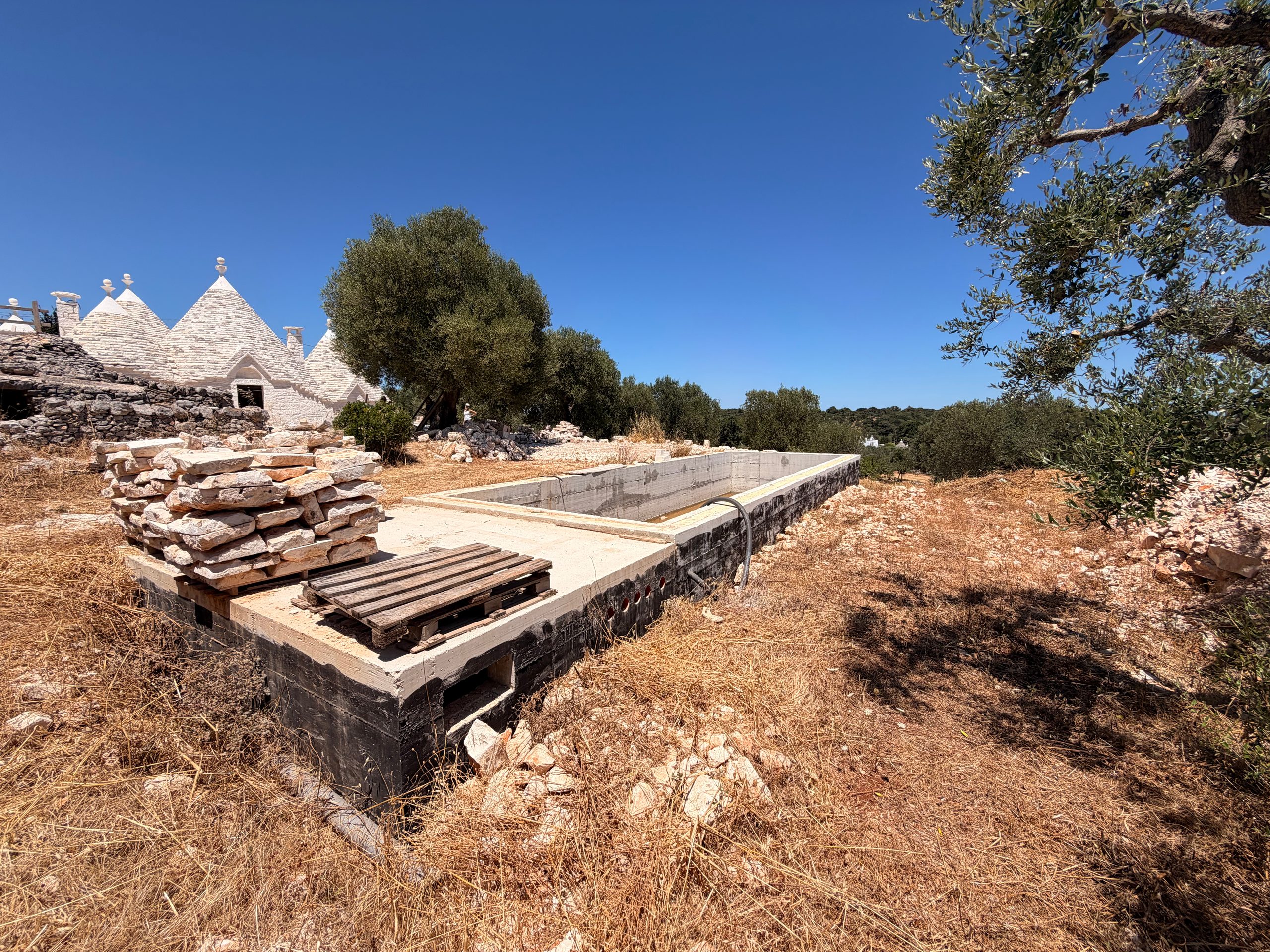
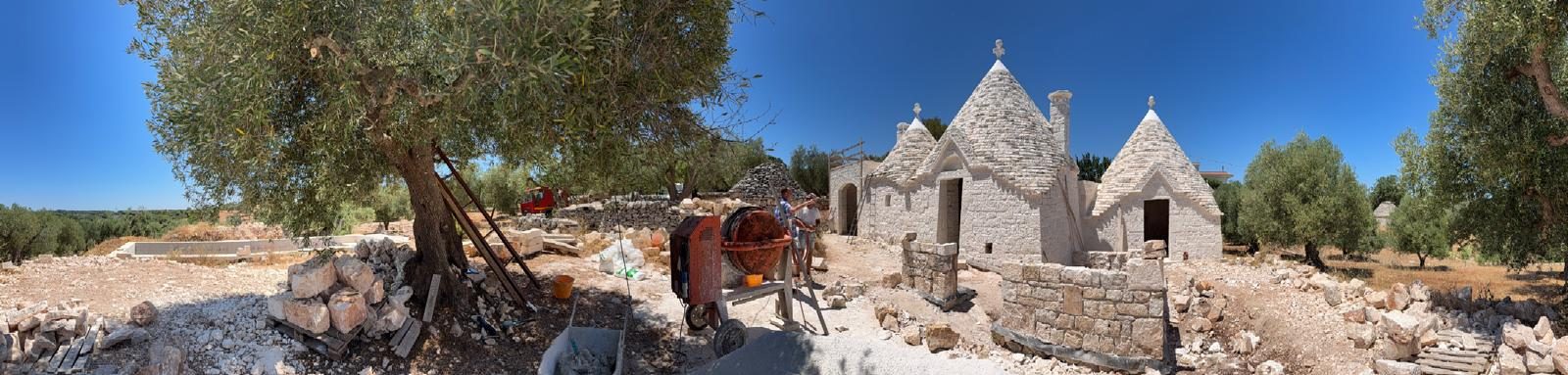
Until it is finished, the trullo stands visibly unfinished — a working site rather than a finished picture.
To see it now is to watch slow work: a mason shaping new stone to match the old, layer by layer. This building will outlast us and shelter people not yet born. Care taken now carries forward further than we will.
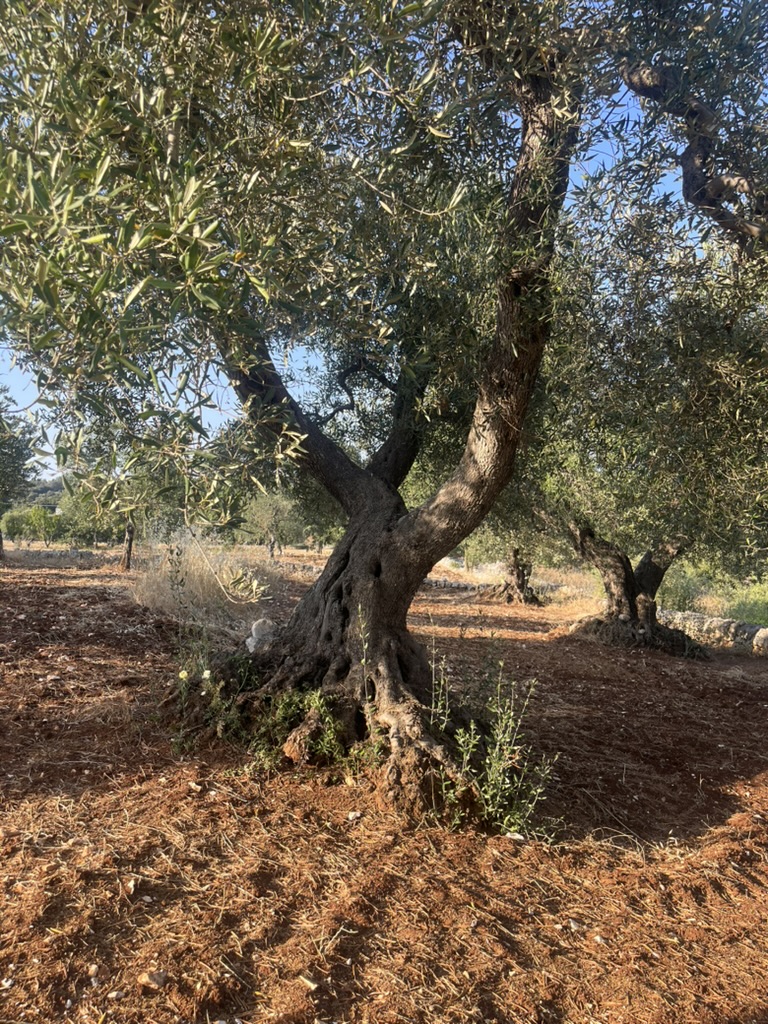
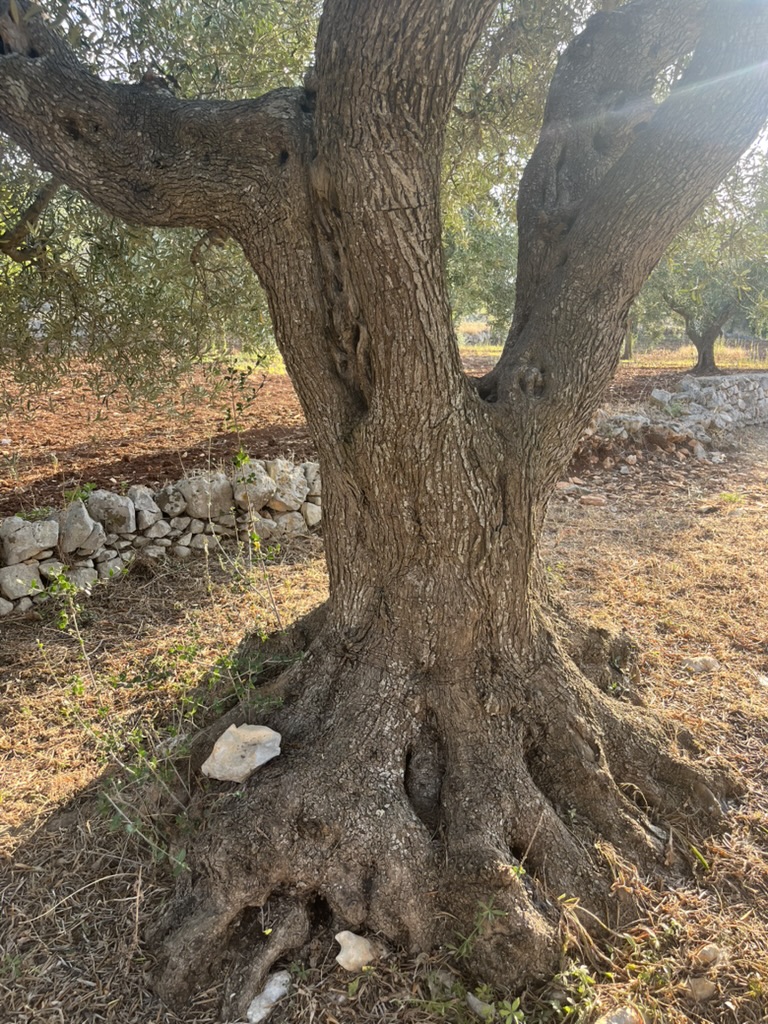
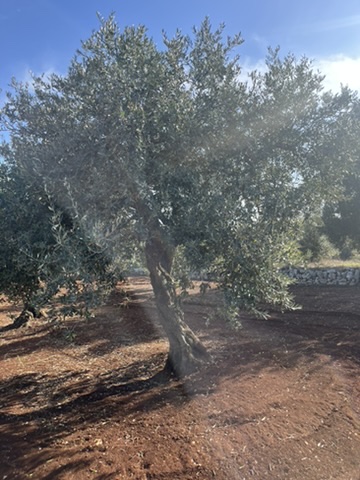
Around it the ancient olives stand as elders. Their roots hold the terraces together, their branches shade the workers who rest beneath them, and their fruit becomes oil. The trullo and the trees keep the same covenant: endure, shelter, give back more than you were given.
 Home
Home The Farm
 The Land
 Overview
 The Trees
 The Olives
 The Harvest
 The Pressing
 2025 Vintage
 Bee Sanctuary
 Biodiversity
 The Steward